




The Waikato River runs through the centre of one of Aotearoa / New Zealand's most important economic regions. On this morning, it also becomes a classroom.
"Hold the paddle here. Top hand steady. Don't stab the water — place it."
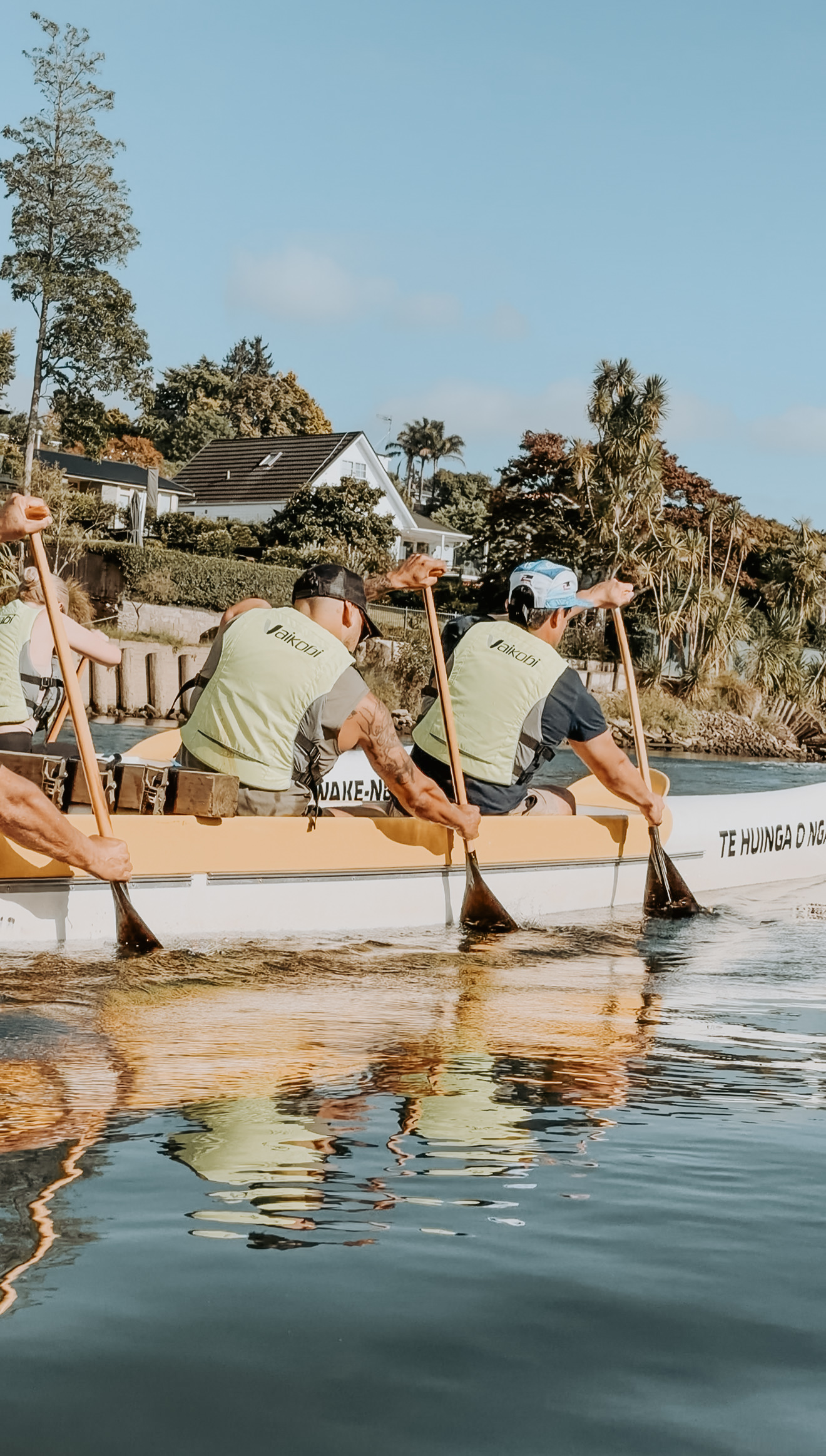
Life jackets are tightened along the riverbank. Paddles are handed out. Four waka (canoes), already lashed together in pairs, are carried down into the water. Twenty-four paddlers form two teams, each made up of two six-person canoes.
The structure is deliberate. Stability and balance. Movement must be coordinated.
The teams climb in.
A few laughs ripple across the group as they push off and move into the current. They paddle toward the middle of the awa (river) and pause, holding position as the current presses beneath them.
The deep vibrations of the didgeridoo roll across the water. Tapping sticks follow. A karakia (prayer) is spoken by Māori language practitioner Jason Kereopa. For a brief moment, the waka are held together in the centre of the river before the paddles return to the water and the journey begins.
Finding rhythm on the water
At the centre of one of the waka sits Ikimoke Tamaki-Takarei, a tribal leader and experienced waka educator within Waikato-Tainui. His role is to guide the paddlers, set rhythm and ensure coordination.
"Tahi (1)... rua (2)... toru (3)... whā (4)... rima (5)... ono (6)... whitu (7)... waru (8)... iwa (9)... tekau (10)... keep it together."
The first strokes are uneven. Paddles clash and miss. The waka slows.
"Listen to the rhythm," he calls. "If one of you goes off, we all slow down."
The count resumes. Gradually, the paddles align. The waka lifts and begins to glide cleanly through the water.
"You don't move this waka by yourself," he says. "You move it together."
Over the next three hours, that rhythm becomes constant, and so does the conversation.
A river governed through settlement
As the waka moves downstream toward Tūrangawaewae Marae, the seat of Kiingitanga (the Māori King Movement) and the home of Te Arikinui Kuini Ngā wai hono i te pō (the Māori Queen), the conversation shifts to governance.
Donna Flavell, Chief Executive of Waikato-Tainui, explains how the river is managed.
"Our people don't believe you can carve up our awa. It's all or nothing. Our river is a tupuna - our ancestor - a living being," she says.
The Waikato River is governed through the Waikato-Tainui Raupatu Claims (Waikato River) Settlement Act 2010, a landmark agreement between Waikato-Tainui and the New Zealand Government. The settlement established a co-governance and co-management framework that gives Waikato-Tainui a direct role in decision-making across the river and its catchment. "Ultimately, the River is to be the beneficiary of the settlement."
At its centre is Te Ture Whaimana o Te Awa o Waikato, the Vision and Strategy for the river. It directs how the river must be restored and managed and holds unusual legal weight, prevailing over inconsistent planning frameworks and shaping decisions across multiple layers of government.
The Vision describes a future where a healthy river supports both environmental life and human communities, and where those communities take responsibility for maintaining its wellbeing.
"Our river was the highway," Flavell says. "Our river was the food bowl for our people. Our river was everything that sustained us - physically and spiritually."
The significance of that relationship was reinforced the day prior at the Tūrangawaewae Regatta.
"The natural world is constantly speaking through rivers, land, winds, and oceans — and it is time to listen," Te Arikinui Kuini Ngā wai hono i te pō told the crowd.
A river under pressure
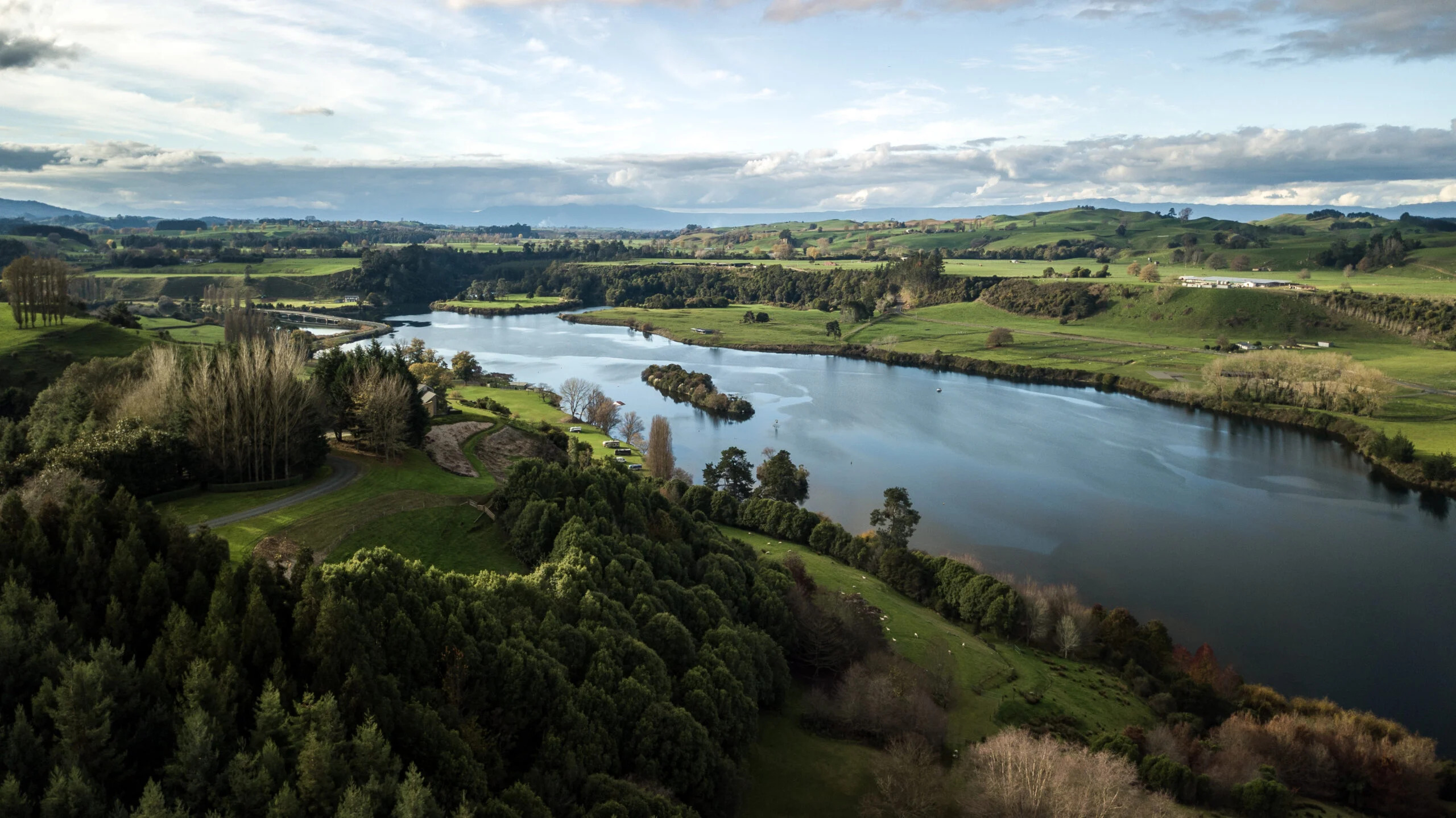
The Waikato River runs more than 440 kilometres and drains a large catchment that supports agriculture, electricity generation and urban water supply.
It is heavily used. It is also under pressure.
As the waka passes a wastewater outfall, the mood of the group shifts.
"There's a discharge pipe under here," one of the hosts says. "They say it's clean enough to discharge."
Flavell recounts a visit to the wastewater treatment facility.
"One of the kaumātua (tribal elders) said, 'Drink it then.'"
They refused.
"When it's drinkable, then it's clean enough," she says.
Wastewater discharge, agricultural runoff and stormwater all contribute to the river's condition. Monitoring data shows that key indicators of river health, including nitrogen levels and bacterial contamination, are deteriorating in parts of the catchment.
"The Waikato iwi are situated downstream of the river," Flavell says. "Everything upstream affects us."
Stormwater systems designed to filter runoff can be overwhelmed during heavy rain.
"They've got systems in place," one paddler explains. "But in flood?"
"Straight out."
When the river recedes, contamination remains.
"It does not stop our kids from going straight back to the river," Flavell says. "As a result, they can fall ill or develop other conditions that affect their health and wellbeing."
The warning from the regatta carries through the conversation on the water.
"When the environment suffers, so too do our people, our culture, and our economy," Kiingitanga spokesperson Rahui Papa said.
An economic engine under strain
The Waikato River underpins one of New Zealand's most productive export regions. Dairy exports, electricity generation and water supply for major urban centres all depend on it.
Major companies operate along its length, including Fonterra, New Zealand's largest dairy exporter; Mercury and Genesis, electricity companies that operate hydroelectric dams; and AFFCO, a large meat processing and export business.
"These are big users," Flavell says. "They take water, and they discharge contaminated water back into it."
The relationship between industry and the river is complex.
"Disadvantage — they discharge into the river," Ikimoke says. "Benefit — they employ our people."
Companies such as AFFCO have historically provided employment for Māori communities in towns along the Waikato River. That connection remains.
"It's always a balance," Flavell says. "The River's health was the key focus of the Waikato-Tainui negotiations. For far too long the nation had received benefits derived from the River, and though it is the backbone of the energy and primary sectors it has been overexploited resulting in severe degradation of its health. And, despite its high value to the nation, its health and well-being had never been at the forefront of any form of decision making in the past. Our settlement has changed that. We all have responsibilities to protect and restore the health and wellbeing of our awa for future generations."
Hydroelectric dams provide another example.
"They stop the natural flow of the mauri — the life force and essential vitality of the river," Ikimoke says. "But they're also protecting our marae."
Water levels are controlled through a series of dams stretching back to Lake Taupō, reducing the likelihood of major flooding downstream.
Loss of species and knowledge
Further along the river, attention turns to ecological change.
"We can't even catch tuna (eels) anymore," Flavell says.
"Our kids don't know how to make hīnaki (eel traps) anymore."
The river's ecosystem has shifted significantly.
"Eighty percent of our biomass in the river is koi carp," Flavell says.
Native fish populations have declined. Cultural practices connected to those species have also been affected.
To support eel populations, Waikato-Tainui now physically transfers tuna around hydroelectric dams.
"They get stuck in the turbines," Flavell says. "They get munched up. So our people physically collect them and take them up and over the dam walls." Our iwi is determined to restore our traditional food sources and practices, and we are undertaking a range of initiatives to support this work.
Restoration at scale
Along the riverbanks, restoration work is visible. Planting, fencing and wetland reconstruction projects are underway across the catchment.
Over recent years, millions of native plants have been established and large areas of land restored through coordinated programmes involving iwi, government, landowners and industry.
These projects are part of a long-term strategy aimed at improving water quality, restoring habitat and stabilising riverbanks.
A point of comparison: Derbarl Yerrigan
For members of the Whadjuk Aboriginal Corporation delegation from Western Australia, the parallels are clear.
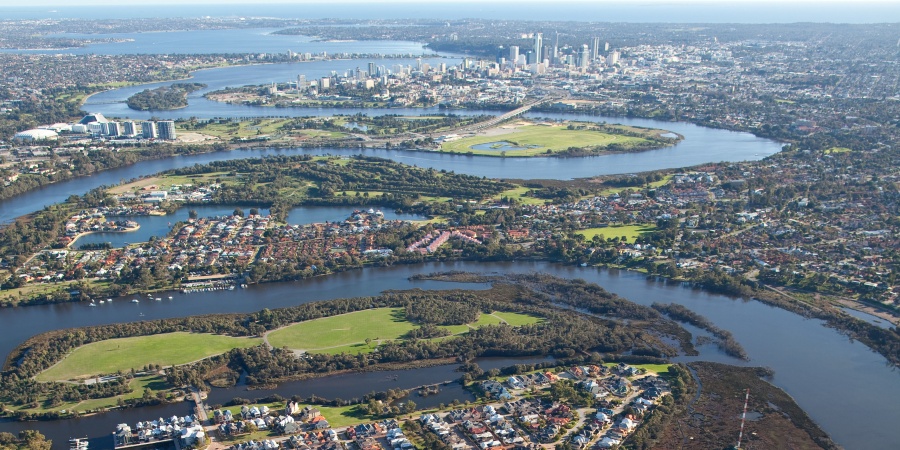
The Derbarl Yerrigan (Swan River) faces many of the same pressures. Agricultural runoff and urban stormwater discharge affect water quality. Efforts to improve the river focus on reducing nutrient inputs and improving drainage systems.
The environmental problems are similar. The difference is who holds decision-making power.
In Western Australia, river management is led by government agencies and a multitude of local governments, with Indigenous involvement often advisory or fragmented.
In the Waikato, that structure has been fundamentally reshaped through the Waikato River settlement. Waikato-Tainui holds a formal, legislated role in decision-making, influencing policy, resource consents and long-term planning across the catchment.
That authority shapes outcomes.
Approaching Tūrangawaewae
After three hours on the water, the paddling has settled into rhythm. The paddles move in unison.
"We can't back paddle," someone says. "Once we go, we go."
The river turns and widens as Tūrangawaewae Marae comes into view.
This is the centre of Waikato-Tainui authority, where governance, culture and strategy converge.
What the river carries
The Waikato River carries the outcomes of settlement, the pressures of industry and development, and the work of restoration. It connects law, economy and culture.
The Vision for the river describes a future where environmental health and community prosperity are linked, and where responsibility for the river is shared across all who depend on it.
That expectation is shaping decisions across the region. It influences infrastructure design, industrial activity and long-term planning.
For those on the water that morning, the lesson was clear.
"You move together," Ikimoke said.
The same principle applies beyond the waka. Without alignment, nothing moves.