





Our Story: Aboriginal Chinese People in Australia, at the National Museum of Australia, documents over 170 years of connection between Chinese migrants and Aboriginal Australians. Supported over five years by Fortescue along with government and community partners, the exhibition brings together oral history, archival records, family photographs, and artworks. It reveals how families and businesses were formed in the face of colonial exclusion and discrimination.
Chinese migration increased during the gold rushes of the 1850s. By 1901 about 30,000 Chinese people had arrived, most of them men. After the goldfields declined, many remained in Australia and turned to small business and agriculture.
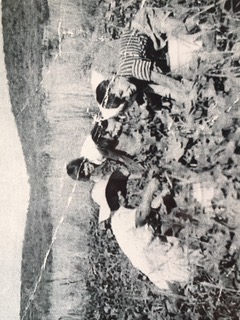
Zhou Xiaoping, the artist and curator of the project, explained that market gardens were a central point of connection. "Every family we interviewed talked about the gardens," he said. "They were not only businesses but places where Aboriginal people were employed and where families lived side by side. You can see how those working relationships turned into long-term relationships."
Zhou's installation Chinese Cabbage Leaves uses more than 100 glass leaves to reference the gardens. "We can show old photographs of gardens from 170 years ago," he said. "But with art I want to bring that history into the present so people can feel it."
Relationships between Chinese men and Aboriginal women were common through the late 19th and early 20th centuries. Zhou said, "At that time both groups were treated unfairly. Aboriginal and Chinese people were both discriminated against, so they came together. They lived in the same areas and found similarities in how they cared for families and children."
Children of these unions often faced prejudice. Stephen Loo, a Noongar man whose family history features in the exhibition, said, "There had been so much silence. For my father and grandparents it was not spoken about. What this exhibition does is bring pride back. It reconnects us not just to family but also to the fact that our people were building businesses and sustaining communities."
Loo contributed photographs and gravestone records linking his Aboriginal and Chinese forebears. "It is about giving something back to our family and to younger generations who have lost those connections," he said. "This is not just my story, it is our story."
Both Aboriginal and Chinese Australians were affected by discriminatory laws. The White Australia Policy of 1901 restricted Chinese migration and re-entry. Aboriginal people were subject to state protection laws that limited land access, employment and political rights. These restrictions reduced the ability of both groups to accumulate wealth across generations.
Despite this, Aboriginal-Chinese families established enterprises that became important to regional economies. In Alice Springs the Ah Hong family ran a market garden and bakery from the 1890s. In Broome the Chi family developed businesses including a restaurant, noodle shop and taxi service.
"These examples show that Aboriginal and Chinese people contributed to local economies together," Zhou said. "They show that Aboriginal people were involved in enterprise even when official society excluded them."
Zhou has worked with Aboriginal communities and artists for more than three decades.
"My career in Australia has always been connected to Aboriginal culture," he said. "Projects like this are not only about art but also about survival, because art supports families and communities."
He added, "If you only sell your work it is not easy to live. But when you do projects like this, with sponsorship from companies and government, it makes survival possible. It allows us to tell stories that are not only cultural but also economic."
The exhibition also features works by seven artists of Aboriginal-Chinese heritage. Zhou noted, "Today people are happy to say they are Aboriginal and also Chinese. In the past many hid that part of themselves, but now there is recognition."
Loo sees clear parallels between past and present. "When you see our mob and Chinese migrants working together 150 years ago, you realise those partnerships were about survival but also about opportunity. That is something we can learn from today."
The history also connects with Australia's present-day economic reality. China is now one of Australia's major trading partners, with the relationship underpinned by exports of iron ore, gas and other resources, much of it from Western Australia. In the 2022-23 financial year about 85 per cent of Western Australia's iron ore exports were sold to China, totaling around 753 million tonnes. This reflects how closely the economies remain linked.
For Zhou, the combination of culture and commerce has always been important.
"Business can be short-term, but culture is long-term," he said. "When the two come together, real opportunity emerges."
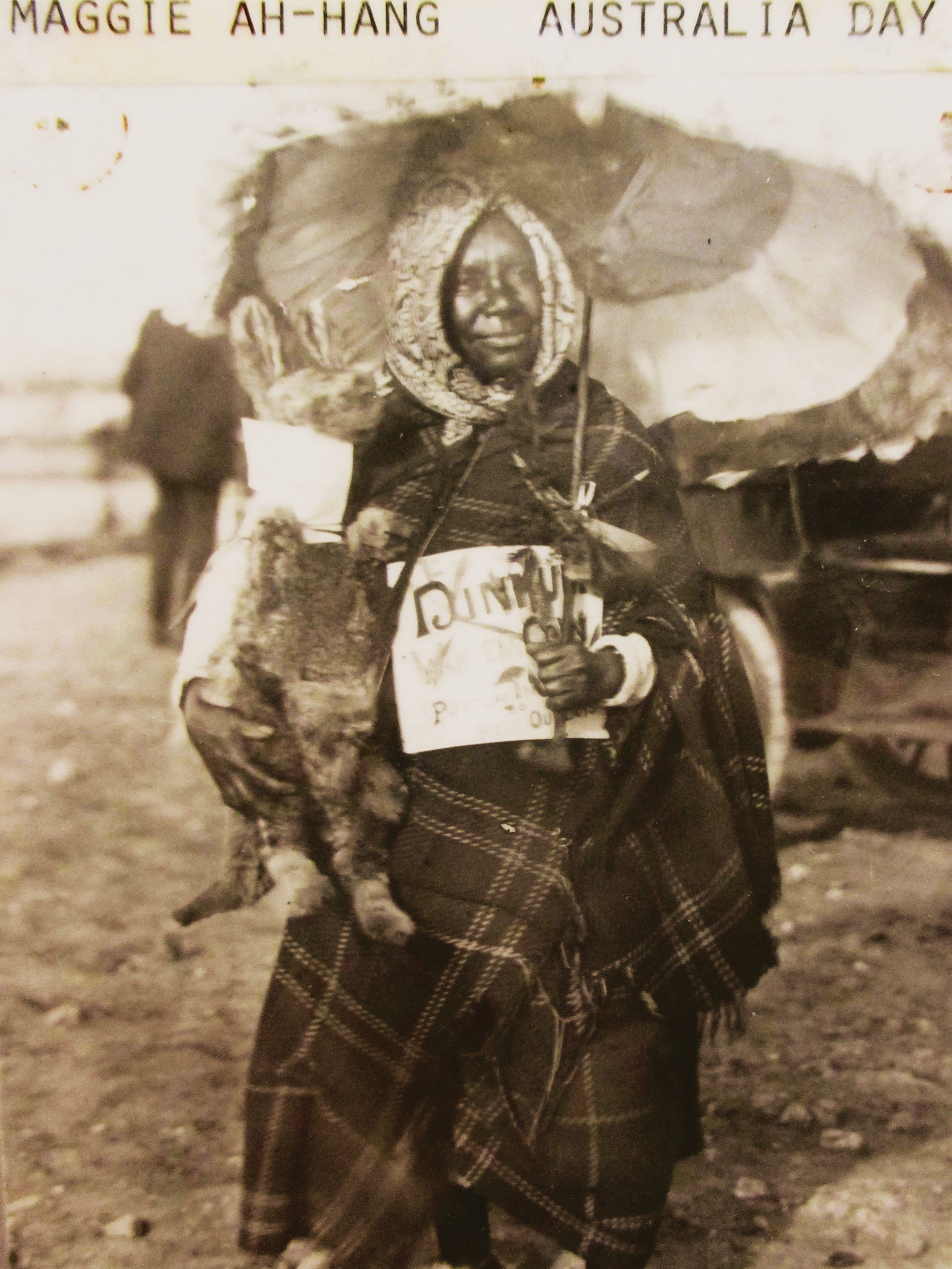
Our Story: Aboriginal Chinese People in Australia exhibited at the National Museum from 10 April 2025 to 27 January this year and was scheduled to tour China before returning to Western Australia. For many families this is the first public recognition of their histories.
As Loo reflected, "Finding out I was of Chinese descent gave me a new sense of connection. This project makes it easier for all of us to share that knowledge and give it to our families. It is about putting something in place for future generations."
Our Story demonstrates that connections between Aboriginal people and Chinese migrants included enterprise, family, work and community. It also shows that the roots of Australia's engagement with China are far older than today's trading relationship.