



A new $50 million water bottling project at Naseyani in Fiji's Ra province is being positioned as a major investment in rural development, export growth and landowner partnership.
The Fiji Wai project was formally launched with a groundbreaking ceremony and the commissioning of new borehole sites, with the development expected to become one of the country's most advanced commercial bottling facilities.
Owned by Fiji Wai, a subsidiary of Unit Trust of Fiji, the project is expected to take approximately nine months to build.
Once completed, the plant is scheduled to be commissioned in January 2027.
The facility is expected to produce up to 36,000 bottles an hour and target high-value export markets under International Organisation for Standardisation standards.
The project is part of a broader push to link natural resource development with inclusive economic growth and stronger partnerships with landowning communities.
Prime Minister Sitiveni Rabuka said the project was intended to reflect both sustainable development and rural empowerment.
"Today, we launch a venture that represents our commitment to sustainable development and rural empowerment," he said.
"This project is more than an industrial expansion — it is a strategic investment in our natural resources and a bold testament to the power of inclusive partnership with our landowning units."
The launch brought together the start of construction on the bottling plant with the commissioning of the new borehole sites that will support the project.

Together, those steps marked the formal start of a development the Government has tied to both industrial expansion and regional economic activity.
The Government said the project would combine industrial capacity with a focus on long-term community benefit.
That approach was also linked to the role of the Vanua of Naseyani, particularly the Mataqali Tawa, in the development.
Mr Rabuka said the project was tied to the Government's view that national development should be built in partnership with traditional landowners.
"Our national development is fundamentally rooted in the strength of our partnerships with the Vanua," he said.
"By aligning our commercial objectives with the aspirations of our landowning units, we ensure that progress is not only sustainable but deeply inclusive."
"As we scale our global reach, the benefits of our natural resources must remain anchored in the prosperity of our communities — honouring traditional custodianship while driving collective economic empowerment," Mr Rabuka said.
Lavinia Kaumaitotoya, chairwoman of Fiji Wai and Unit Trust of Fiji, said the development was built on a partnership model involving public, private and landowning interests.
"This project reflects the strength of collaboration between Government, investors, and landowners," she said.
"It demonstrates our shared commitment to building a sustainable industry that not only meets international standards but also delivers meaningful benefits to local communities."
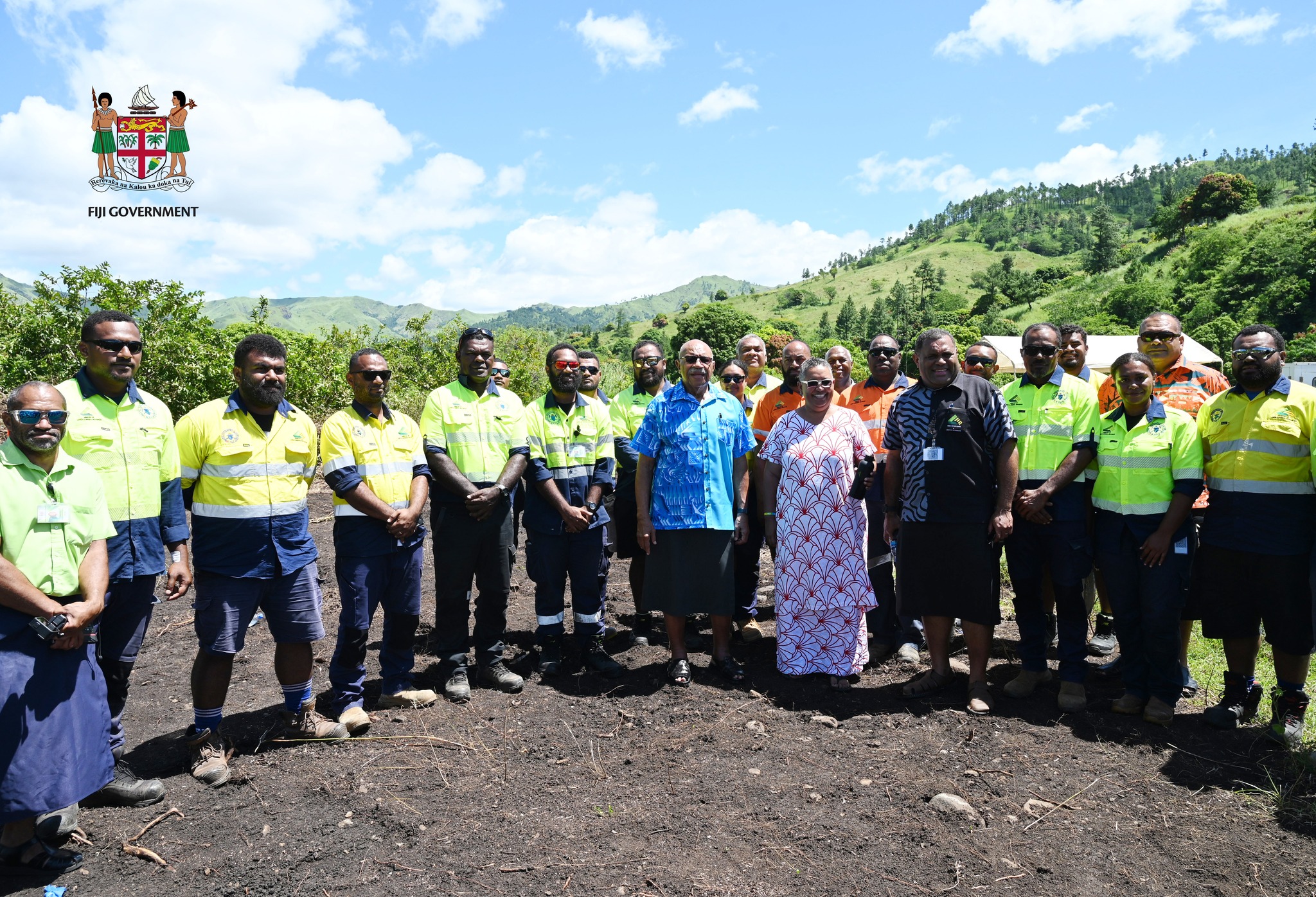
The company said the plant would help position Fiji more strongly in the premium water sector while keeping development inclusive and environmentally responsible.
At a planned capacity of 36,000 bottles an hour, the facility is being positioned as a significant export-focused operation rather than a small local plant.
Rather than being centred in one of Fiji's larger urban areas, the development is being advanced in rural Ra, where it is being promoted as a source of long-term activity tied to local partnership.
Mr Rabuka said the plant would help strengthen Fiji's competitiveness in premium bottled water.
He said adherence to international standards would be central to that goal.
The facility's scale, export focus and production capacity make it one of the larger business developments currently being advanced in rural Fiji.
Its emphasis on landowner participation also gives it a community dimension beyond a standard industrial announcement.
With construction now under way, the project's next phase will be measured by whether it can deliver export growth, community benefit and stronger rural development ahead of its planned January 2027 commissioning.