



The federal government's Indigenous Procurement Policy has long been promoted as a major success story, but a new study has revealed billions of dollars in Commonwealth contracts have been captured by only a handful of Indigenous-registered companies—prompting warnings of deep structural failure in the system.
Since it began in 2015, the Indigenous Procurement Policy (IPP) has generated $12.6 billion in federal spending with First Nations businesses and almost 80,000 contracts awarded to more than 4,400 Indigenous-owned enterprises. On paper, the policy has exceeded every target set for it.
But new analysis by Research Fellow Christian Eva at the Australian National University, based on eight years of FOI data never before examined publicly, shows that the distribution of these benefits is far narrower than the headline numbers suggest. Dr Eva found that half of all Commonwealth contracts over $10,000 were awarded to just 11 businesses, and that half of the total value—around $7 billion—went to only 18 businesses.
"Given that the IPP was succeeding and has succeeded so well in terms of its targets, in terms of number of contracts and money spent, I don't think there's much appetite to lift the hood and see what's going on because it's been so successful," Dr Eva told the Indigenous Business Review (a National Indigenous Times publication).
"But even if that is the case, how do we make sure the policy is working for a broader range of firms? How can we promote more diversity to genuinely ensure sector growth, which is the primary aim of the policy, rather than simply awarding millions of dollars in contracts to a small number of businesses, or worse, favouring certain firms that win multiple contracts?"
His paper, Who Defines Success?, published in the Australian Journal of Public Administration, provides the first comprehensive distributional analysis of the IPP since its creation. One of its most striking findings is a geographical skew in Commonwealth spending. According to the research, 30 per cent of all IPP contract value—about $2.1 billion—went to firms based in the ACT, despite the Territory being home to just one per cent of Australia's Indigenous population.
"At first I thought these could be national businesses, they just have a base in Canberra," Dr Eva said. "But these are firms that are operating almost entirely out of Canberra. They are Canberra firms, and they're likely established for procurement purposes, whether they were here before or after the IPP."
The data also shows concentration in labour-hire, consulting and construction firms clustered around government departments and procurement panels. Dr Eva said these patterns reflect the architecture of government purchasing rather than the diversity of the Indigenous business sector.
"You can raise your eyebrows to businesses about getting contracts," he said. "And some people have different perceptions on what they see as Black cladding and what isn't."
Black cladding occurs when non-Indigenous companies expand their Indigenous shareholder base—or assert Indigenous identity—to qualify for IPP contracts. While Dr Eva stresses he is not suggesting widespread black cladding in the capital, he argues the IPP's design makes the practice almost impossible to detect.
"I'm not super confident about the changes like they're saying—they can crack down on black cladding," he said. "The rules are too lax and enforcement is also lax. Therefore, there is no black cladding because, according to the technical definition of the criteria, all of these firms meet the criteria; it is the public perception that they do not deserve to meet them."
Earlier this year, the federal government announced reforms requiring Indigenous businesses to be at least 51 per cent Indigenous-owned and controlled to access the IPP. But the study argues that without stronger governance, clearer control tests and consistent verification, the reforms will not address the underlying problem: the policy rewards businesses best positioned to navigate procurement, not necessarily those delivering community value.
The FOI data also reveals significant gaps in basic monitoring, with ownership information missing for the majority of suppliers. Around 64 per cent of firms recorded under the IPP appear with "unknown" ownership status. While this does not prove ineligibility, it highlights major failures in recordkeeping and verification across government.
Despite the IPP's significant role in increasing Indigenous participation in the economy, Dr Eva warns that its celebrated success is masking increasingly narrow outcomes.
"We need to change the way the policy is working to prevent hundreds of millions of dollars going to a handful of businesses," he said. "We need a more equitable policy that supports a wider range of firms and the broader aim of the IPP."
Five years before the policy existed, Commonwealth spending with Indigenous firms was around $15 million annually; today the figure is nearing $15 billion.
"That's not nothing," Dr Eva said. "But with any Indigenous program at a federal level, we really do need stronger transparency and stronger accountability."
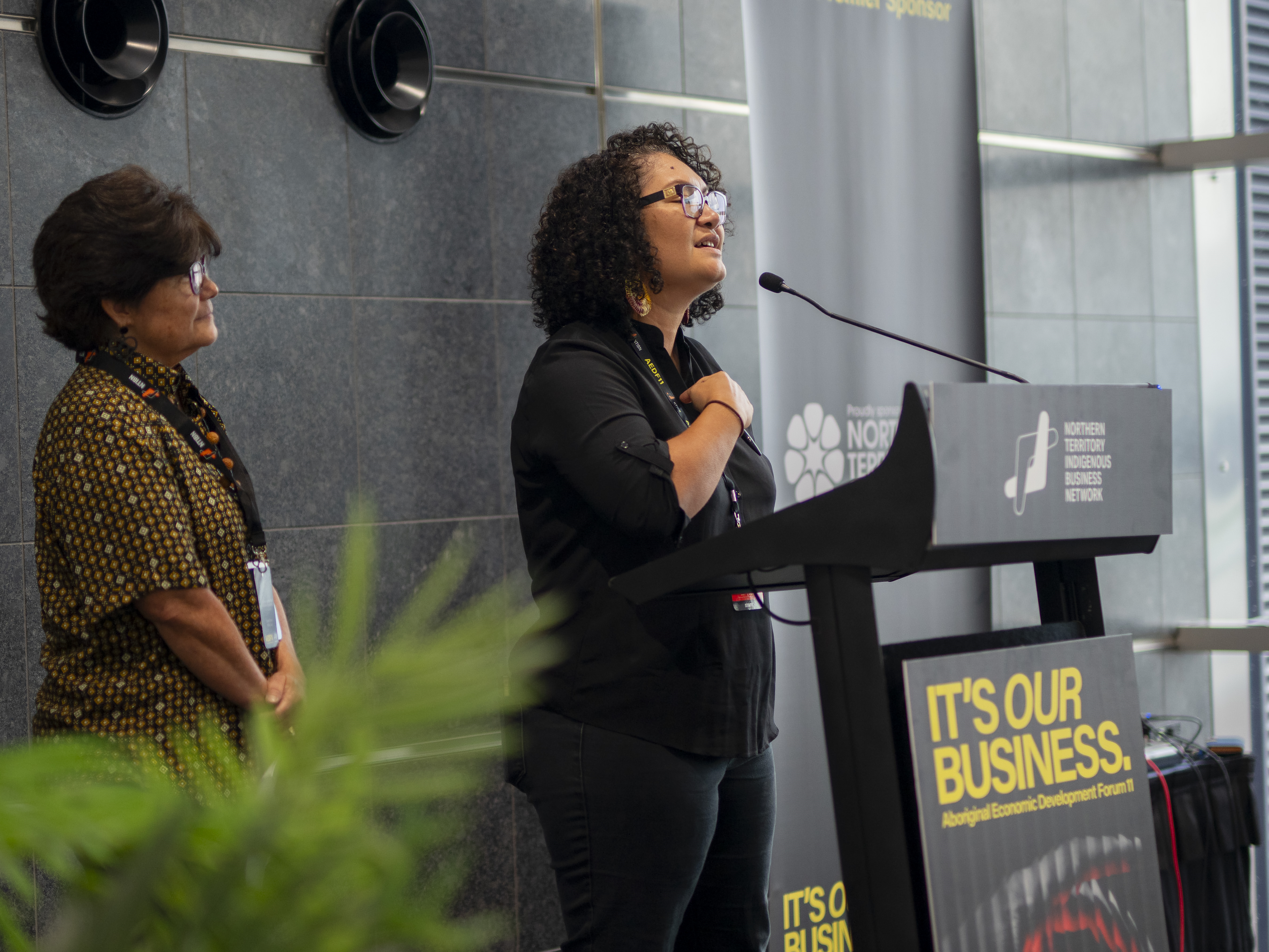
National Indigenous Business Chambers of Australia chair Naomi Anstess said the concentration of half of all IPP value in just 18 companies "is not a success story but a structural red flag."
"IPP is hitting targets, but it's not hitting the mark," she told the Indigenous Business Review. "This data shows the benefits aren't flowing to our communities. They're pooling in Canberra and in businesses that meet the minimum definition, not the spirit of it."
Ms Anstess said the issue goes beyond distribution and reaches into governance.
"Indigenous people must have authority over how Indigenous procurement works," she said. "IPP was groundbreaking, but it hasn't evolved. If the policy doesn't mature, its outcomes won't either. We need transparency, we need accountability, and we need Indigenous-led reform—not just reporting that tells a good story on paper."
Although the Minister for Indigenous Australians, Senator Malarndirri McCarthy, did not directly address the concentration concerns raised in the study, she said the government remains committed to strengthening the policy.
"More than 4,600 Indigenous businesses have been awarded Commonwealth contracts under the IPP," she said. "The IPP is an important part of First Nations economic empowerment, supporting the growth of the Indigenous business sector and significantly increasing the Commonwealth's purchasing from First Nations businesses."