





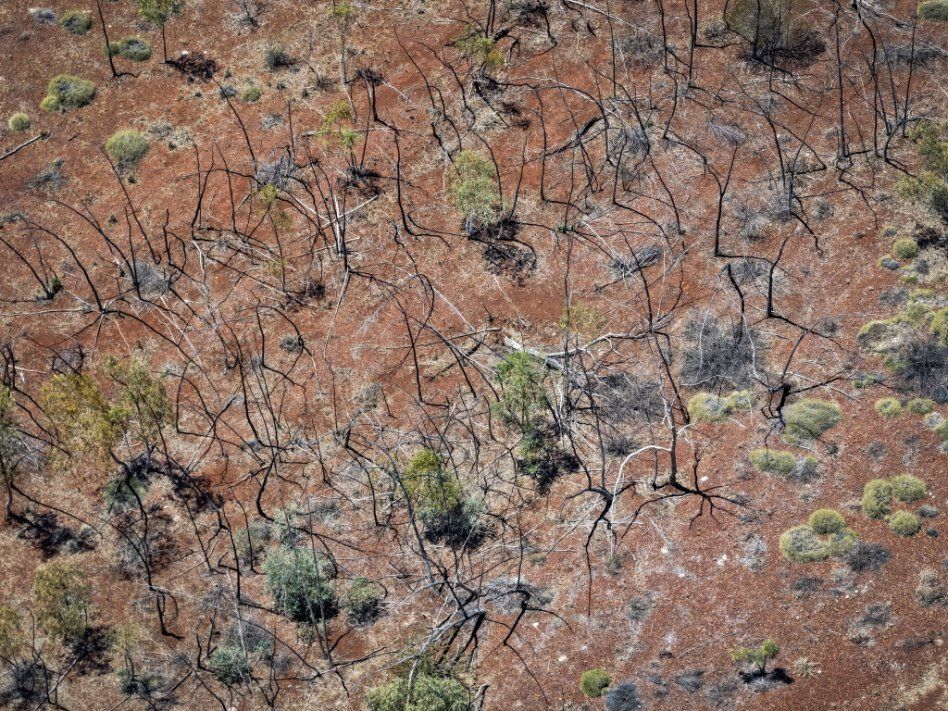
Yarrala, a waterhole in Western Australia's West Pilbara where Robe River Kuruma women once gave birth, has dried out and filled with red pindan earth, with Traditional Owners blaming Rio Tinto's groundwater extraction near its iron ore operations.
Robe River Kuruma Aboriginal Corporation representative Jason Masters used Rio Tinto's annual general meeting on Wednesday to question the mining giant over the environmental and cultural impacts of water pumping linked to the Robe Valley iron ore venture.
The Robe River Kuruma people hold native title rights and interests across parts of the West Pilbara where Rio Tinto operates several iron ore mines through the Robe Valley joint venture.
Mining and port operations in the Pilbara require large volumes of groundwater to be pumped from underground aquifers for ore processing, dust suppression and regional water supply schemes.
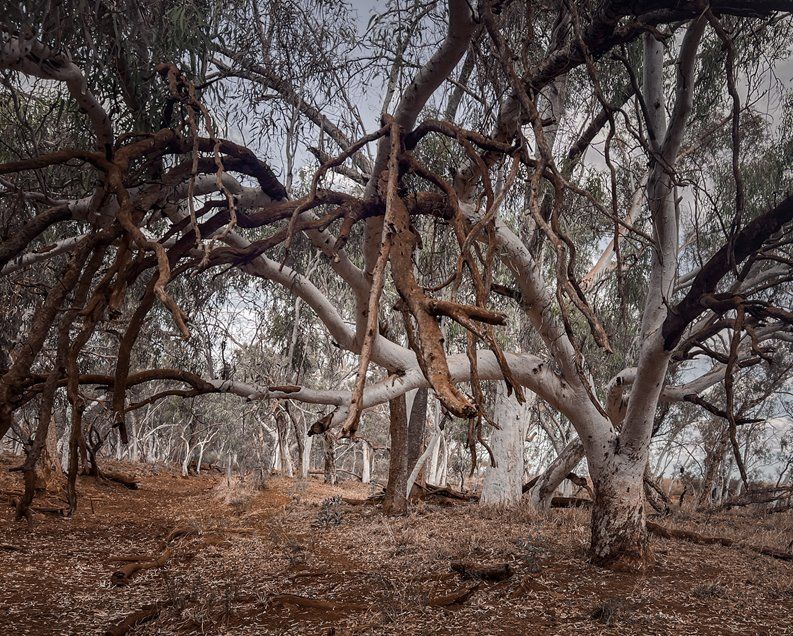
Robe River Kuruma elders allege the pumping has contributed to the drying of culturally significant waterholes and the death of river gums along Bungaroo and Jimmawurrada creeks.
Addressing Rio Tinto's board, Mr Masters asked what specific plan the company had to stop groundwater abstraction at Bungaroo and allow Country to recover.
He also questioned how the board defined "irreversible impact", asking why the drying of Yarrala and the loss of long-lived river gums did not meet that threshold.
Rio Tinto Iron Ore Chief Executive Matthew Holcz responded to Mr Masters in the meeting, saying the company had done a lot of work to reduce our abstraction, with the desalination plant coming online in the second half of the year.
"That will further reduce the abstraction as well, but I also commit to making sure that we engage in very transparent conversations with the Robe River Kuruma people on how we are going to go forward with a sustainable approach.
In a statement following the meeting, Robe River Kuruma Aboriginal Corporation chief executive Anthony Galante said Mr Masters had entered the AGM "carrying the weight of generations into that room", speaking on behalf of Elders about the condition of Country.
He described Yarrala as a place that "has held water since time immemorial" but is now "dry for the first time in living memory", while river gums along Bungaroo and Jimmawurrada creeks that "stood when our grandparents were born... are now dead".
Rejecting Rio Tinto's mitigation measures, Mr Galante said, "a reduction from six gigalitres to three is not restoration. It is slower damage," adding that "a desalination plant that goes live in 2026 does not undo what has already been lost".
He also questioned the company's approach to consultation, stating that "free, prior and informed consent does not begin after the mining has been planned around it".
Framing the impacts as cumulative and long-term, Mr Galante said the damage unfolding at Bungaroo reflected "slow violence — destruction dispersed across time, built up gradually", adding: "Juukan Gorge took a morning. Bungaroo has taken thirteen years. The harm is the same."
"Recognising that water is life, after the water is gone, is a value statement standing where a commitment should be," he said, concluding bluntly: "Country. Is still. Dry."