



There was much ado about something when Northern Australia's first cotton processing facility opened last August in Kununurra on time and on budget.
Hundreds of locals, growers, farmers, Traditional Owners, federal and state government leaders celebrated the North-West town's landmark $60 million Kimberley Cotton Gin, all hopeful the facility would herald a billion-dollar industry following decades of trials, tribulations and strategic planning.
No one had more at stake than the Kimberley Cotton Company, a consortium of three organisations - the Ord River District Cooperative (ORDCO), Kimberley Agricultural Investment (KAI), and the Miriuwung Gajerrong Corporation - established in 2021 to construct and manage the new cotton processing facility.
But they would be feeling fine about early signs Northern Australia's cotton industry could become a billion-dollar industry, with economic fortunes now favoured by the massive cost savings of transporting raw cotton 3,500km to Townsville and Queensland.
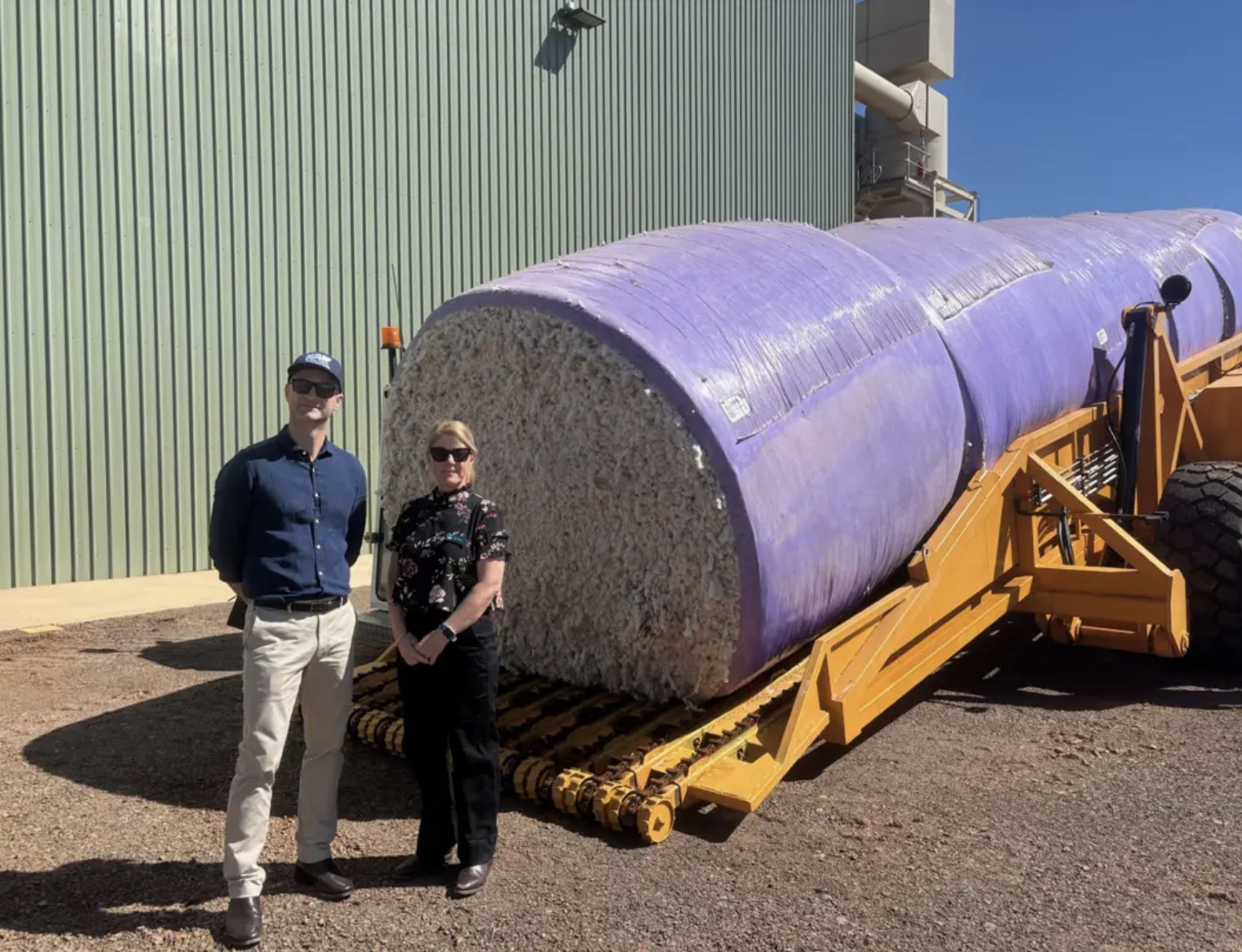
The gin facility 3000km north-east of Boorloo/Perth produced its inaugural harvest of cotton from the Ord Valley's vast farmlands, notching 81,000 bales when the last modules were processed in its first year.
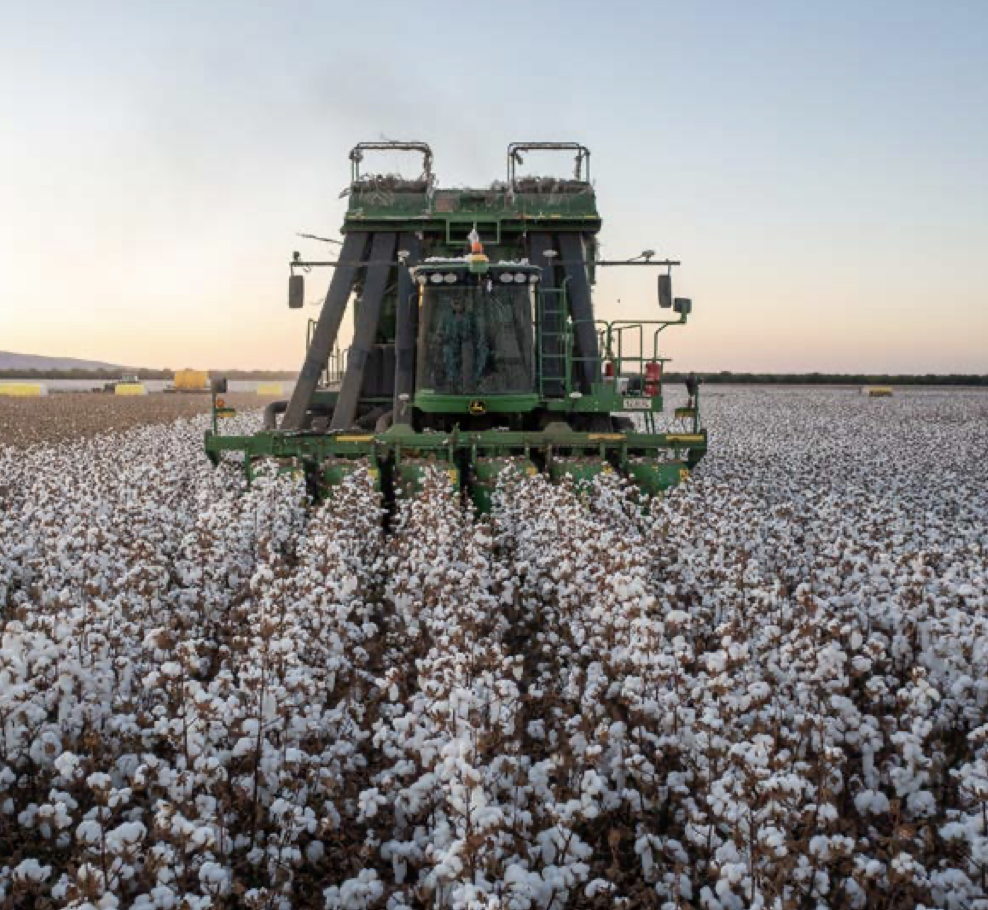
Kimberley Cotton Gin was away, thanks in part to the region's growers planting a record 10,000 hectares across the Ord Valley in preparation for local processing, up from 2,200 hectares the previous season.
For many established local farmers, 2025 was their biggest year of cotton production. There were also fresh insights on maximising the crop's potential.
It was a result key investor NAIF anticipated. Its $34 million investment in the Kimberley Cotton Gin was based on its estimated creation of $240m for the region and eventual billion-dollar industry nationwide.
The facility would provide capacity for the already successful industry to grow, initially processing between 100,000 and 120,000 bales a year and creating a. 1,000-plus workforce in the next decade.
NAIF's partnership with Kimberley Cotton Company supported construction and operation of the gin facility.
Set on a 79.4-hectare site, the gin runs entirely on hydro-electricity, making its power supply 100 per cent renewable and easing road transport costs for Kimberley growers to get their cotton processed.
Fine time for cotton processing
Craig Doyle, NAIF's former chief executive, said Kununurra Cotton Gin was a major step to establishing a robust and sustainable cotton industry in the region.
"We're proud to have supported this project from investment decision in 2021 through to opening," he said.
Kimberley Cotton Company chair Jim Engelke, who is also KAI general manager, said the cotton gin was just the beginning of development opportunities in the region.
"Investment is needed in enabling logistics, export facilities and the incremental increase in cattle management," he said.
NAIF has so far committed $4.3 billion in loans across 32 projects in northern Australia, supporting around 18,000 jobs.
The Fund said equitable and sustainable projects involving northern Australia's growing First Nations population - which represent 14 per cent of the total population compared to the 3 per cent average - was crucial to driving growth and local workforce and industry supply chains.
Traditional Owner group at the table
Traditional Owner Participation has been central to the industry's development, with Miriuwung and Gajerrong Corporation now moving beyond traditional land-use agreements to active commercial partnerships.
The Corporation is a founding shareholder and partner in the Kimberley Cotton Company (KCC), and hold a 10 per cent stake in the $60m processing facility.
It has conducted its own cotton growing trials on Traditional lands, such as the Goomig land parcels, in a joint venture with Cubbie Farming, and ensured the KCG included specific commitments to First Nations employment, training, and use of local Indigenous suppliers.
The facility not only makes local cotton crops like those on Miriuwung and Gajerrong Corporation's Goomig Land more viable, but would help drive generational wealth across the region, with more than 1000 new jobs on MG Country expected in the next decade.
Kimberley's local cattle industry would also benefit, with cottonseed - a by-product of ginning - an important source of animal feed.
Miriuwung and Gajerrong Corporation's cotton investment has extended beyond its stake in the professing facility. The organisation recently partnered with Duxton Farms to assist its cotton production across its Goomig farmlands, recently producing its first cotton crop.
"We're proud to be involved in this significant project," Miriuwung and Gajerrong Corporation said.
"The facility and cotton industry here will benefit MG Country and its people for decades to come, with opportunities to expand our cotton crops across the Ord."
After positive initial trials in 2017, through a record wet season, more than 350ha of the Ord River Irrigation Area was planted with cotton in 2018, which grew to circa 1,000ha following continued positive outcomes from the trials.
A major agricultural hub near Kununurra utilising Lake Argyle and the Ord River for gravity-fed irrigation, the ORIA covers more than 28,000 hectares, producing sandalwood, chia and fruits like mangoes and melons, along with cotton.
Expansion plans into the NT would see the area exceed 50,000 hectares, with the ORIA's key advantage in cotton production over eastern Australia being access to irrigated land, with a 95 per cent reliable water supply and consistently low water costs from Lake Argyle helping achieve stable yields each season.
Adjustment of cotton farming practices across the Kimberley are expected before next harvest, including growing shorter cotton, factoring nutritional considerations and improved irrigation systems and supply chains to maximise production and operational efficiency.
Wyndham Port powers cotton exports
Cotton grown will not only be processed in northern Australia but exported through nearby Wyndham Port, whose crucial role to opening up the industry drew the Prime Minister Anthony Albanese there during a visit to Kununurra in January.
Growers in the Ord were buoyed when the Port of Wyndham, 100 kilometres north-west of Kununurra, gained First Point of Entry (FPOE) status from the federal government last year, with the first shipment of locally-grown cotton - 60 containers each carrying about 104 bales of cotton - recently exported.
Having FPOE status will allow the Wyndham port to receive empty containers for immediate export and enable direct international shipping for the local cotton industry.
Mr Engelke said the processing facility and port upgrades were welcome in northern Australia, where development was often difficult.
"There are always significant challenges due to the remote location. Remaining flexible and focused is necessary to keep the project progressing."
Mr Engelke believes having ability to export local products such as cotton could usher a "major economic shift for the region".
"It's an exciting time for the whole region, and the unique challenges agriculture faces up here just makes the outcomes all the more rewarding," he said.
He believed the gin facility would strengthen Australia's reputation as a major cotton exporter and create opportunities in the country's northernmost regions.
Flow-on industries are also expected as cotton farming across northern Australia grows, with other service industries likely stimulated, such as farm support, transport services, equipment supply and maintenance, further embedding economic activity across the region.