





Indigenous workers in remote WA communities are gaining recognised qualifications in specialist clean-up roles through a training model designed to ensure participants complete projects with documented skills rather than informal experience.
Boorloo / Perth-based remediation and demolition contractor Merit Consulting Group has developed an on-site training pathway partnering with Aboriginal corporations and remote communities to train Indigenous workers in environmental remediation, demolition and asbestos-removal.
The program was developed after the company observed workers in remote areas were being recruited for regional projects but rarely received the formal certificates needed to use those skills elsewhere.
Merit Consulting Group director Steve King said ensuring workers received recognised qualifications had become a central focus.
"Too often people are told they'll be trained on a project, but when the job finishes they don't walk away with anything that formally recognises those skills," Mr King said.
"We wanted to make sure that if someone trained with us, they left with documented qualifications and equipment tickets they could take into future work."
The training pathway began during works in Bayulu near Fitzroy Crossing in 2020, where seven local Indigenous workers were trained on site over several months.
Merit Consulting Group paid for a qualified assessor to travel to site to oversee the training process, with workers gaining certifications across a range of heavy equipment including excavators, loaders and compactors, as well as highly specialised demolition and asbestos-removal training.
Many of those workers remain employed with Merit Consulting Group today, having since worked on projects including the Newman Hospital demolition. Others have used their experience and qualifications to gain employment on major state infrastructure projects such as the Fitzroy Crossing bridge rebuild.
Sonny Gordon, 37, was one of the first to go through the training pathway with Merit Consulting Group, when they arrived in his Bayulu community for site remediation and asbestos removal in 2020.
"When we first trained on asbestos, I had no idea how bad it was. They showed us how dangerous it is and how to handle it properly - all the safety stuff before you start a job," Mr Gordon said.
"There was asbestos everywhere in our community and as people saw us clearing it up safely they were really happy - even better having local boys doing that work. They say we have cleaned up the Kimberley."
Mr Gordon says getting proper training and certificates has given him the opportunity to work on projects across the state.
"Before working with Merit, I knew how to use the machines a bit, but I didn't have any tickets then. I wouldn't have got those certificates if they hadn't put the time into me. Now we've got more jobs coming up and the boys are keen to get out there and make some money for the family."
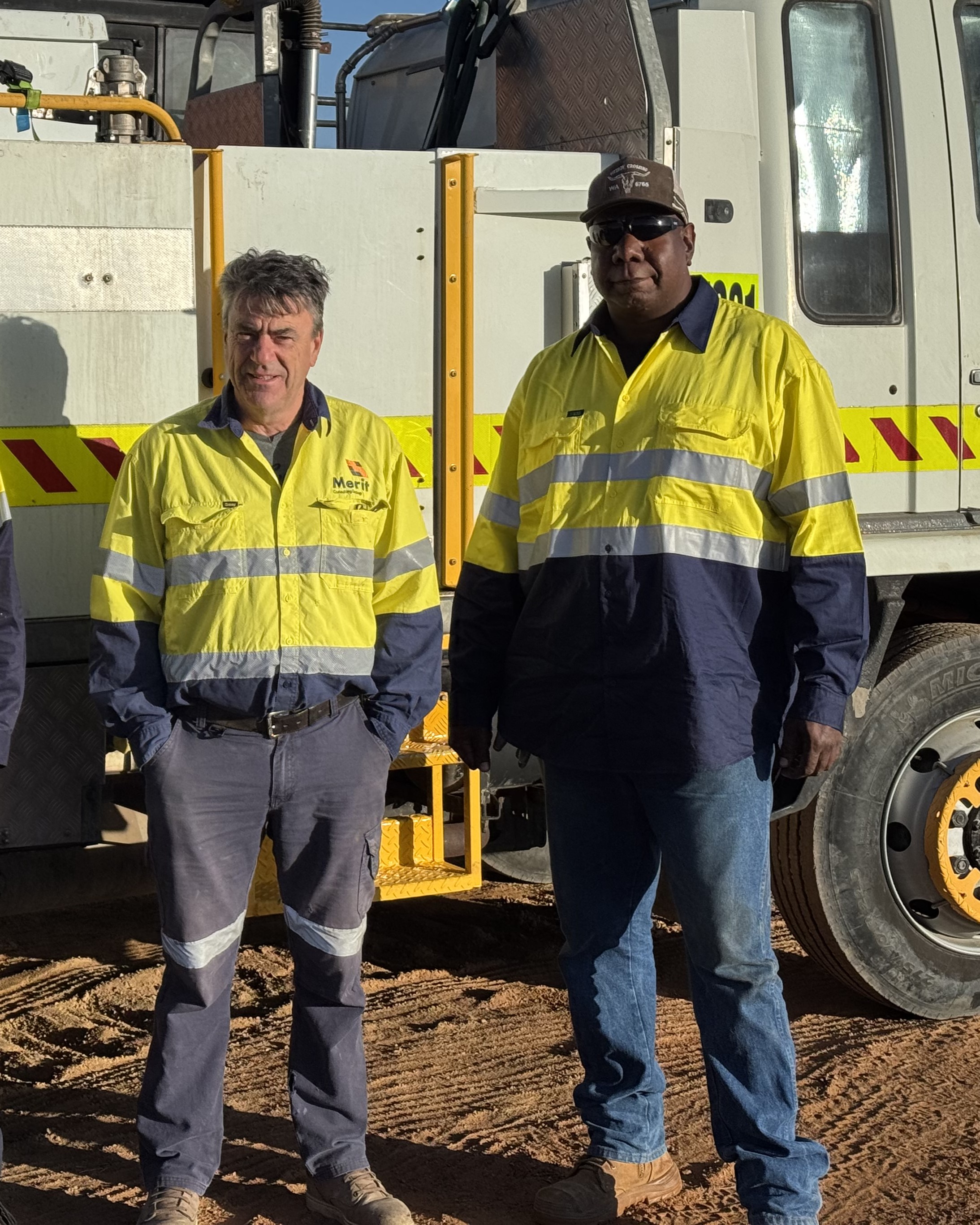
Mr King said the program takes the training to the communities where projects are being delivered.
"Western Australia is a vast state and many of the projects we work on are in remote locations," he said.
"When local workers gain the right skills and qualifications, it helps build capability in those regions while also making projects easier to deliver."
Sourcing skilled labour from Boorloo / Perth can often be challenging, the company noted, with a limited pool of workers willing to travel long distances and work in isolated environments. Transporting metropolitan crews also adds significant travel, accommodation and logistical costs.
Mr King said working with communities also required businesses to understand and accommodate cultural responsibilities.
"Taking the time to work with communities and understand cultural considerations is critical. From the start, we have been prepared to work with that and show flexibility. When businesses respect those cultural considerations, it builds trust and the working relationship becomes much stronger," he said.
On a current remediation project near Southern Cross, Indigenous workers make up around half of the workforce on site.
Mr King said the program worked because of the focus on building trust with local communities.
"Employing local Indigenous workers allows us to learn about the local culture and establish trust with the community. When that trust is built, projects tend to run more smoothly and the benefits flow both ways."
He said the experience had reinforced the importance of businesses investing in practical training opportunities when working in regional communities.
"A business should contribute something back to the places it operates in," Mr King said.
"If we can help people gain skills, confidence and long-term employment, that's a win for everyone."