



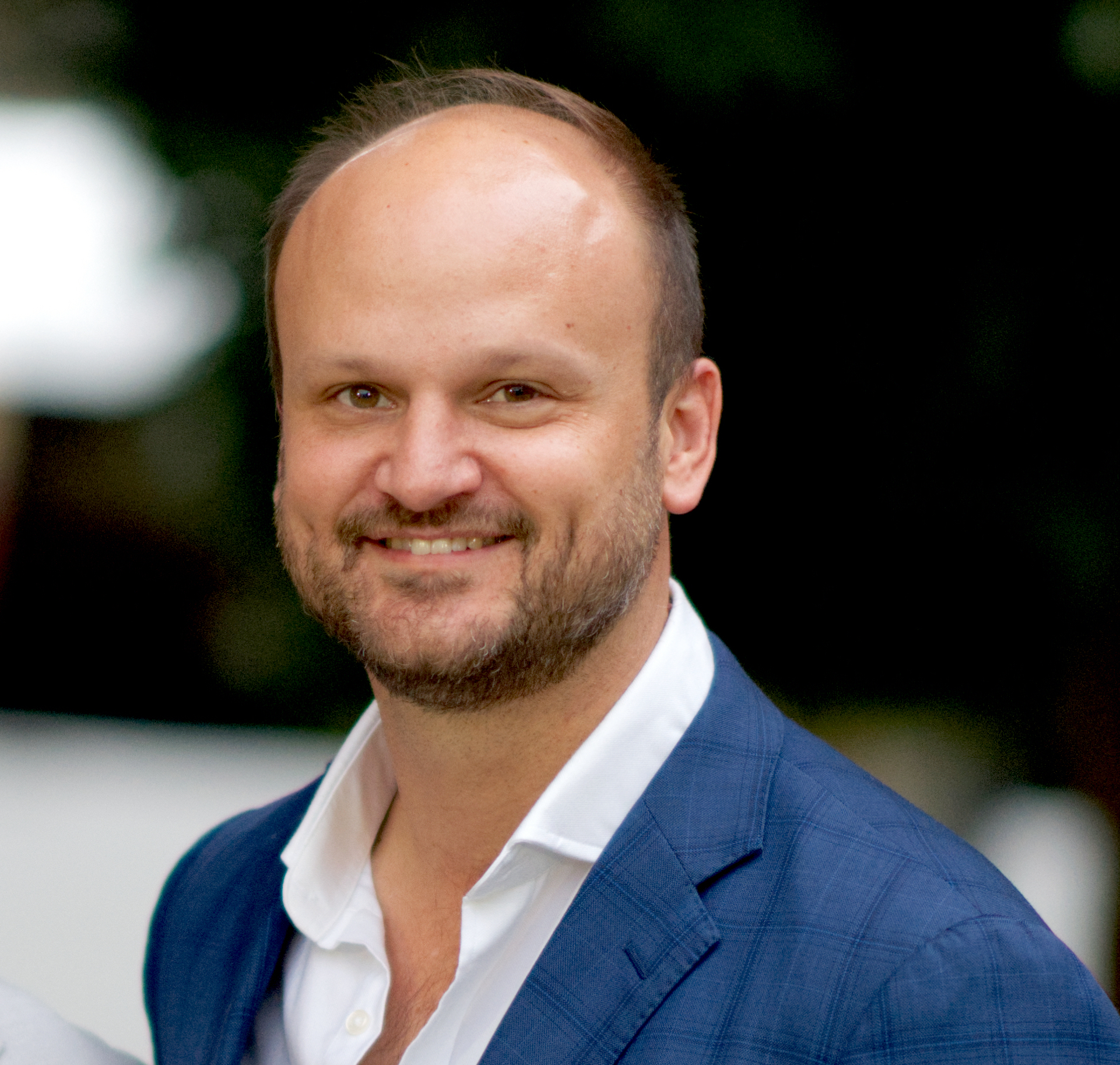

When Anthony Faingaa finished his professional rugby career, he faced a question that many elite athletes eventually confront. After years of discipline, structure and identity tied to sport; where do you go next?
For Faingaa, the answer was not immediately obvious. What was clear, however, was that the transition from elite performance into the workforce was not always straightforward.
"I sort of thought, where do people like me after 17 years of rugby get an opportunity to work," he says.
That question became the starting point for what is now Moonyah Workforce, an Indigenous-owned labour hire and workforce solutions business operating across construction, infrastructure, resources and civil sectors.
Founded in 2019, the business has grown rapidly. Today it deploys between 200 and 500 workers daily across New South Wales, Queensland, Western Australia and the Northern Territory, supported by an internal team of around 20 staff and a large fleet of traffic control vehicles.
Yet for Faingaa, scale is not the defining measure of success.
"If I can provide opportunities for people, the rest will look after itself," he says.
From rugby to recruitment
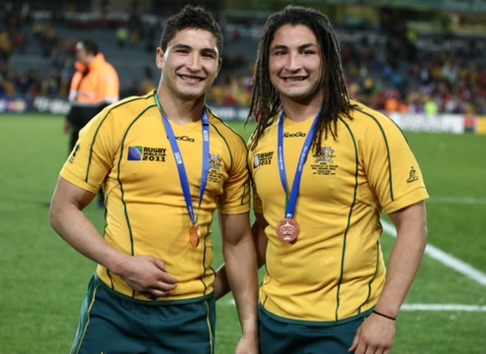
Faingaa and his twin brother Saia built their careers in elite rugby, playing at the highest levels in Australia. The lessons from that environment now shape how the business operates.
"I'm in the people business. Everyone's getting out of people," Faingaa says.
The comparison between sport and business is direct. In rugby, success depends on aligning individuals with different strengths and perspectives toward a shared outcome. In workforce services, the same principle applies across job sites, crews and client expectations.
"Every week we bring people together with totally different opinions to try and get an outcome. That's exactly what we do now," he says.
A 'safe house' built on family values
The name "Moonyah" comes from the Bundjalung language and translates to "safe house". It reflects both the founders' cultural heritage and the environment they are trying to create.
"We wanted to build a safe house where people from any walks of life can get the opportunity to work," Faingaa explains.
That philosophy is grounded in personal experience. Raised in Queanbeyan, Faingaa speaks candidly about growing up in a family that worked hard and valued respect above all else. His father worked multiple jobs. His mother and grandmother were central figures in shaping the family.
"My mum was the backbone," he says. "My mum and my grandmother were just the strongest women in my life."
His Aboriginal heritage, including a grandmother who was part of the Stolen Generations, has also shaped his perspective on identity and responsibility. From a young age, he and his brother worked to reconnect with their culture and community.
That experience now informs how the business engages with people.
"Whether you're a billion-dollar businessman or you're, you know, to get into the pub like my father did, we give you the same respect." he says.
Labour hire, but not as a transaction
At its simplest, Moonyah Workforce provides labour hire and traffic management services. That includes supplying workers to construction sites, manufacturing facilities, mining operations and infrastructure projects.
But Faingaa is clear that the business is not designed to operate as a transactional intermediary.
"There are a lot of labour hire companies. But we're not a faceless business," he says.
Instead, the company focuses on maintaining a connection with its workforce, even as it scales. Induction processes emphasise the company's story, values and purpose. Leadership remains visible on sites. Workers are treated as part of a broader system rather than interchangeable inputs.
This approach is also critical in a competitive labour market.
"If the business doesn't mean something to our workers, they'll go somewhere else for another dollar," Faingaa says.
Diversity, not exclusion
As a Supply Nation-certified Indigenous business, Moonyah Workforce operates within Australia's Indigenous procurement landscape. However, Faingaa is deliberate in how he frames the company's role.
"We give anyone an opportunity. Black, white or yellow," he says.
Around 15 to 20 per cent of the workforce identifies as Indigenous, alongside a significant proportion of female employees. The emphasis is on inclusion rather than restriction.
"I look at us as a diverse business. An equal opportunity business," he says.
At the same time, the company plays an important role in supporting Indigenous workers into employment. That includes creating culturally safe environments where communication is prioritised and expectations are managed with clients.
"If people need time, they need time. Our job is to communicate that properly with the client," Faingaa explains.
The goal is to remove barriers that often lead to disengagement or job loss, while maintaining accountability and continuity of work.
Growth, capital and capability
Like many fast-growing service businesses, Moonyah Workforce has relied on access to working capital to scale. Faingaa credits strong banking relationships for enabling that growth, particularly in structuring finance for equipment, vehicles and operational expansion.
The business has also invested in technology, using digital systems and AI tools to improve efficiency in areas such as job allocation and administration.
"If I started this seven years ago without the technology we have now, I would have needed twice the staff," he says.
This combination of labour-intensive service delivery and technology-enabled operations reflects a broader shift in the sector. While automation may reshape parts of the economy, Faingaa sees continued demand for skilled and semi-skilled labour.
"We're focusing on the people business because everyone's getting out of it," he says.
Looking ahead
For Faingaa, the next phase of growth is both commercial and symbolic.
The Brisbane 2032 Olympic Games represent a major opportunity. He wants to see Moonyah Workforce visible at a national level, contributing to major projects and representing Indigenous business capability on a global stage.
"I would love people to see Moonyah cars and people representing Aboriginal businesses when they arrive," he says.
Beyond that, the ambition is straightforward.
"I'd love to give a thousand people the opportunity to work," he says.
It is an ambition grounded less in scale for its own sake, and more in what scale represents. Each additional placement is another person connected to income, stability and a pathway forward.
For Faingaa, that remains the measure that matters.