




Two remote Northern Territory communities are set to benefit from cleaner, more reliable power, with the federal government backing First Nations-led microgrid projects with $11 million in funding through the Australian Renewable Energy Agency (ARENA).
The projects at Borroloola and Santa Teresa (Ltyentye Apurte) will support local communities to design, develop and lead their own energy solutions, improving power reliability, affordability and energy security in areas where the electricity grid does not reach or is currently unreliable.
They will also help create a pipeline of local skills and training, with 10 Certificate II places in Construction and Renewable Energy Pathways and two electrical apprenticeships to support jobs during construction, operations and future energy projects in the region.
The Borroloola community's Ngardara Solar Microgrid project with receive $8.347M in funding.
The grant funding from ARENA's Regional Microgrid Program, First Nations' stream also helps unlock access to private and philanthropic investment, placing the project on track to achieve financial close by mid-2026 with construction commencement targeted to begin in September.
An Australian-first, the microgrid project is a model of utility-scale and First Nations' community-owned renewable energy, with design and development co-led by First Nations' renewable energy developer Original Power with the Borroloola community's Ngardara Cooperative as majority owner.
Massive reduction in reliance on diesel
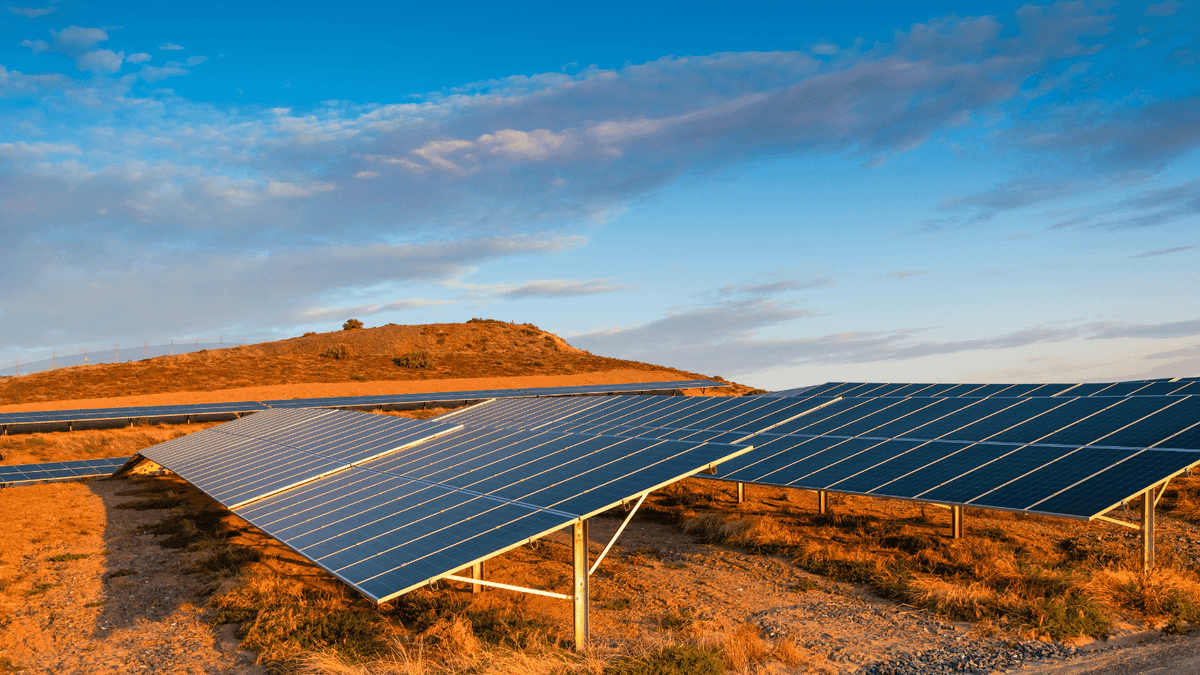
Comprising a 2.1 megawatt (MW) solar array and 1.8 MW / 6.6 MWh battery, the microgrid project has been designed to assist the Borroloola township to achieve up to 80 per cent renewable energy penetration; saving the Northern Territory Government 1.2 million litres of diesel every year, offering electricity cost reductions to First Nations' households, and reducing government subsidies required to mitigate volatile diesel wholesale costs.
The project is proposing a commercial model where the revenue generated by the community microgrid will be shared with local First Nations' households to provide electricity bill relief through a benefit sharing arrangement pioneered by Original Power, delivering "solar credits" direct to household prepayment meters.
The project has sector-leading potential, and as a first-of-its-kind development, it has overcome major development hurdles resulting from a lack of fit-for-purpose regulatory, technical and commercial assessment and approval processes.
Once operational, the project is set to transform the Territory's high-cost and diesel-reliant remote energy landscape and put First Nations' project owners in the driver's seat of delivering just transition pathways to lower cost, clean and resilient energy systems.
'First Nations communities are seeking to drive renewable energy solutions'
Madie Sturgess, Original Power Co-Director, said the Ngardara Solar Microgrid project "directly challenges" legacy energy systems to "innovate and evolve to the emerging reality that First Nations communities are seeking to drive renewable energy solutions that can overcome long-term challenges to energy access and affordability".
"Despite underdeveloped regulatory frameworks and traditionally monopolistic energy arrangements, the Ngardara Solar Microgrid project has driven the Northern Territory energy sector to co-deliver a viable blueprint for genuine ownership and benefit of local energy futures - the democratisation of energy for communities historically excluded from the renewables transition," she said.
Ngardara Company Chair Scott McDinny said the project demonstrates that "when community-led solutions are enabled through the right policies, resourcing and partnerships, we can overcome decades-old challenges around the high cost of remote power generation, solve household disconnections and build genuine economic prosperity and independence for our regions".
"With a workforce trained and ready to go, we're looking forward to breaking ground on this visionary project in coming months," he said.
Original Power Executive Director Karrina Nolan said the Ngardara Solar Microgrid shows "the incredible capacity of our communities to implement solutions to our own challenges'.
"The ... project showcases a model for access to cleaner, more affordable power for remote communities, with significant benefits back to households, government, retailers and utilities."
Bill savings of up to 50 per cent
Over its 25-year lifespan, the project intends to offer substantial benefits including: bill savings of up to 50 per cent for Borroloola households on prepayment meters resulting in reduced disconnection events, and lease payments to Traditional Owners; improved grid supply and security enabled by smart energy asset deployment, displacing diesel reliance and building economic and climate resilience; and delivery of a local workforce development program, including ten Certificate 2s in Construction and Renewable Energy Pathways and two electrical apprenticeships, to secure construction and operational phase jobs and skilled labour for other future local energy productivity activities.
Federal Minister for Indigenous Australians, Senator Malarndirri McCarthy, and the Special Envoy for Climate Change Adaptation and Resilience, Kate Thwaites, met on Thursday with trainees at Charles Darwin University, who are acquiring skills in connection with Borroloola's Ngardara microgrid project.
In Santa Teresa (Ltyentye Apurte), near Mparntwe/Alice Springs, ARENA is supporting early-stage planning and design for a proposed First Nations-led microgrid being developed with Atyenhenge-Atherre Aboriginal Corporation. The project has the potential to improve reliability and supply around half of the community's electricity from renewables.
A local energy model for remote communities across the country
Both projects have the potential to provide a blueprint for scalable, community-led microgrid models in remote communities across Australia.
The investments are being delivered through ARENA's Regional Microgrid Program, which includes $125 million to support microgrid technologies in regional and remote communities, including $75 million specifically allocated for First Nations communities.
Senator McCarthy said reducing the reliance on diesel for power and electricity in places like Borroloola and Santa Teresa is "critical to improving energy security and affordability in remote communities".
"Community-led microgrid projects mean more reliable, clean energy while at the same time supporting local training and job opportunities," she said.
"These projects show what is possible when communities design and lead their own energy solutions."