



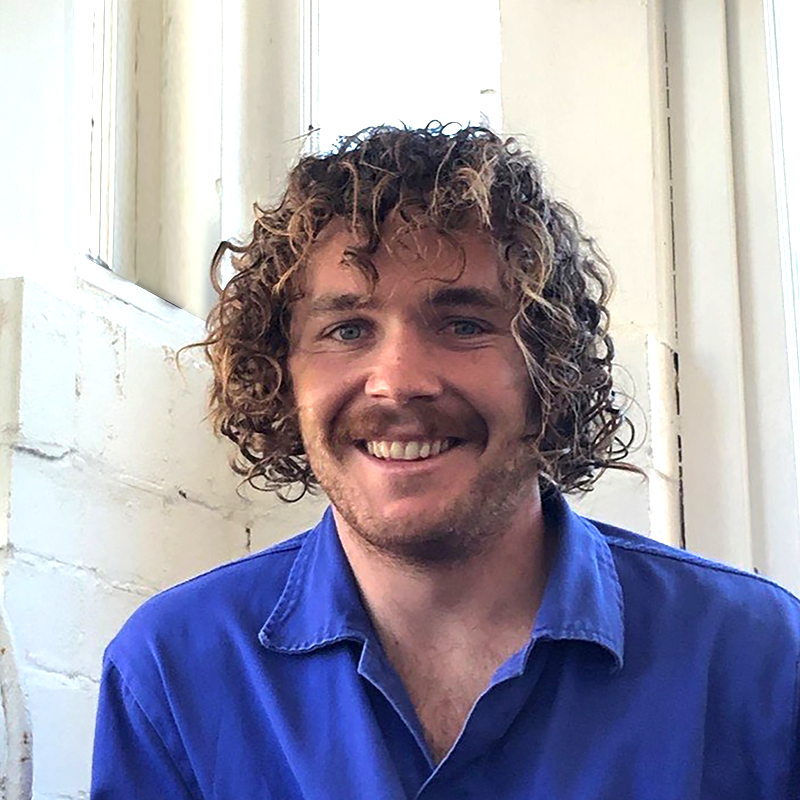

From restoring the health of Country and ecosystems to economic self-determination with yabbies by the tonne, First Nations Victorians are driving success in the state's agriculture.
The next generation is being encouraged to join them.
In 2020, the Victorian Government announced a four-year, $50 million dollar Agricultural College Modernisation Program to help support people pursue careers in agriculture and meet growing skills and international market demands in the sector.
Out of it came garinga djimbayang - its name meaning 'to grow and learn' in Dja Dja Wurrung Language.
The program, through the ACMP, offers grants between $300,000 and $1 million supporting Registered Aboriginal Parties and TAFE partnerships to embed First Peoples knowledge and practice into culturally-safe, supportive agriculture training.
On Thursday, garinga djimbayang unveiled 'Sharing Stories of First Nations Peoples' Connection to Agriculture' - a initiative where the individuals already involved and leading the way tell their story.
The launch coincides with World Food Day, on October 16.
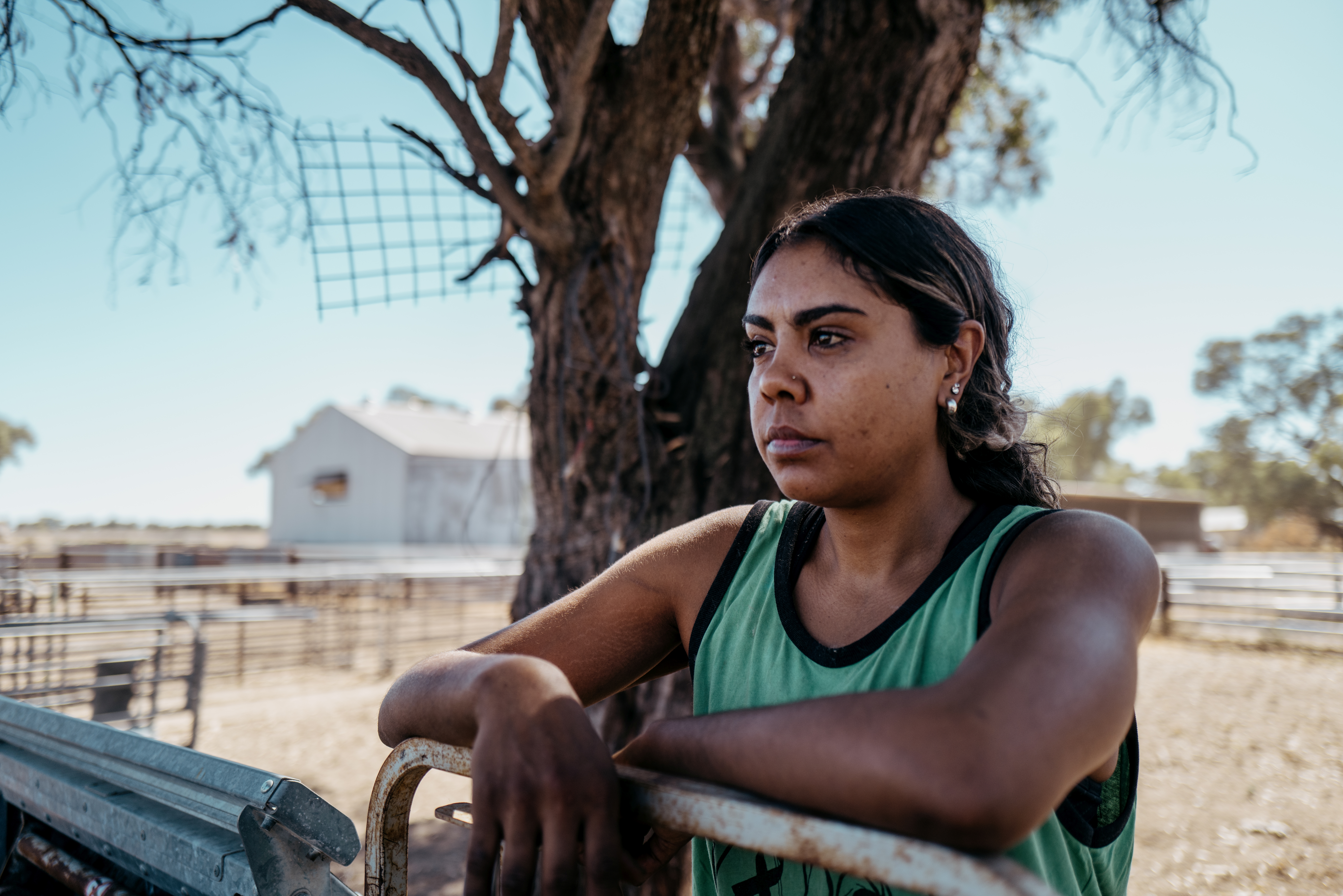
On Yorta Yorta Country in Victoria's north, cousins Noelly and Desrae 'Dede' Atkinson are carrying on with the family business - running a shearing business which was once their Pop's.
Around 15 workers are on the books at Atkinson Shearing.
"I was just his main shearer for 15 years and now I'm the boss. I was a bit nervous, but it's all been going well. It's been a good, good ride," Noelly Atkinson said, who arrived when his uncle Clint was running the business.
He knows the hard work needed personally, in an industry where it pays off, literally, by how many sheep you get through in a day.
"So, if you're a hard worker, the more money you make. It's got me a long way. I've built two houses as a shearer," Noelly said.
Atkinson Shearing's work and team can find itself spread between different properties, sometimes at other ends of the state.
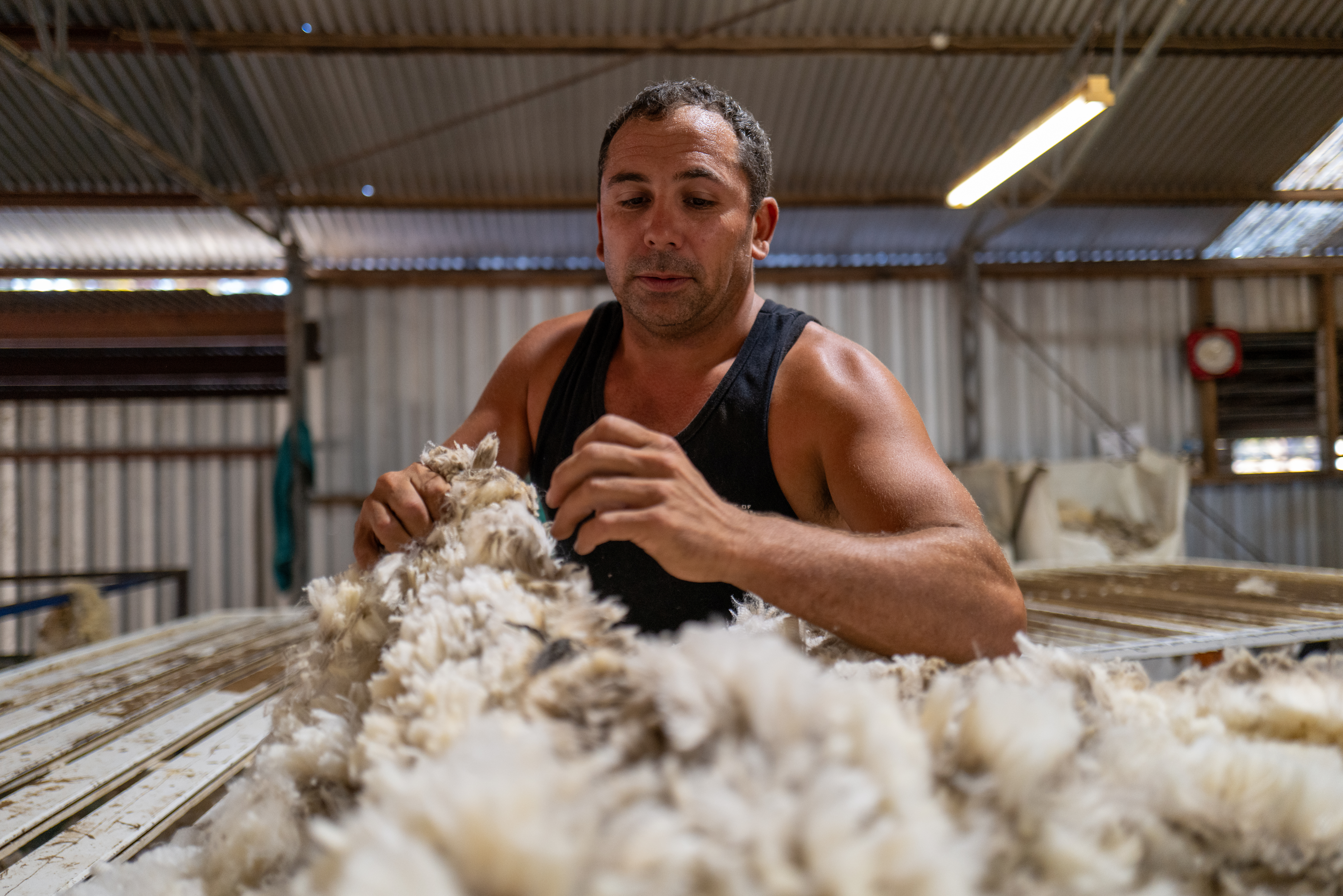
New rouseabouts (non-shearers, often new entrances to the sheds who help clear and skirt the wool of dirt and debris) are supported to go to shearing school to develop their skills in the trade.
"A lot of the old blokes used to say, you're not a gun shearer until after about six years of shearing. You can't just walk in and shear a sheep. It doesn't work like that. You've got to build up your body and there's a million little things to learn," Noelly said.
Dede has done exactly that.
Prior to coming across to the family business, Dede Atkinson worked in civil construction - obtaining heavy machinery and electrical qualifications there, and at a local abattoir post-school.
"Women weren't allowed to learn how to do the high pull on the kill floor. But I proved them wrong. Before the shift started, I'd go up there and just watch and learn until I got it," she said.
"The supervisor finally gave me a run, and I already knew how to do it."
She started as a rouseabout before going to the two-week shearing course, and is now completing qualifications as a wool classer.
Dede hopes others follow her into the sheds, maybe even her son.
"Working with my boy in the sheds, passing on the family tradition to our younger mob," she said of what the future might hold, "And encouraging more mob, more women and especially more Blak women in the sheds".
Dede and Noelly are two of a dozen individual accounts showcased in 'Sharing Stories
Produced by First Nations majority-owned and led communications agency Yarnology, the project showcases self-determined and unscripted stories from each participant with online resources and video.
It's hoped others are enticed to follow.
"Country was just calling me"
Wotjobaluk, Jupagulk and Jadawadjali woman Elizabeth Mace spent 30 years working in agriculture and horticulture before arriving at Dalki Garringa Native Nursery, where she's operations manager, near Horsham in Victoria's west.
Barengi Gadjin Land Council, who own and operate the nursery, represent the rights of Wotjobaluk, Jaadwa, Jadawadjali, Wergaia and Jupagulk peoples Traditional owners in the Wimmera.
"Country was just calling me, saying we need you. Everything just fell into place. It was ancestors 100%." Ms Mace said of being offered the role at Dalki Garringa Native Nursery.
It came when BGLC was developing their Caring for Country Plan.
At the nursery, a priority for the team is regenerating "broken land" with traditional practice, with young First Nations staff involved.
"For a couple of them, this has been their very first job. As we grow and become commercially viable, having more training is a big goal."
Gundidjmara man Chris Sheppard and Barkindji Mutthi Mutthi Wangkumara man Dylan Kelly both work in Healing Country at Worn Gundidj Aboriginal Co-operative nursery in Warrnambool.
The nursery is similalry championing economic opportunities with bush foods and cultural tourism.
Mr Sheppard, Worn Gundidj chief executive, had previously been a baker and pastry chef before a shift in agriculture.
"Turn up. Work as part of a team, learn a bit about bush foods, your culture and language while you're there. Then you can find your journey. It's a great start for young mob that want to get into the Ranger program or work on Country with Traditional Owners," Chris said to young people looking at a career in the broad sector.
For Mr Kelly, being at the nursery each day is like a reminder to his younger years as a kid in Mildura.
"Nan and Pop were always going fishing, going out camping. It's the same feeling that I got from them, that I get here when I'm on land, or when I'm working with nature," he said.
He's also sharing his knowledge in plants with his daughter.
Jamie Williamson was a member of the Yuma Yirramboi Councill working group who designed garinga djimbayang between 2021-2023.
Yuma Yirramboi was previously under the name of Victorian Aboriginal Employment and Economic Council.
"This program provides an opportunity for other First Peoples to see other career opportunities and other industries," Mr Williamson told National Indigenous Times.
"What really drove it in the early days was the notion of 'you can be it if you can't see it'.
"So this project takes that notion and provides an opportunity to a broader audience to see the different things that are out there within the agriculture fields."
Alongside expertise in the agricultural sector, working group members came with backgrounds in Aboriginal economic development, self-determination, community-controlled health and justice and education.
In addition to new opportunities and roles being presented, agriculture can also be an opportunity to enter careers in your community with strong opportunities outside more urban centres of Victoria, Mr Williamson explained.
"There's lots of opportunity within the agricultural sector overall, whether it's within your traditional beef, sheep, dairy farming or crops, or looking at the new markets that are opening up around bush foods," he said.
"There's definitely great opportunities which lay there and exist. And there's a lot of knowledge within First Nations people that could increase productivity and help ensure sustainability of not just the industry, but also the environment."
Mr Williamson said the culture sector is a sector which is changing.
"We're starting to see bringing more and more technology. For younger generations...who are more tech savvy than the rest of us...this is a great opportunity for them to still be able to be involved with technology and work at home or within their hometowns and communities, for those that grow up in regional areas."
DJAARA (Dja Dja Wurrung Clans Aboriginal Corporation) have a number of arms exploring and succeeding in economic self-determination on Country.
Their aquaculture and agriculture enterprise DJAKITJ is set on capitalising on opportunities with culturally significant foods.
On the way they utilise contemporary technologies in combination with traditional ecological knowledge.
DJAKITJ is set to house 60 yabby ponds, each twice the size of an olympic swimming pool, aimed to become one of the largest aquaculture projects in Australia.
As Kolby Keer put it, possibly the biggest in the Southern Hemisphere.
Mr Kerr is a Djaara and Yorta Yorta man, working on Country, as assistant farm manager at DJAKITJ in Lockington.
%20%20-%20Sharing%20Stories,%20Agriculture%20Victoria%20-%20supplied.jpg)
Some of the ponds have already been filled - initially with 4000 yabbies.
Once fully operational, the plan is to produce 15 tonnes of yabbies per year.
"If it's profitable and all working good, hopefully we'll build more in the next bay of the farm," Mr Kerr said.
"Hopefully in the future we have a restaurant on our own, and we can just deliver it directly there...and also to pubs around the place."
His work aligns closely with his hobbies - making things easy, he added.
"If you have opportunities, just take them....you might find out that you really like doing it," Mr Kerr said.
The farm is the result of DJAARA's purchasing of 200 acres, about an hour's drive north of Bendigo.
Producing food at scale was part of the vision, with packaging for local consumption to wholesale distribution now in the longer term.
Former DJAARA chief executive Rodney Carter said: "This is an example of a venture to provide support in economic development."
"Dja Dja Wurrung People are the decision makers. We're the owners. We have to accept the faults in things that might go wrong, and we get to celebrate the successes."
'Sharing Stories of First Nations Peoples' Connection to Agriculture' is available to explore online, via Agriculture Victoria, part of the Department of Energy, Environment and Climate Action (DEECA).