




Note: This report includes the name of person who has died.
The Traditional Owners of Country including Wittenoom have launched a $1.5 billion legal claim against the Western Australian government.
For decades state governments have resisted calls to clean up the legacy of asbestos contamination left by mining at Wittenoom, 1,400 kilometres north-east of Boorloo.
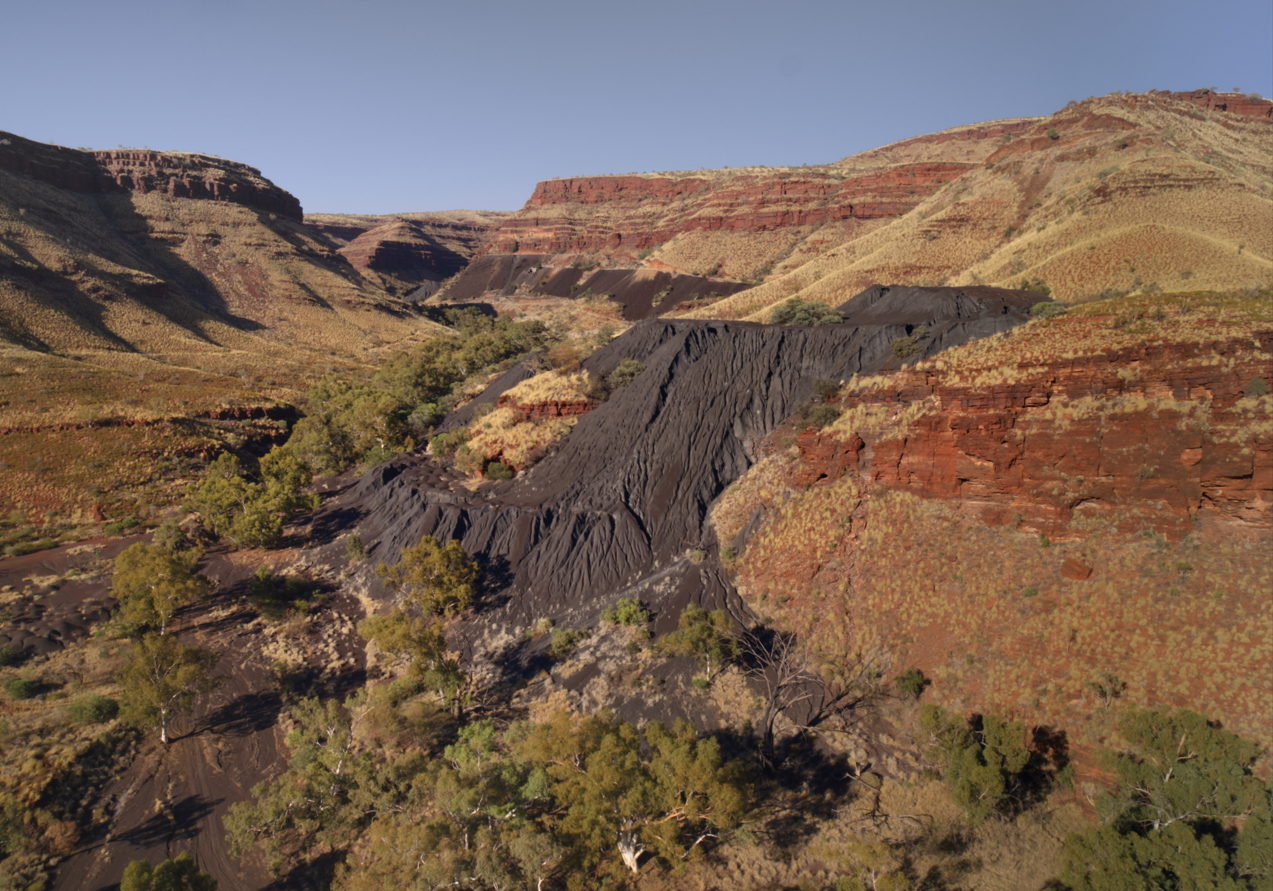
The Pilbara town was closed in 1978 and millions of tonnes of blue asbestos waste still surround three abandoned mines nearby. 46,000 hectares of Banjima native title land is quarantined because of the deadly contamination.
On Tuesday, the Banjima Native Title Aboriginal Corporation (BNTAC) formally launched proceedings in the Federal Court in Melbourne.
BNTAC Deputy Chair and Banjima Traditional owner, Johnnell Parker, said: "We Banjima people belong to one of the most beautiful parts of the world, and our connection to Banjima Country runs deep."
"As Uncle Maitland Parker said 'I still cry for Country, but that's embedded in me I just can't walk away from it'," she said.
"Despite the damage, our Elders have raised us to be strong and resilient. We carry in our hearts their strength as we continue the fight, to heal our Country, to protect it, and to ensure future generations can stand on healthy land and remain connected to who they are."
BNTAC is seeking the sealing of three mines, the removal of three tailings dumping grounds, the removal of the asbestos-built Wittenoom racecourse and airport, and the remedy of any gorges, rivers, and creeks that may have been polluted.
Traditional Owners will ask the Federal Court to divide the case in two, with the first phase focused on the orders to clean up Banjima Country.
The BNTAC expects this figure for the works, subject to expert evidence, to reach around $1.5 billion.
The second will deal with damages for both the asbestos contamination and what is alleged to be the WA Government's knowing participation in the dispossession and marginalisation of the Banjima people.
"Whilst there is a dollar value there, this is a community issue and not just a Traditional Owner issue," Ms Parker told the ABC.
"This is an environmental issue that's sitting in the most beautiful part of country and if it spreads out, then what are we going to do about it?"
In their statement of claim for the case, as reported, BNTAC lawyers argue the Western Australian government has denied Banjima native title rights by allowing the waste's continuous presence and spread. No action has ever been taken by the State to remove the waste.
The statement points to research by then-WA Senior Scientific Officer Peter Franklin, whose 2016 report found Banjima people had the highest per capita rate of mesothelioma incidence in the world.
Lead lawyer Peter Gordon, of Gordon Legal, said: "The relocation, dispossession, exploitation, and erosion of the cultural integrity of the Banjima nation will take generations to repair. But the longest journey to clean up the largest contaminated site in the southern hemisphere begins with a single step."
14 years after the closure of the town of Wittenoom, a WA parliamentary inquiry in 1992 recommended the asbestos tailings be removed.
In previous proceedings, Colonial Sugar Refining Company (CSR), which obtained the mining leases from Peter Wright and Lang Hancock, ultimately paid tens of millions of dollars in damages to former employees who contracted asbestosis.
At the centre of the BNTAC claim is the push to convince the Federal Court responsibility for the tailings has passed to the Western Australian government.
Mr Gordon told the ABC the state government has "owned, occupied and been responsible for the land upon which this contaminated waste has sat since 1979".
Senior Traditional Owner and successful business owner Rex Parker told National Indigenous Times that Indigenous-owned businesses should get the opportunity to manage remediation of the land.
"We would be cleaning up our own Country and getting it to a standard that it was like originally," he said.
Mr Parker said the work would have a dual benefit of restoring the land while providing opportunities for Indigenous businesses.
"The community would benefit a lot by cleaning it up, returning it back to the Traditional Owners. The State Government didn't want to have anything to do with it," he said.
Johnnell Parker's uncle Maitland, a revered Banjima Elder, died in 2024 after an eight-year battle with mesothelioma.
Mr Parker, whose story was told in an award-winning documentary, did not work in the Wittenoom mines, but as a ranger in the adjacent Karijini National Park.
Ms Parker said her uncle would be proud of the stand being taken by Traditional Owners.
"He would have the most beautiful smile and a laugh," she told the ABC.
"To be able to continue on what he started, for me, I'm very proud."