





The Kimberley Agriculture and Pastoral Company, known as KAPCO, is doing more than producing premium beef. It is shaping the next generation of Indigenous leaders.
As a 100 per cent Aboriginal-owned enterprise managing Mt Anderson, Myroodah, Frazier Downs and Bohemia Downs, KAPCO's vision has always been about people first, empowering its workforce to see themselves as future managers, trainers and community leaders who carry the story of the land forward.
Now, KAPCO is transforming the northern beef industry through its partnership with Rum Jungle Meatworks, a move that has given the company full control over its supply chain. For the first time, cattle can be processed close to their point of origin, reducing transport costs and time, improving quality, and delivering fresher, more affordable beef to local communities.
General Manager Greg Dakin said the change has been a game-changer.
"Being able to access service kill space at Rum Jungle has given KAPCO control over a commodity which was previously sold into southern markets. Being able to process in a location close to the point of origin and freight directly to the retailers has reduced costs and the subsequent price point for the consumers. By cutting out the middle man, it's a win-win for everyone," he said.
The shift allows KAPCO to provide local communities affordable high-quality food at a time when the cost of living continues to rise. It strengthens local economies and demonstrates what self-determination looks like in practice. Every part of the process, from paddock to plate, is now in Indigenous hands, creating jobs, skills and pride for people on Country - creating a positive ripple effect for the whole community.
With support from both industry and the public through buying KAPCO's beef, the Indigenous owned and operated company can continue to have a growing positive social impact.
For KAPCO, success is not only measured in profits. It is measured in people. Earlier this month, Mr Dakin led twelve of the company's stock staff from the Kimberley to Darwin for a week of ag-extension and leadership learning. The trip, entirely self-funded by KAPCO, gave the team the chance to see the full supply chain for KAPCO Beef and understand how their work on Country connects to the wider industry.
"KAPCO strongly believes in the development of our staff and we want them to stick around for the long term," he said.
"Being a private company, KAPCO self-funded the trip because reinvestment into staff development and extension provides excellent value for money with benefits that continue into the future.
"The value for KAPCO is having well trained staff that understand the end of the supply chain, the impact of low stress stock handling on the end product and a strong sense of pride in being part of KAPCO Beef and its fundamental goal of production of beef for its local communities."
The crew's itinerary was full and purposeful. They visited Parliament House, the Museum and Art Gallery of the Northern Territory, Humpty Doo Barramundi Farm, Tou's Garden, Berrimah Farm Science Precinct and Rum Jungle Meatworks.
For many, it was the first time leaving Western Australia.
"It was a significant event for many being the first time leaving Western Australia," Mr Dakin said.
"The exposure to not just the processing of KAPCO Beef but also other industries such as the Humpty Doo Barramundi and Tou's Garden really helped shape their broader view of agriculture in Australia.
"We hope that it has inspired the crew to look beyond our station borders and be proud of their contribution to the bigger picture of agriculture and food production in Australia."
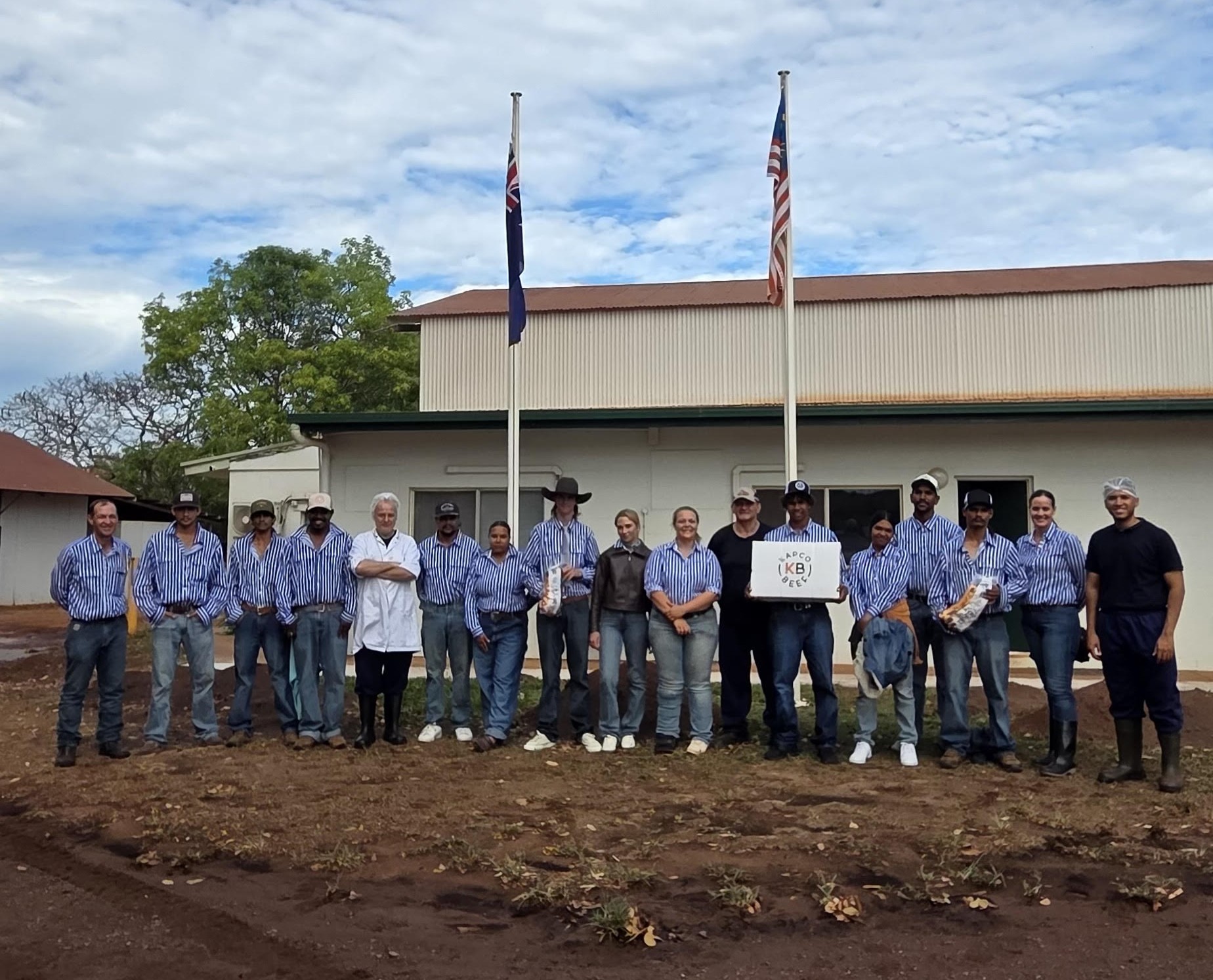
For Greg, the trip was about more than exposure; it was about building future leaders.
"The ability for staff to see beyond the station and state borders has provided the practical understanding and fundamental basics to support our own internal supply chains," he said.
"A better understanding of biosecurity requirements and potential outcomes supports our pastoral operations. We believe that knowledge and exposure will bring inspiration and understanding and our staff will strengthen and solidify their future career aspirations and see that their potential for careers on Country is limitless."
Looking ahead, Mr Dakin believes these experiences will shape KAPCO's legacy.
"KAPCO's development of KAPCO Beef provides support and sales avenues to the already strong pastoral operations. It changes the economic outcomes for those cattle from being a price taker to a price maker and strengthens KAPCO's ability to shape its own future," he said.
"Whilst KAPCO will continue to consider future development and expansion, we are confident that continued investment and development in our employees will reap benefits long into the future. The proven returns in investment in staff will be felt right through our operations and we will continue to build on that investment."
KAPCO's story is one of vision and leadership. By combining community empowerment, business innovation and cultural strength, it is redefining what success looks like in the north. From the paddocks of the Kimberley to the plates of local families, KAPCO is proving that when Indigenous people lead, everyone benefits.
Note: KAPCO chair Wayne Bergmann is a co-owner of the National Indigenous Times.