



Fiji has strengthened its commitment to climate-smart agriculture and regional collaboration with the opening of the Regional Workshop on 'Juncao Industry Development: Poverty Alleviation, Climate Change Response, Infrastructure Resilience Enhancement and Sustainable Development Promotion' in Nadi.
The event, held at the Sofitel, was officiated by Minister for Lands and Mineral Resources and Acting Minister for Agriculture and Waterways Filimoni Vosarogo.
The workshop was delivered in partnership with the National Engineering Research Centre of Juncao Technology at Fujian Agriculture and Forestry University and brought together participants from across the Pacific.
Mr Vosarogo said the partnership between Fiji and the People's Republic of China continues to grow through shared agricultural innovation and sustainable development.
"Fiji and China continue to build on decades of cooperation under the Belt and Road framework," he said.
"Our partnership has supported infrastructure, knowledge-sharing, and sustainable agricultural development."
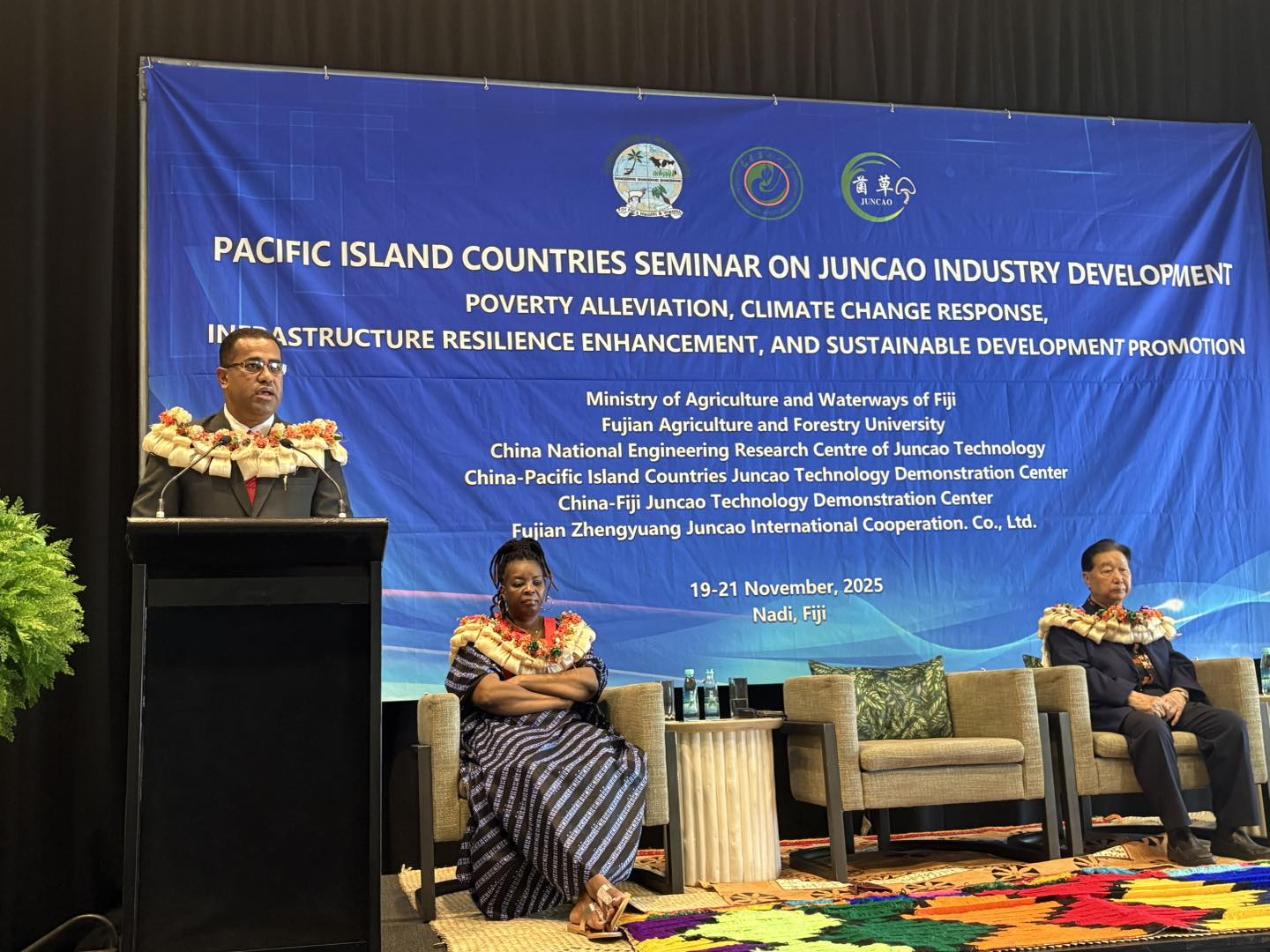
Mr Vosarogo reaffirmed Fiji's commitment to regional collaboration under the 2050 Strategy for the Blue Pacific Continent, noting that climate change remains the biggest threat to food and nutrition security.
"The introduction and expansion of Juncao technology in Fiji demonstrates China's commitment to green, low-carbon and poverty-alleviating agricultural innovation," he said.
"This initiative directly supports the 2030 Agenda for Sustainable Development and strengthens our region's ability to withstand climate shocks."
Juncao is a hybrid grass developed by Chinese scientists that supports mushroom cultivation, livestock feed production and soil restoration.
The China-Fiji Juncao Technology Demonstration Centre at Legalega Research Station includes research plots and a seed breeding base covering several hectares.
The project has now entered Phase 3, focusing on commercialising mushroom production, promoting Juncao grass for livestock feed, empowering rural communities and restoring degraded land.
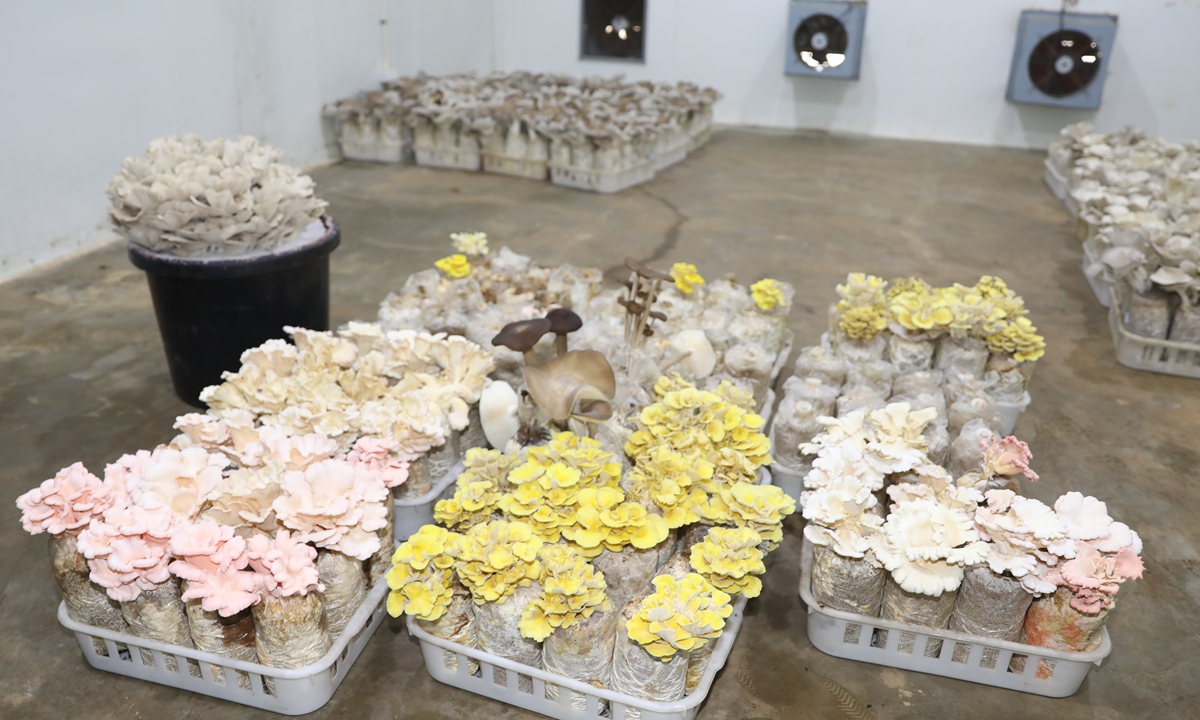
"Farmers are now cultivating what we call the 'Super Grass' to produce high-quality mushrooms, livestock feed and to address soil erosion," Mr Vosarogo said.
"This technology is improving livelihoods, empowering women and youth, and building climate resilience in our rural communities."
According to the Ministry, Fiji's Juncao program has achieved a series of important outcomes across education, training, and community development.
It has hosted an international symposium in 2024 with 20 participating countries, along with two regional symposiums that brought together representatives from 10 Pacific nations.
Across Fiji, 65 local training sessions have been delivered for 2,800 Juncao technicians, while more than 3,000 students have taken part in practical learning programs designed to build agricultural skills.
Curriculum work is now underway to include Juncao studies in Year 13 agriculture, supported by 80 participants who have completed advanced training in China.
To date, more than three million Juncao grass cuttings have been distributed to 2,500 farmers, with women representing 34 per cent of the 3,500 farming households involved.
The initiative has also expanded Juncao cultivation to 16 villages and supplied 223,612 mushroom substrates, equipment, and materials to support six production bases nationwide.
Under the guidance of Chinese experts, Fiji now cultivates seven mushroom varieties, including oyster and Ganoderma mushrooms, with over 600 farmers engaged and more than 500 hectares under Juncao cultivation.
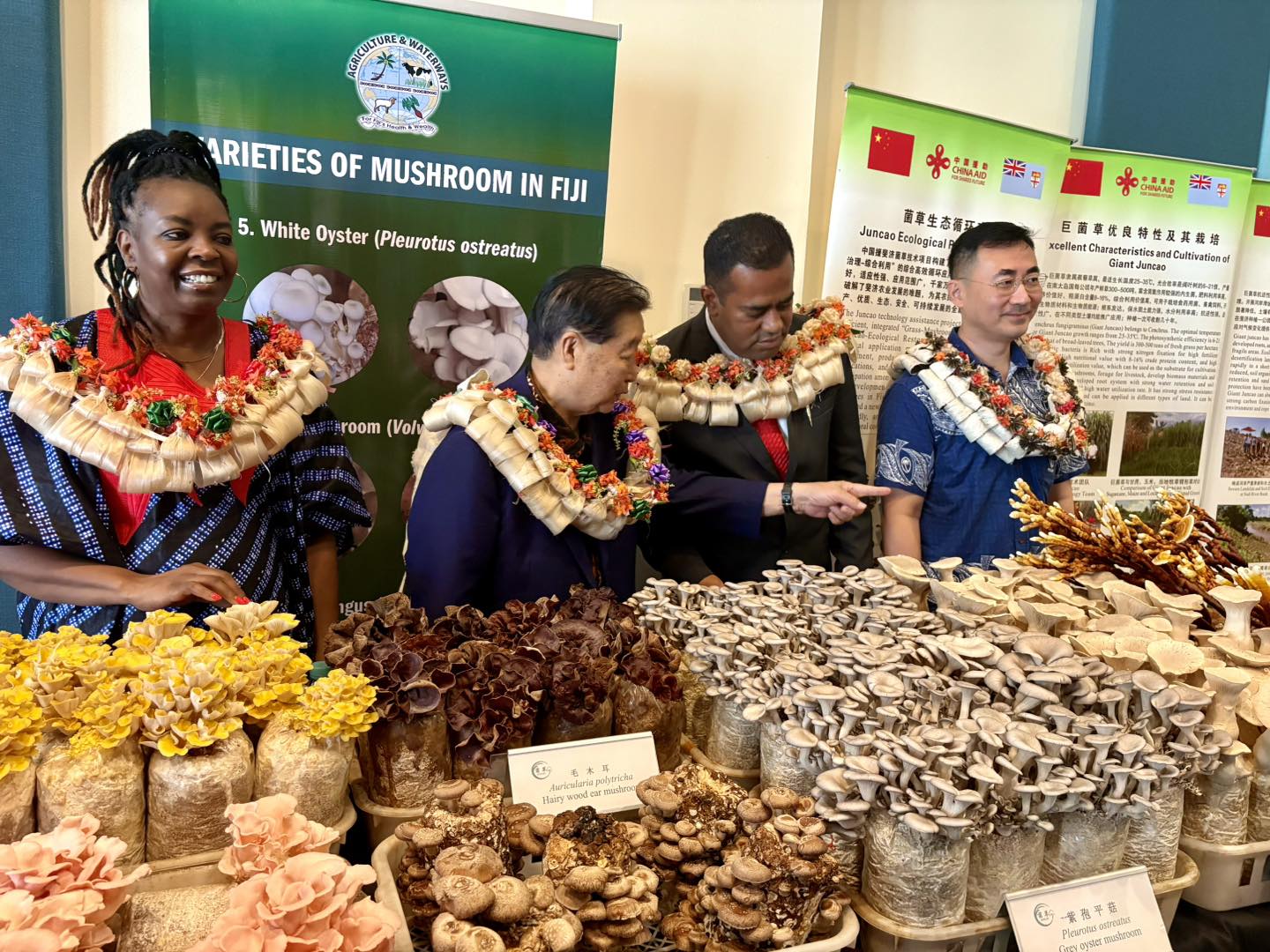
The technology has also proven effective in reducing soil salinity and erosion.
Trials in Nadi showed that soil salinity dropped from 1.9 per cent to 0.3 per cent within four months.
Farmers along the Nadi River have used giant Juncao grass to stabilise riverbanks and improve crop growth.
Fiji currently imports about 100 tonnes of mushrooms each year, valued at $0.9 million, mainly for the tourism sector.
Mr Vosarogo said Juncao technology provides a pathway to meet domestic demand and reduce import costs.
"With innovative development models and the expansion of mushroom production bases, Juncao technology can help Fiji meet domestic demand, reduce import costs and strengthen food security," he said.
The China-Pacific Island Countries Juncao Technology Demonstration Centre, launched in 2023, has extended support to Vanuatu, Tonga, Samoa and the Federated States of Micronesia, supplying technical expertise, training and plant materials.
The regional centre features automated equipment and controlled cultivation systems with an annual production capacity of around 300 tonnes.
Mr Vosarogo thanked the Chinese Government for its long-standing technical and financial support.
"We extend our sincere appreciation to the Government of the People's Republic of China for its unwavering support and expertise," he said.
"This partnership has enabled the success of the Juncao Technology Programme and the commencement of this important regional workshop."