



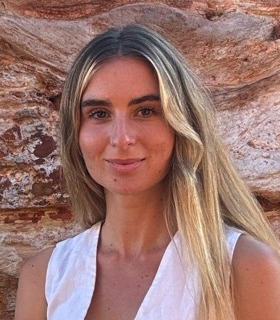

On a women's site of red rock and wind-carved outcrops on the Burrup Peninsula in WA's Pilbara region, two young Murujuga women rangers walk among the ancient stone.
Around them, thousands of petroglyphs cover the rock faces - images carved into stone by generations of Ngarluma, Yindjibarndi, Yaburara, Mardudhunera, and Wong-Goo-Tt-Oo people.
Together, they form one of the world's richest collections of engraved rock art, with some motifs estimated to be up to 50,000 years old.
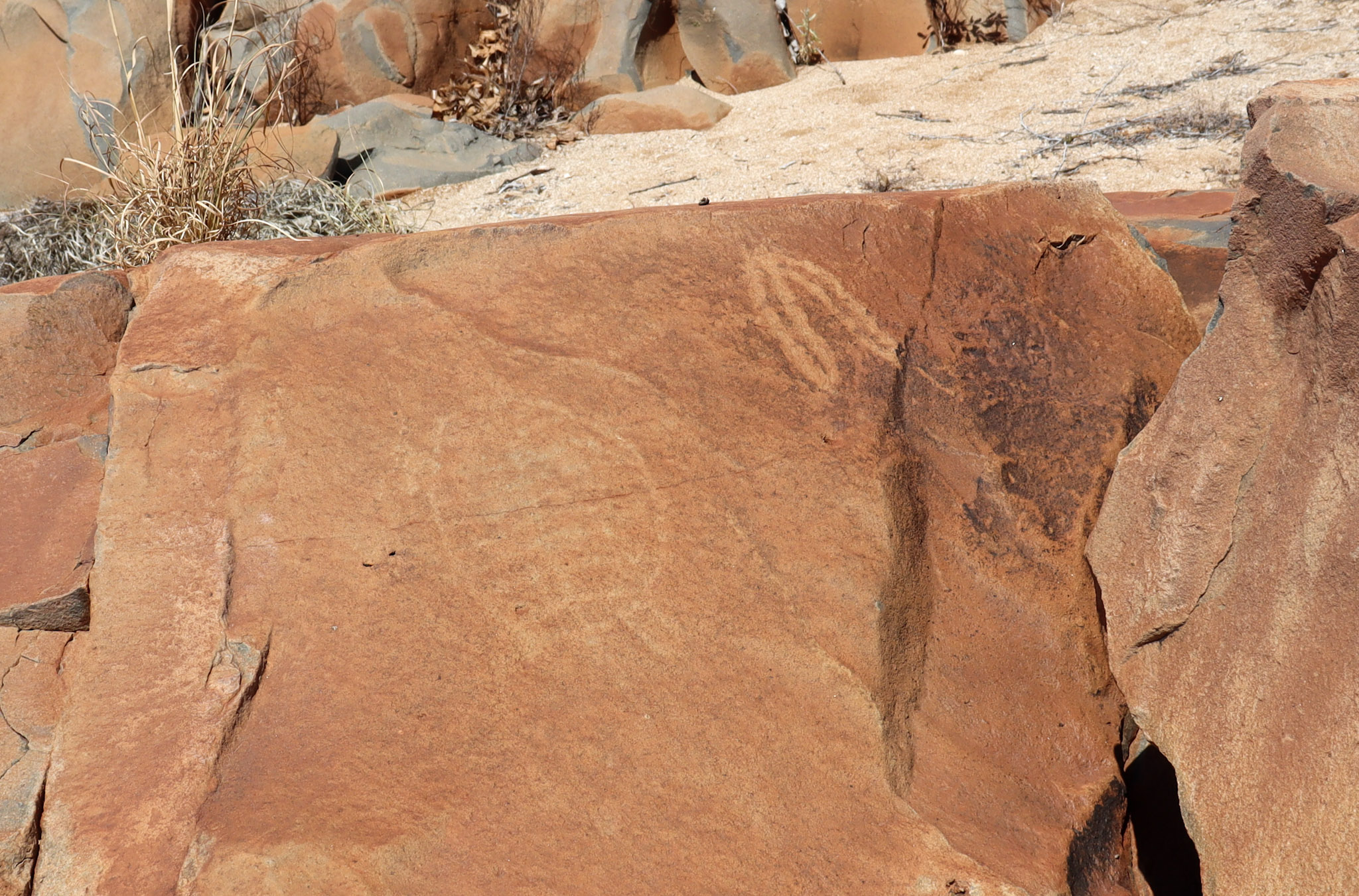
They pass an empty freshwater hole where women gave birth for thousands of years.
They are protecting the history of past generations through new tools - iPads, GPS pins, with a database of rock art and songlines.
Last year the Burrup Peninsula and surrounding islands - known as the Murujuga Cultural Landscape - received landmark UNESCO World Heritage recognition, following six years of research and nomination work led by the Murujuga Aboriginal Corporation (MAC).
MAC rangers Sarah Hicks and Jade Churnside spend their days preserving rock art and teaching others about Country. Some of the areas they care for are women's sites, where men are still prohibited from entering.
"This area is where women would come to have their babies," Ms Hicks says, standing beside the dry basin.
"It's one of the places of teaching, where women would show the young ones how to hunt kangaroo or goanna, how to gather seeds and spinifex grains, and grind them into flour."
Sarah learned those stories "from years of listening to the old people".
"I learnt it from my nana," she says.
She is determined to carry her Elders teachings forward, saying it's important she educates people coming through the Burrup Peninsula "to know what their learning is, and know where their limit is".
As Ms Churnside trails over auburn rock she's distracted by the smell of Jami what she calls bush vicks, in reference to vicks VapoRub.
She bends over to smell the surprisingly modest green and lilac plant, for its pungent smell, explaining the plant "is good for women and babies".
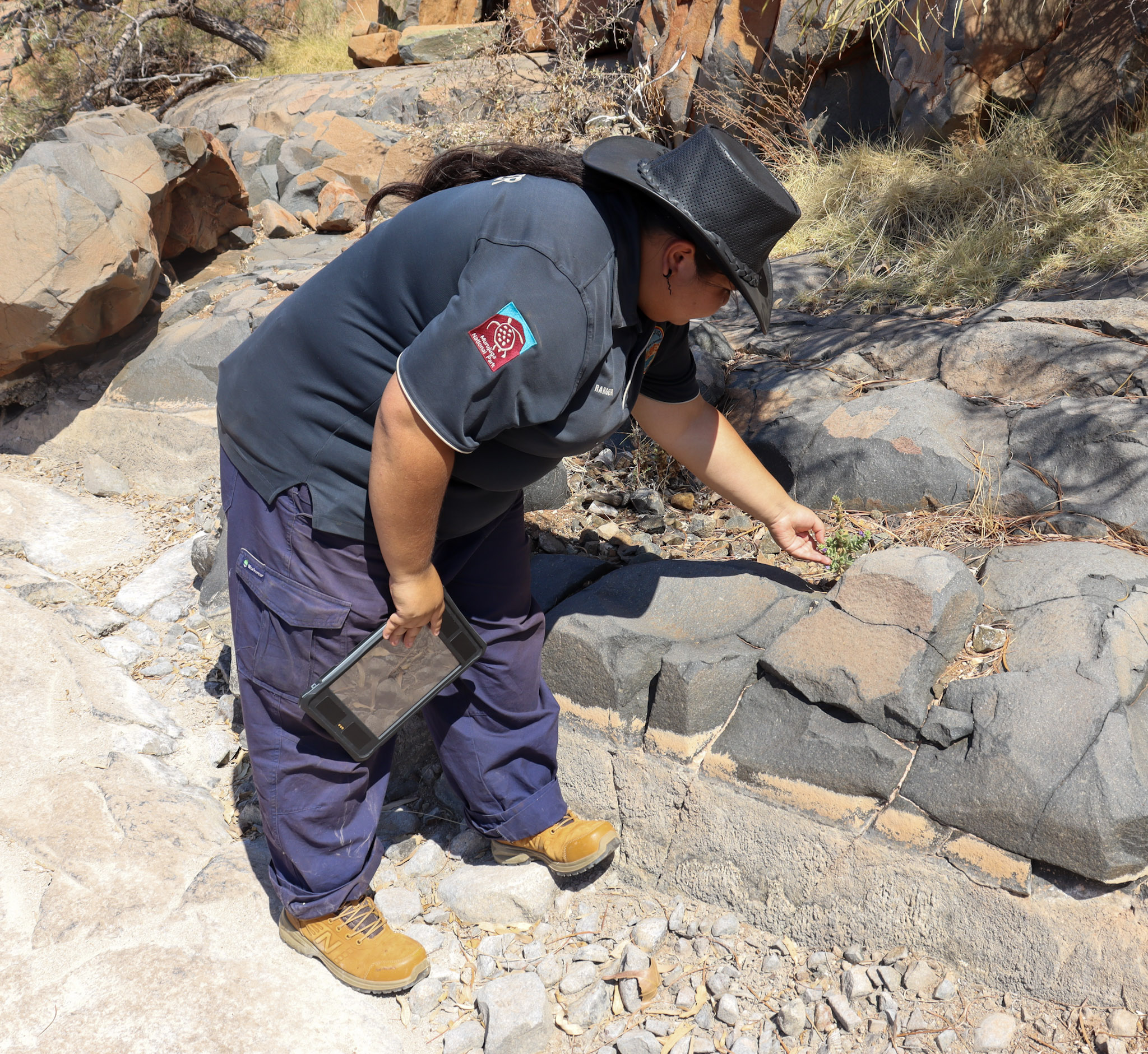
"It's like bush Vicks, the oils clear your nose right away. You can use the flowers for a herbal tea, or drop the leaves in your drink," Ms Churnside says.
She smiles, dabbing the resin on her fingers. "You can still smell the oil - it's strong."
Alongside oral knowledge, the pair work with the Fulcrum app on rugged iPads to record everything from animal sightings to rock-art conditions.
"We use our iPads for fire control, graffiti checks, plant and rock-art observations," Ms Churnside says.
"It takes a GPS location, so when we fill out a form it marks the spot on a big map. It keeps all our knowledge together instead of on bits of paper."
That digital record complements what elders have always carried in memory.
"We know where the rock art is," she says.
"But having it actually recorded helps show people how much history is here."
Protection doesn't end at the shoreline for Jade and Sarah, under the ocean framing the Burrup Peninsula holds rich culture from their ancestors.
About 7,000 years ago, rising seas after the last ice age reshaped Murujuga's coastline, turning what was once an inland landscape into a scatter of islands across the Dampier Archipelago.
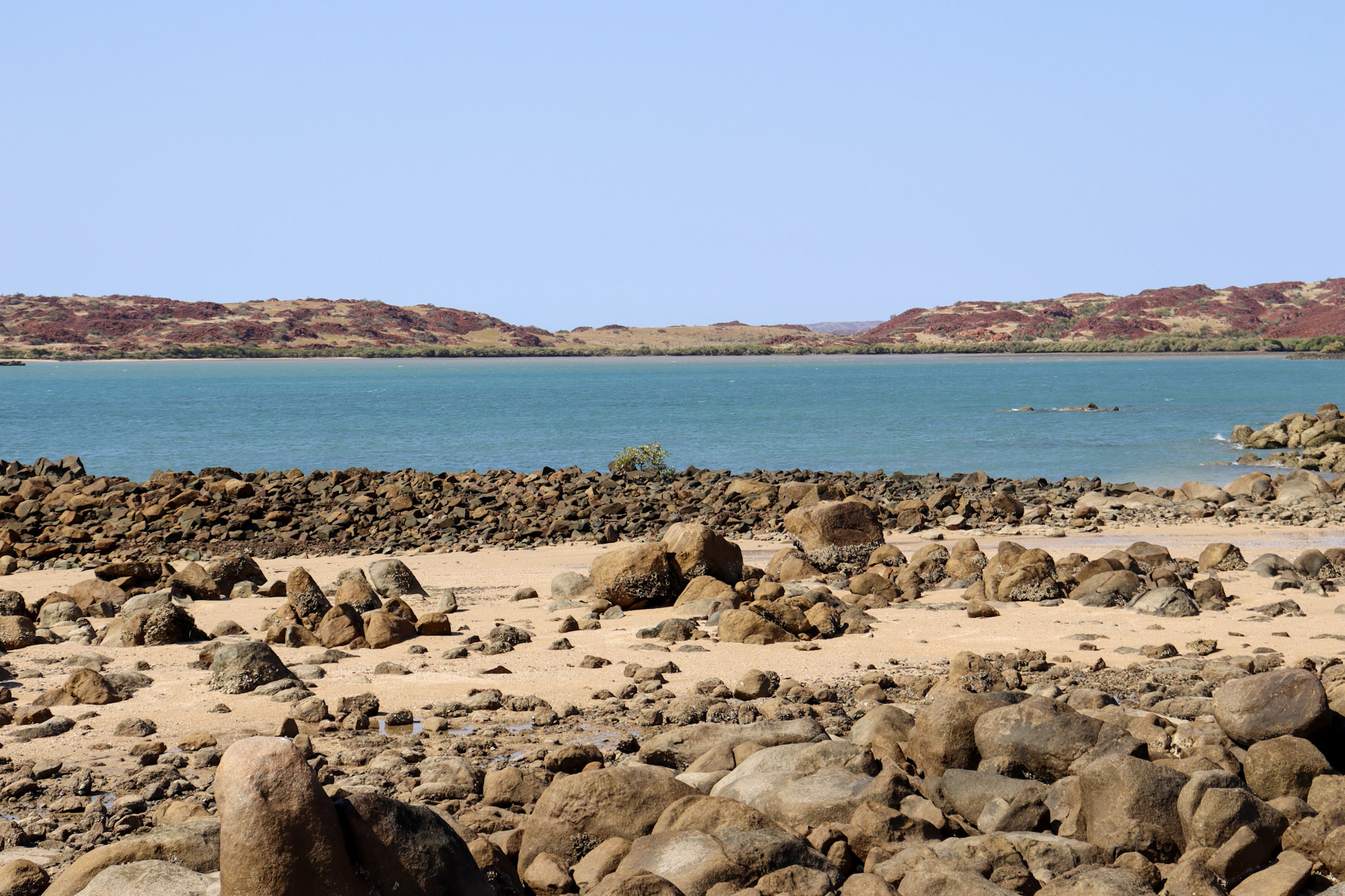
As the ocean moved in, the coastal plains were drowned, taking with them campsites and hunting grounds that had supported people for tens of thousands of years.
Recent archaeological work, carried out in partnership with the Murujuga Aboriginal Corporation, has revealed stone tools and other artefacts now preserved beneath the sea.
"We do a lot of diving for our work, looking for underwater artifacts," Ms Hicks says.
"Out toward Whitnell Bay we found a standing stone still upright - sea level only came up about 7000 years ago."
"They've even found spearheads down there, big ones, not like the small ones on the mainland."
Soon the two will head to Rosemary Island, a women's place off the Pilbara coast that is both culturally sacred and scientifically vital.
"Hawksbill turtles nest there - it's their main ground," Ms Churnside explained.
"They were poached illegally for their shells, turned into combs and brushes. Now we tag them, record the nests, count the eggs, then come back to see how many hatch."
Temperature even determines the hatchlings' sex.
"Cooler sand makes more boys; warmer sand, more girls," she said.
"There are more girl turtles being born now - the ocean's heating up."
On Rosemary Island, no men are allowed.
"Women would go there if they were struggling to have a baby," Ms Churnside says.
"It's a women's Island."
For both women, being a ranger is a continuation of matriarchal culture.
"Back then, women were the leaders," Ms Hicks says.
"They carried the knowledge and gave it to the men to hold."
Ms Hicks is starting a women's cultural learning program to strengthen that legacy.
"It's about balance," she says.
"To say, we women are still here, we're still practising the lore."
As the afternoon light fades across the Burrup's rock valleys, the two rangers pack away their iPads and logs.
In a few days they'll swap boots for dive fins, tracing songlines beneath the sea and guarding the stories that live in salt and stone.