





Trust between Joombarn-Buru Traditional Owners and the China-backed mining company Kimberley Mineral Sands has broken down over the issue of awarding local contracts, despite the injection of $160 million in public funding.
"It was meant to be our big opportunity," one Joombarn-Buru representative said.
"We were not asking to run the mine. We were asking for a fair chance."
According to the Joombarn-Buru leaders, jobs and contracts promised under the native title agreement for the Thunderbird mineral sands project have failed to materialise.
The stakes are high because the Thunderbird mineral sands project, north-east of Derby in the West Kimberley, is one of the largest mineral sands developments in northern Australia.
The project is operated by Kimberley Mineral Sands, a joint venture formed in 2021 between the original investor, Sheffield Resources, and the Chinese steel giant, Yansteel.
The mineral sands project was greenlit with the 2018 signing of a native title agreement between Sheffield Resources and the Traditional Owners, now represented by Joombarn-Buru Aboriginal Corporation.
The latter represents native title holders from several West Kimberley language groups, including Nimanburr, Nyikina, Jabirr Jabirr-Ngumbarl, Yawuru, Warrwa and Nyul Nyul.
The Thunderbird Mineral Sands Project mines mineral sands which have downstream uses in ceramics, paint pigments and industrial coatings.
The mine is a $489 million development expected to operate for about 36 years, supporting around 225 jobs during construction and about 345 ongoing operational roles.
Construction began in October 2022 and the mine began operating in January 2024.
The objective of the native title agreement was to give traditional owners the "best possible chance" of securing business opportunities linked to the project.
This was significantly underwritten by the project receiving major public financing through the Northern Australia Infrastructure Facility (NAIF), which committed $95 million in 2018.
NAIF is a federal government lender that provides loans to major infrastructure projects across northern Australia.
Financial support from NAIF increased to $160 million in 2022 to help fund construction.
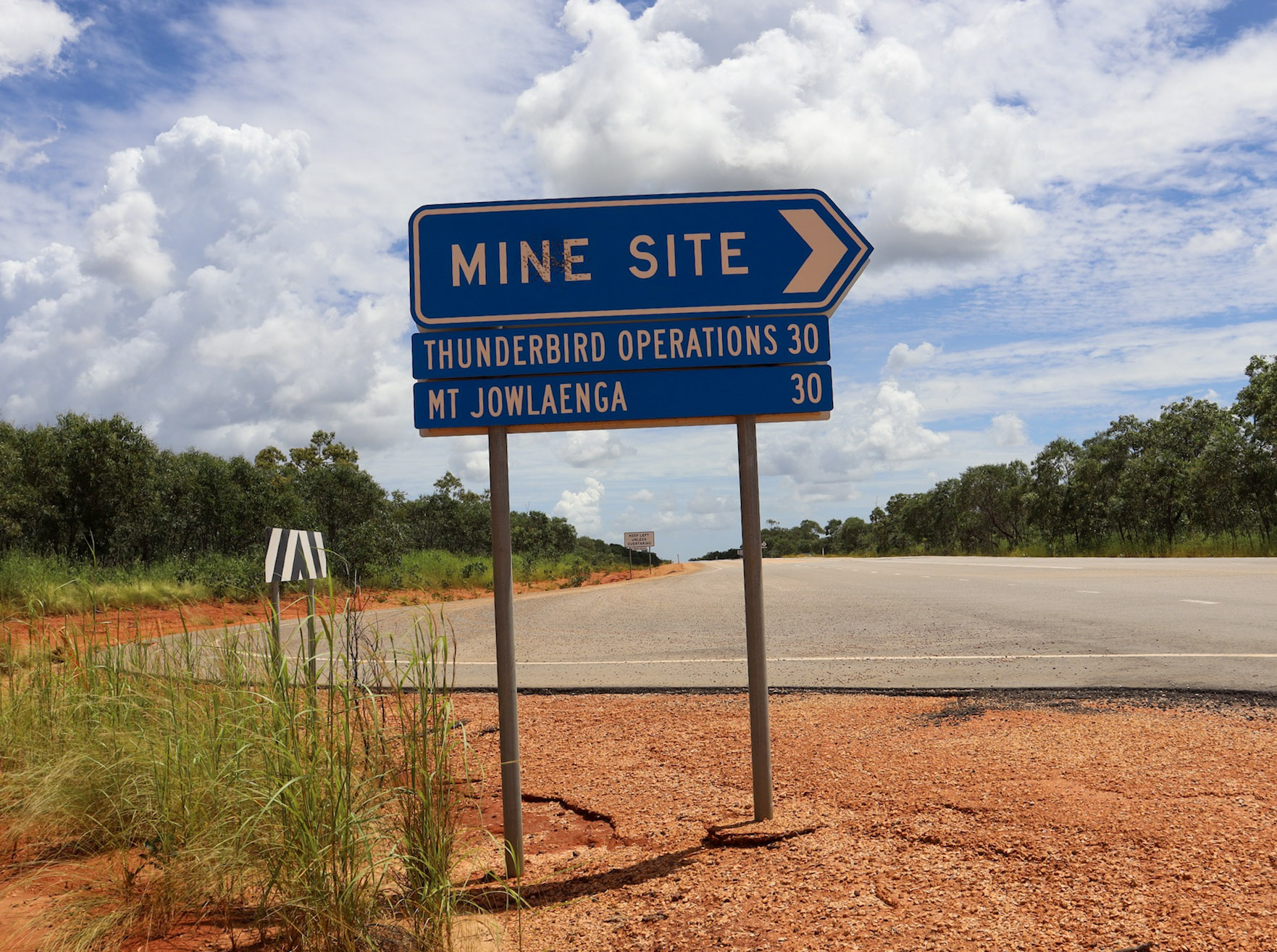
In its public project summary, NAIF lists its Indigenous Engagement Strategy (IES) as a key benefit of the development, stating Kimberley Mineral Sands is working with Joombarn-Buru Traditional Owners and Indigenous organisations across the Kimberley.
Under those commitments, Joombarn-Buru traditional owners are meant to be prioritised for training, jobs and business contracts for the project.
The Thunderbird Co-Existence Agreement also covers the company prioritising local Aboriginal-run businesses when awarding up to $5 million a year in construction contracts and up to $10 million in operational work.
But several Traditional Owner representatives say that promise has not been realised.
Joombarn-Buru Aboriginal Corporation deputy chair Maureen O'Meara said the project was initially welcomed as a pathway to economic opportunity for Traditional Owners.
"When you look at an over 30-year mine we could have created so much economic opportunity for our people," Ms O'Meara told National Indigenous Times.
The proud Baad and Nimunburr woman who grew up in Derby said many locals believed the project would boost employment in the town.
"People in Derby were gearing up for mineral sands. We thought it would bring jobs to the town," she said.
"Derby supported them right through the Sheffield days — getting licences, getting funding, everything."
When the mine began exporting product in early 2024, the first shipment left from Port Hedland before Kimberley Mineral Sands began exporting mineral sands through the Port of Broome.
Ms O'Meara said the decision was a blow for Derby.
Another major disappointment, she said, was the lack of contracts awarded to Traditional Owner businesses during the construction phase. .
Construction is typically the most lucrative stage of a mining development, when hundreds of millions of dollars are spent on excavating, infrastructure and equipment.
"There was a lot of work during construction that could have been awarded to Traditional Owners in the spirit of partnership, and this would have been the platform for change and to grow our businesses," Ms O'Meara said.
"We've got businesses around here that could have geared up and taken on some of those contracts."
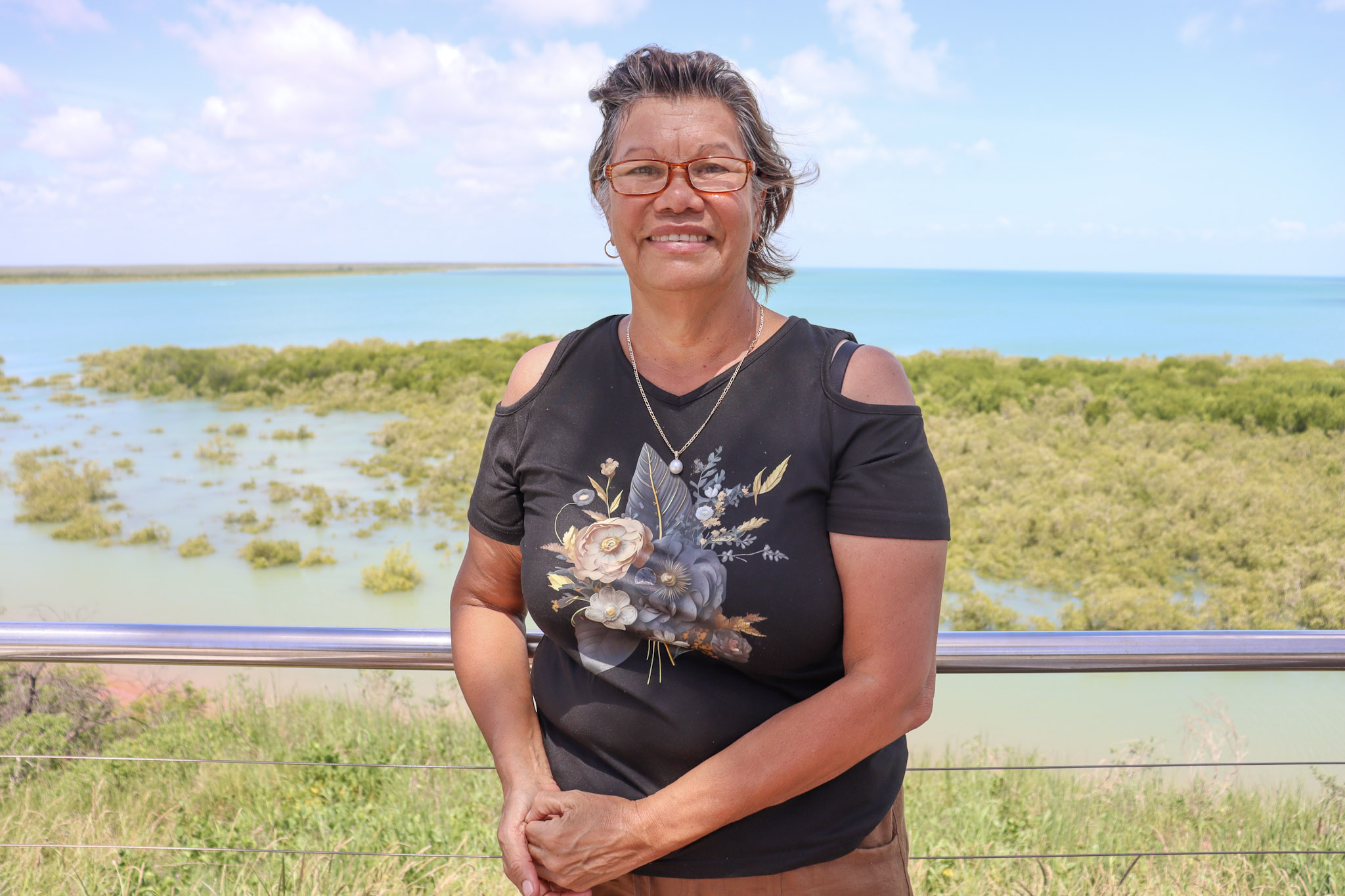
Another board member of the Joombarn-Buru Prescribed Body Corporate backed Ms O'Meara's claims, saying concerns about contracting processes began early in the project.
"The biggest spend was in construction, and no Joombarn people got contracts in construction" the board member said.
One of the project's major engineering contracts was issued by Sheffield Resources the day before the native title agreement with traditional owners was formally authorised, according to a board member.
They said the contract did not include requirements for Indigenous employment or contracting, despite the agreement committing the project to maximise participation by Traditional Owners.
Kimberley Mineral Sands Executive Chairman Bruce Griffin responded to the claim, saying "the EPC contract was awarded by Sheffield Resources in mid-November 2018, following signing of the Co-existence Agreement".
However, the Joombarn-Buru board member said Traditional Owners had been negotiating with the company for more than a year and had anticipated Indigenous participation requirements to be built into tender processes.
"We were negotiating with them for the last year and a half. They knew this was important," they said.
"The terms of ensuring Traditional Owner participation should have been part of the tender."
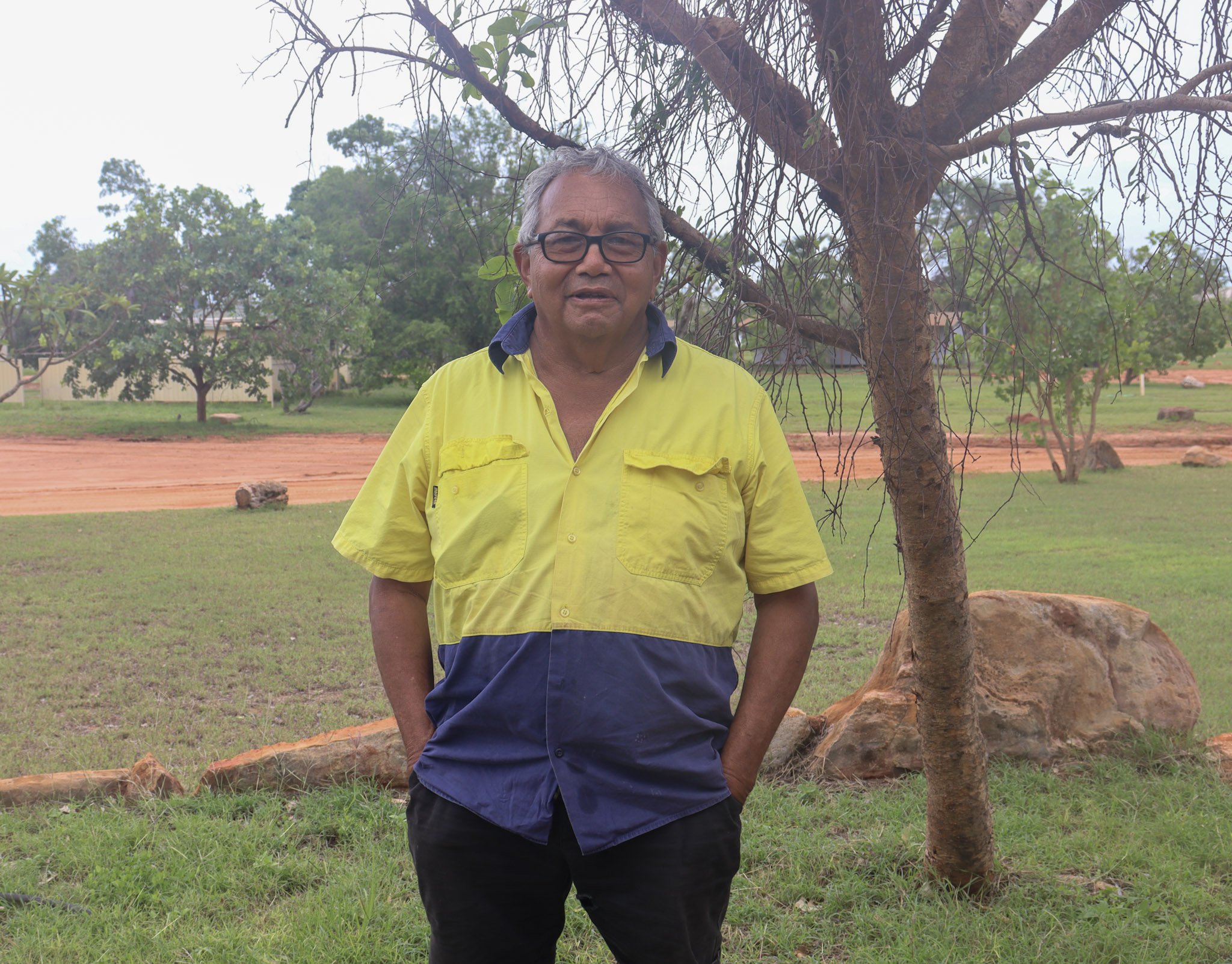
Similar concerns about contracting opportunities were raised by Traditional Owner and proud Bard man Tony Sibosado, a director of Lombadina Aboriginal Corporation.
Lombadina is a remote Aboriginal community about 170 kilometres north of Broome on the Dampier Peninsula.
In early 2022, a joint venture between McCorry Brown and the Lombadina Aboriginal Corporation submitted a tender to supply concrete for the Thunderbird Mineral Sands Project.
The proposal brought together two local businesses, with members of the Sibosado family also recognised as Traditional Owners within the Joombarn-Buru native title group.
Mr Sibosado said winning the contract would have allowed the partnership to expand its operations and employ people in Lombadina.
"McCorry Brown and the Lombadina Aboriginal Corporation submitted a joint venture tender for concrete supplies at the Thunderbird Project where both of us are local businesses plus the Sibosado family members are recognised as Traditional Owners in the Joombarn native title group," he said.
Mr Sibosado said that if the tender had been successful, it would have allowed the businesses to invest in new equipment and employ Lombadina locals.
"If we were successful in this contract, we would have had an opportunity to purchase two new concrete agitators and a new front wheel loader plus employ more Traditional Owner staff for this project," he said.
However, the contract was ultimately awarded to Hanson Australia.
Mr Griffin responded to the claim saying, "detailed information about tender bids and contract awards remain confidential for commercial reasons, however thorough de-briefs are given to all unsuccessful tenderers".
Meanwhile Mr Sibosado claims some tender opportunities were issued with very short timeframes, undermining smaller local operators trying to prepare bids.
"They would send you the opportunity to tender with a two-week response time, so you didn't have time to get all the paperwork and machinery organised," he said.
Mr Griffin disputes the claim and says Kimberley Mineral Sands tender documents are shared with Joombarn-Buru Aboriginal Corporation in advance of public release.
However, Lombadina Aboriginal Corporation director Caroline Sibosado said experiences like Mr Sibosado's had damaged the community's relationship with Kimberley Mineral Sands.
"They've used people in this area to get in there," she said.
"Now they're doing what they like."
Mr Sibosado echoed the sentiment.
"I don't trust them anymore," he said.
Mr Sibosado later lodged a formal complaint with NAIF.
A spokesperson from NAIF responded to the claims saying, "NAIF as a financier does not direct proponents contracting or commercial arrangements".
"NAIF is aware that some Traditional Owners previously raised concerns after being unsuccessful in tendering for contracts with Kimberley Mineral Sands and has met with both the Traditional Owners and the proponent to discuss these matters," the spokesperson said.
However, Ms O'Meara said NAIF had not maintained strong communication with Joombarn-Buru Traditional Owners.
"NAIF needs to be a lot stronger, because we need to have that truth-telling discussion about how we as Traditional Owners feel," she said.
Ms O'Meara said the organisation should speak directly with Joombarn-Buru native title holders when assessing Kimberley Mineral Sands' Kimberley region social and economic reporting record.
"NAIF haven't involved us, and they haven't come to our board meetings, sat down with us, heard from us as Traditional Owners," Ms O'Meara said.
NAIF responded to the claim saying the team - including senior executives - have visited the project on a number of occasions and met with Traditional Owners and KMS.
"Our team most recently met with Joombarn Buru Aboriginal Corporation in March 2025, to discuss the IES reporting of KMS," a spokesperson for NAIF said.
"This was a process agreed with Joombarn Buru Aboriginal Corporation in a meeting in Broome on 15 May 2024, after initial issues were raised with NAIF around reported numbers."
Though, according to Ms O'Meara, repeated concerns raised with Kimberley Mineral Sands and NAIF have gone unresolved, undermining what Traditional Owners hoped would become a lasting economic foundation for the next generation.
Despite the tensions, Ms O'Meara said she still believes the relationship could be rebuilt.
"However, we are still hopeful that Traditional Owners will get better recognition," she said.