



A century ago, Indigenous hands helped put the soul into Australia's most famous boot.
Aboriginal man "Dollar Mick" met Reginald Murray Williams and helped "RM" develop the leather craft techniques for the first R.M.Williams boot.
It all started when a young RM, living on Adnyamathanha country in the Flinders Ranges, met travelling stockman Michael George Smith – "Dollar Mick" – at RM's camp at Italowie Gorge.
Dollar Mick shared his knowledge of leatherwork and soon the "one piece of leather" design – a variation on the Chelsea boot – was born.
"My success began the night Dollar came in his mule buggy and asked to stay," Williams, who died in 2003, wrote in his 1984 autobiography.
Soon the Adnyamathanha people – who refer to themselves as Yura – were collaborating with RM in his original workshop at the Nepabunna mission during the Great Depression, helping source the skin RM wanted to shape the boots, as well as the whips and leather bags he also began crafting.
Nearly a century later, the bond between R.M. Williams and First Nations Australians remains strong, much like the durability of the boots themselves. This connection remains strong today, with investment firm Tattarang buying R.M.Williams in 2020 for an estimated $190m.
The R.M.Williams boot is a powerful symbol, central to the image Australia conveys to the world. Successive prime ministers have gifted pairs to their counterparts overseas.
Originally renowned for its premium, handcrafted footwear, R.M.Williams has since expanded its reputation to include a comprehensive range of fashion apparel, all embodying the quality and craftsmanship for which it is known.
R.M.Williams chief executive Paul Grosmann says the origin story of Australia's most iconic footwear is steeped in First Nations craftsmanship and lore.
"The influence and creativity of First Nations peoples – and their unwavering connection to Country – has been at the heart of our business since the start," Grosmann says.
"It was Dollar Mick, an Aboriginal man that RM met on his travels, who helped our founder develop the leather craft techniques needed to make the very first R.M.Williams boot. His ingenuity lives on today, with every pair of boots crafted in our Adelaide workshop."
R.M.Williams' commitment to Indigenous collaboration continues. According to the Australian Bureau of Statistics, Aboriginal and Torres Strait Islander people represent 3.8 per cent of the Australian population. A survey of R.M.Williams employees this year found 4.3 per cent identified as First Nations.
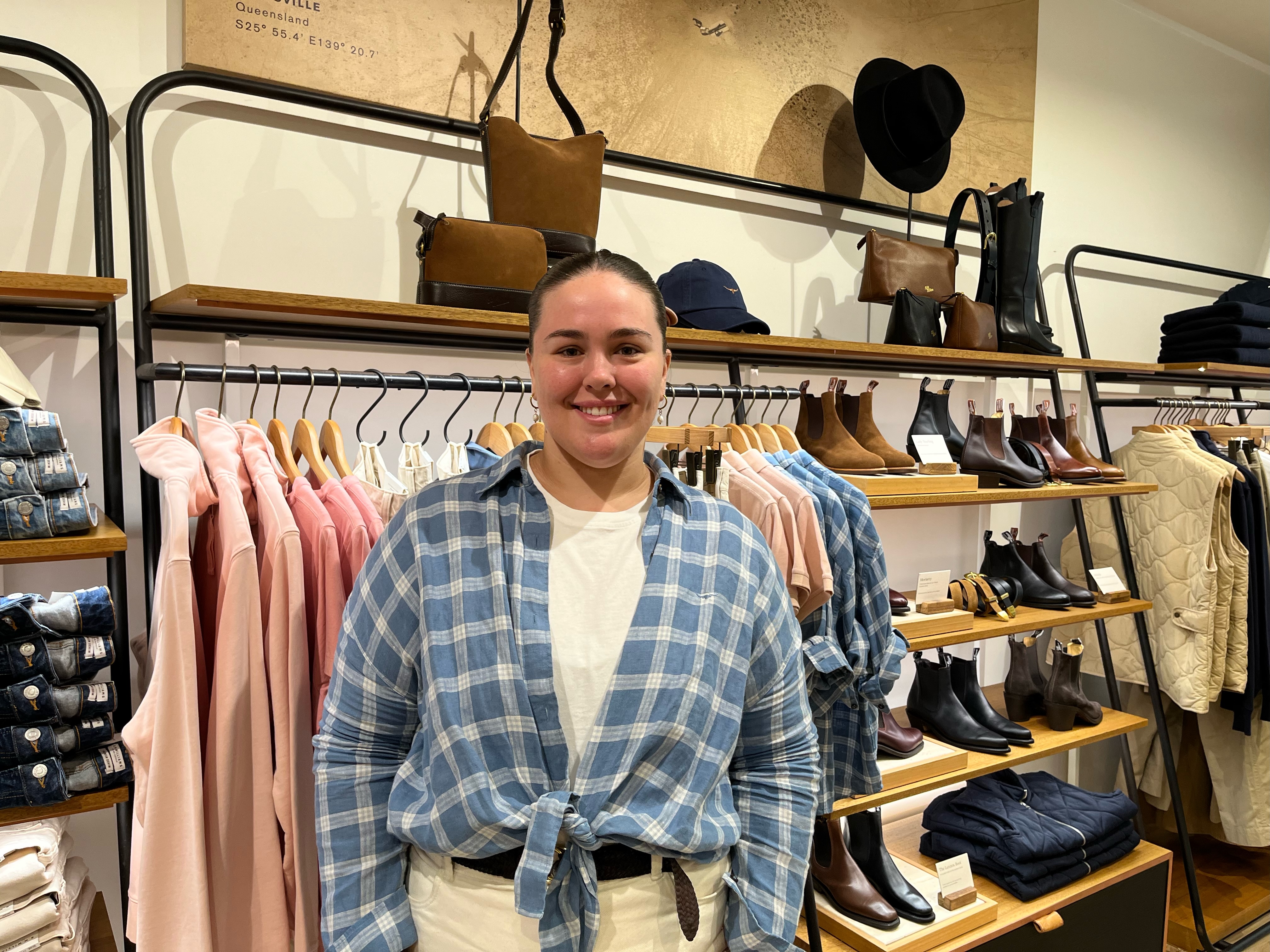
Kamilaroi woman and R.M.Williams employee Sarah Reid-Finefeuiaki, at the company's Indooroopilly store in Brisbane, shares stories of her family and Country with customers.
"Customers get excited when they hear I'm a First Nations person, and where I'm from … and they see the smile on my face and how proud I am to talk about my family and where they are from (Toowoomba)," she says.
Another key part of R.M.Williams' journey has been Steve Glenie who has been an integral part of the team for almost eight years, primarily as a sole stitcher, stitching the rubber sole to the welt strip on the iconic boots. "I've got many roles, but I'm mainly a sole stitcher," Glenie says, highlighting the precision required in his craft.
His journey to RMW wasn't straightforward. "I applied many times to work at R.M.Williams," he recalls, mentioning a one-week course at Salisbury that included a workshop tour and job trial. "I heard back the same day after the trial and got the job. I cracked open a bottle of champagne when I got the job."
For Glenie, teamwork and good hand-eye co-ordination are essential skills in his role, especially when using special hand techniques to ensure the boots are stitched correctly.
The camaraderie is what he values most. "The people and working as a team," he says, is the best part of his job.
As for opportunities at R.M.Williams, Glenie notes: "We get offered to change and learn new things in production. There are always new roles popping up in other areas of the business."
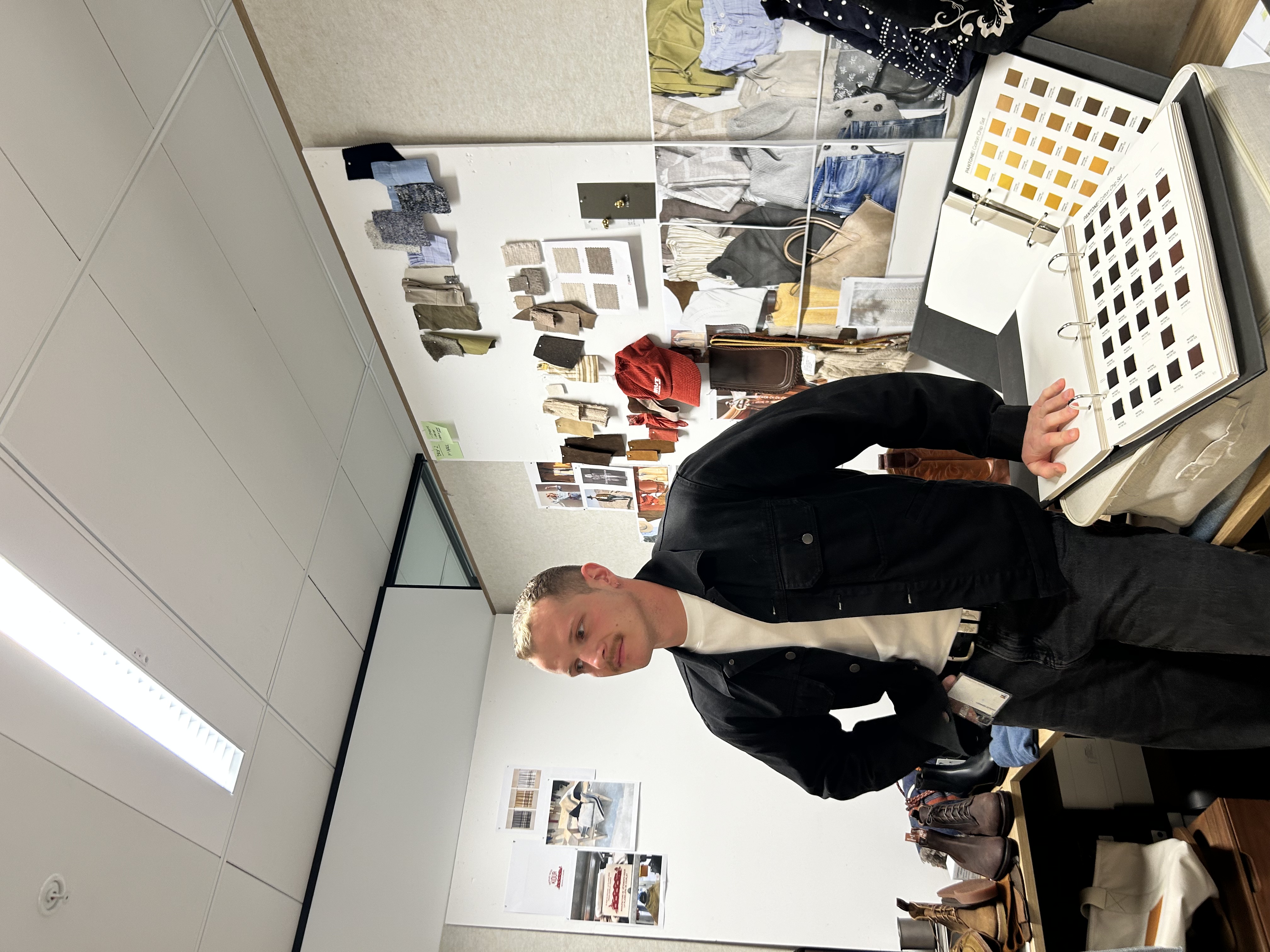
At its womenswear workshop in Sydney, R.M.Williams junior designer Charles Kennedy is incorporating native bush designs on embroidery for an upcoming collection.
Kennedy studied fashion design at TAFE in Ultimo, winning the Gili Award for outstanding First Nations student, and having his designs featured at Sydney Fashion Week as a student. Soon he was working for renowned designer Alex Perry before R.M.Williams came knocking a few years later. He's extremely proud of the company's legacy of working with First Nations craftsmen and how it honours its Indigenous roots.
"There aren't many companies, especially in Australia, that in the 1930s were working so directly with First Nations craftsmen and artisans," Kennedy says. "I think it's an amazing legacy and something we proudly hold on to. To come into a company like this that pays such homage to that, it does feel like a bit of a homecoming."
The 27-year-old – whose family are Jawoyn people from the Northern Territory – was born and raised in Sydney and is also proud to contribute to R.M. Williams' sustainable and ethical commitment, including a pledge for 100 per cent preferred fibres by 2025 and using organic and regenerative materials.
"We prioritise natural fibres, and are increasing our use of low impact materials like Good Earth Cotton," he says.
R.M.Williams is developing a strategy and target for procurement spend from First Nations businesses.
Grosmann says the company is proud of its historical Indigenous ties and will always support its First Nations workers to aspire and achieve their dreams, a stance that extended to First Nations Australians outside the organisation.
"We remain wholeheartedly committed to championing and celebrating the contributions of all First Nations people, both inside our organisation and in our wider community," Grosmann says.