



Fiji has launched a 10-year national framework to guide ocean-based development while protecting marine ecosystems.
The Fiji Blue Economy Framework 2025-2035 sets national policy direction for government, communities, the private sector and development partners across sectors that rely on the ocean.
It is intended to support jobs and income tied to fisheries, tourism, transport and emerging ocean industries, while responding to climate pressures on coastal communities.
Minister for Environment and Climate Change, Mosese Bulitavu, told the launch it was about more than releasing a policy document.
"We are gathered this evening not merely to launch a document, but to affirm a national resolve," he said.
Mr Bulitavu described Fiji as a "Big Ocean State", with an exclusive economic zone spanning more than 1.3 million square kilometres.
"In this vast blue domain lies both our inheritance and our obligation," he said.
Fiji's ocean space is more than 70 per cent larger than its landmass, with most people living along the coast and relying on healthy marine ecosystems for livelihoods.
"The sea feeds our people. It sustains our communities. It connects our islands and shields our shores," Mr Bulitavu said.
His opening remarks framed the framework as an intergenerational responsibility for protecting resources.
"Na vanua kei na kena iyaubula e isolisoli vei keda. Me da qarava vakamatua me baleti ira na noda kawa mai muri," Mr Bulitavu said.
This translates to: "The land and the living things in it are a gift to us. Let us care for it wisely for our future generations."
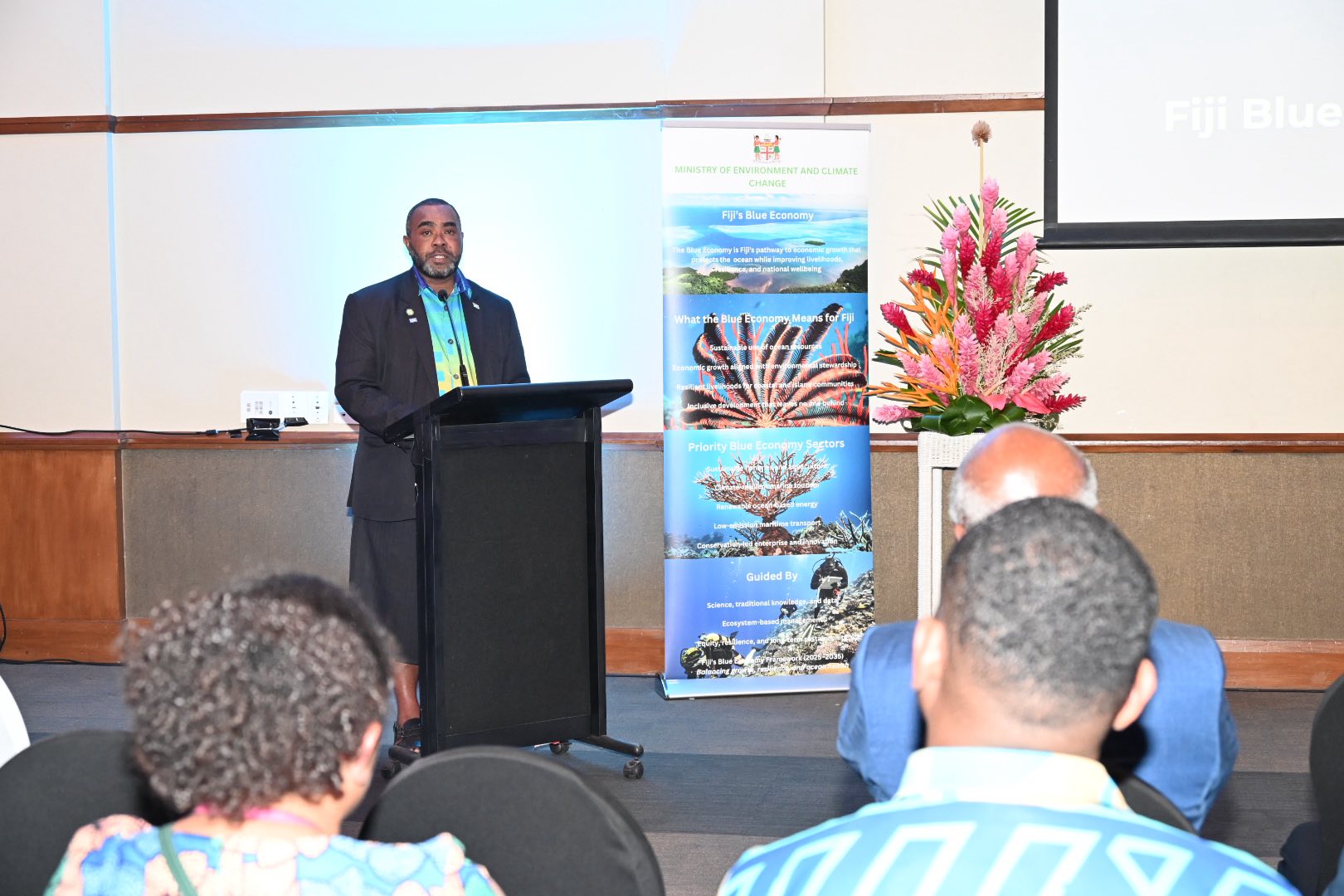
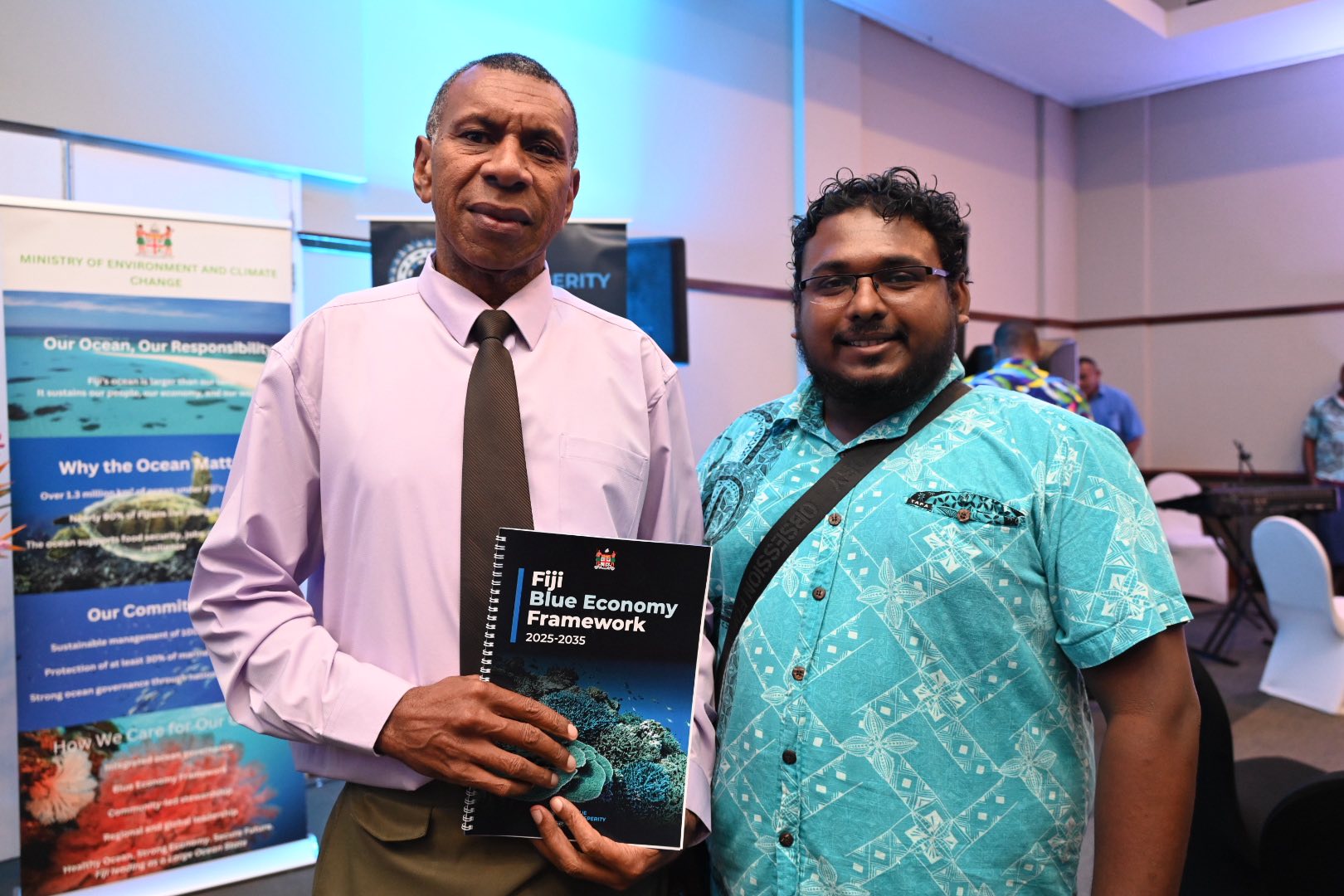
The framework was developed through consultations led in partnership with the Ministry of Environment and Climate Change and Blue Prosperity Fiji.
Climate change and ocean degradation were described as immediate pressures already shaping life in Fiji.
"It is clear that climate change, ocean degradation, and economic vulnerability are no longer distant threats," Mr Bulitavu said.
"Rising seas, coral bleaching, declining fish stocks, and extreme weather events now shape the daily reality of our people."
Mr Bulitavu pointed to Fiji's Ocean Health Index score of 76 out of 100, slightly above the global average of 72, while warning of growing pressure in tourism and recreation, food supply and the sustainable use of marine resources.
"These are not abstract indicators; they point directly to risks facing food security, employment, and foreign exchange earnings," he said.
"This is not a statistic to be ignored, but a warning that demands action."
The framework commits to growth that is linked to stewardship, with the Minister warning against separating development from protection.
"This Framework sets a clear course," Mr Bulitavu said.
"It recognises that economic growth divorced from environmental stewardship is growth without a future."
Tourism and fisheries were identified as core pillars of the blue economy, particularly for coastal and maritime provinces.
"The Blue Economy already matters deeply to Fiji's prosperity," Mr Bulitavu said.
"Tourism contributes close to 40 percent of our national GDP, supports over one-third of total employment, and generates more than two billion dollars in foreign exchange earnings annually, and fisheries remain central to food security and rural livelihoods."
The framework sets out priority areas including sustainable fisheries and aquaculture, climate-resilient marine tourism, renewable ocean-based energy, low-emission maritime transport and conservation-led enterprise.
Decision-making is intended to draw on science, data and traditional knowledge, with communities positioned as central to implementation.
"This is not only an economic framework. It is a human one," Mr Bulitavu said.
"It recognises that coastal communities, customary resource owners, women, youth, and small enterprises are not bystanders to development. They are its custodians and its beneficiaries."
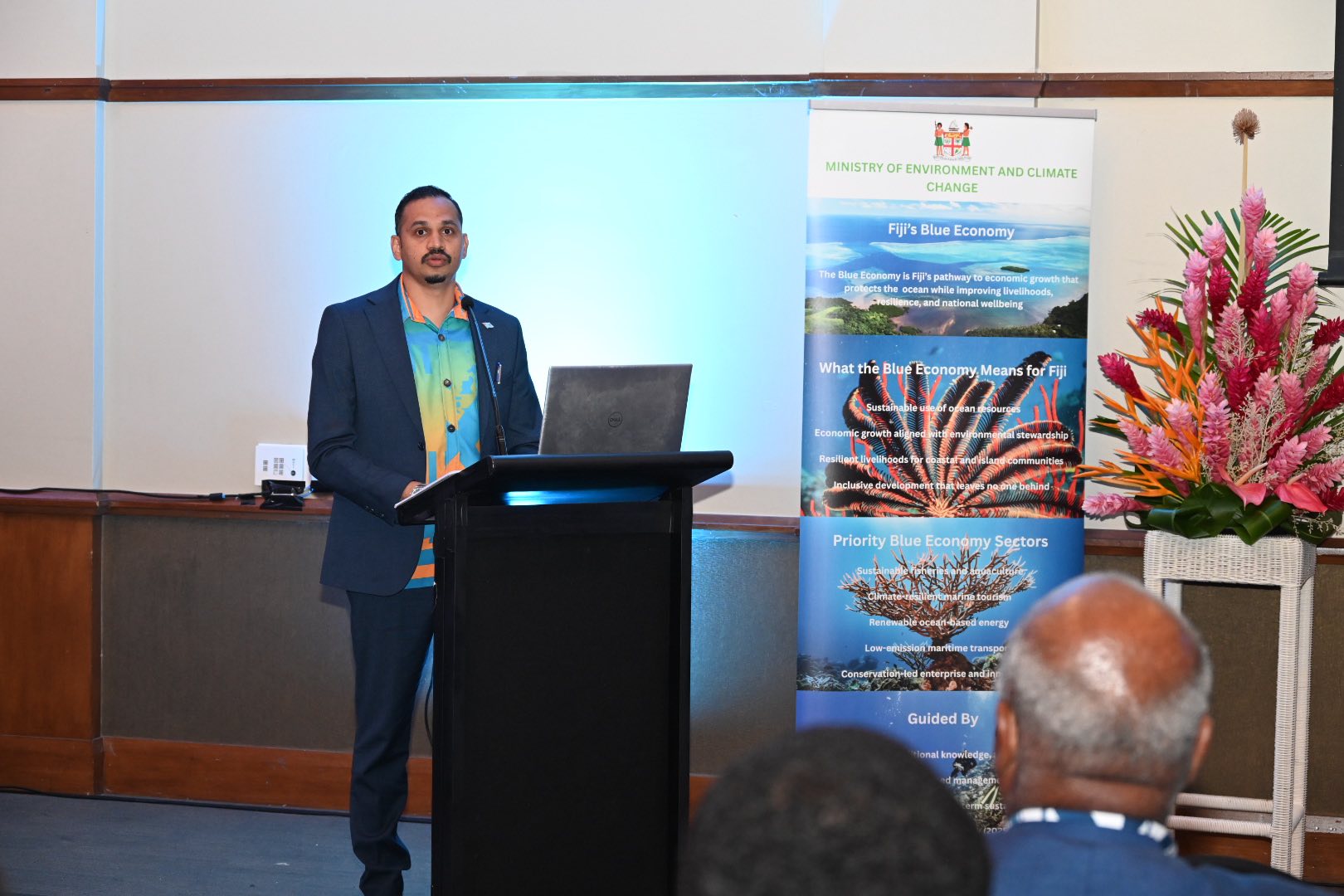
Permanent Secretary for Environment and Climate Change, Dr Sivendra Michael, said the framework was intended to guide decisions rather than prescribe actions.
Dr Michael told stakeholders it was not an action plan, but a roadmap that sets principles to shape blue economy development across sectors.
The framework aligns with Fiji's National Development Plan, National Ocean Policy and Paris Agreement commitments, including a pledge to sustainably manage 100 per cent of Fiji's ocean space and fully protect at least 30 per cent by 2030.
Mr Bulitavu said delivery would rely on shared ownership across government, communities, development partners and the private sector.
"Yet no framework, however well written, can succeed by government alone," he said.
"Its success will depend on cooperation across ministries, on partnership with communities, on trust between public and private sectors, and on accountability at every level."
"This Framework is not the conclusion of our work... It is the foundation upon which the work must now begin."