



Australia stands at one of the most significant economic crossroads in its modern history.
The global race for critical minerals is reshaping international trade, defence alliances and manufacturing supply chains, positioning Australia as one of the world's most strategically important suppliers. Governments are moving quickly to secure the minerals essential for batteries, renewable energy, defence technologies and advanced manufacturing. Yet one question has remained largely unanswered: what does this mean for the First Nations people whose Country holds much of the resource underpinning this new economy?
For two days on Wurundjeri Woi Wurrung Country in Naarm (Melbourne), Traditional Owners from across Australia, Indigenous organisations, government agencies, industry representatives, financiers, legal experts and researchers came together to begin answering that question.
Convened by the Mabo Centre in partnership with AEMEE and the National Native Title Council, the Towards an Australian First Nations Critical Minerals Strategy Symposium represented one of the first coordinated national conversations focused entirely on ensuring First Nations people help shape Australia's critical minerals future.
The symposium was established in response to a clear gap. While Australia has released a Critical Minerals Strategy, and the Department of Foreign Affairs and Trade has developed its Critical Minerals Prospectus to attract global investment, First Nations perspectives have been largely absent from those national policy settings despite the significant overlap between critical mineral deposits and Traditional Owner Country.
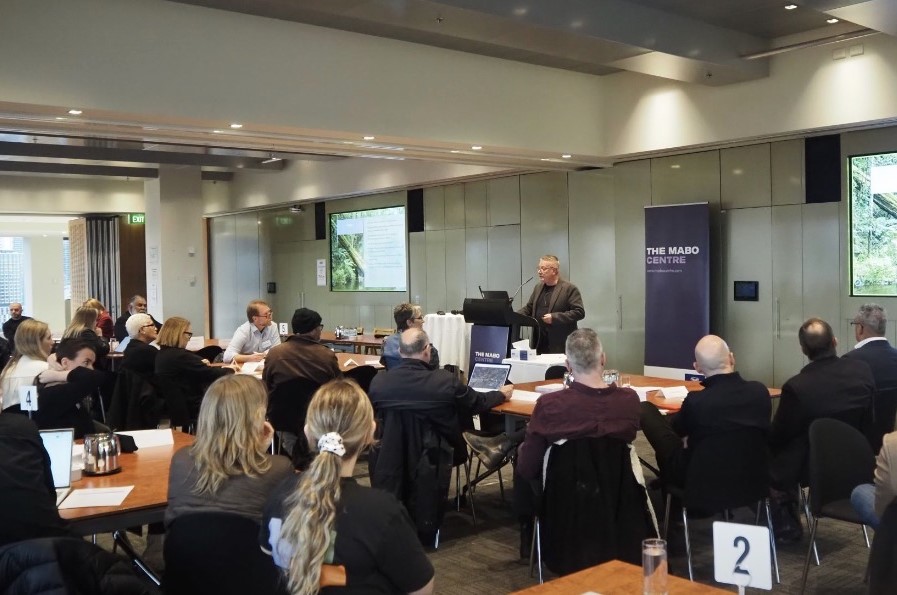
The symposium, expertly coordinated by Brian Bero and the team at The Mabo Centre, brought together an extraordinary cross-section of voices from across Australia. Leon Filewood skilfully moderated the two-day program, guiding discussions that balanced technical expertise with the lived experiences, rights and aspirations of Traditional Owners.
Bero noted "that First Nations communities require targeted support, and symposiums like this are much needed to address information gaps, and bring awareness to issues that impact First Nations groups and businesses to allow them to make informed decisions on how they can meaningfully participate in the critical minerals sector".
Opening the symposium, National Native Title Council CEO Jamie Lowe set the tone for the discussions ahead, highlighting that more than 80 per cent of Australia's identified critical mineral deposits occur on land where native title has either been determined or where native title rights and interests are currently claimed.
That statistic changes the conversation.
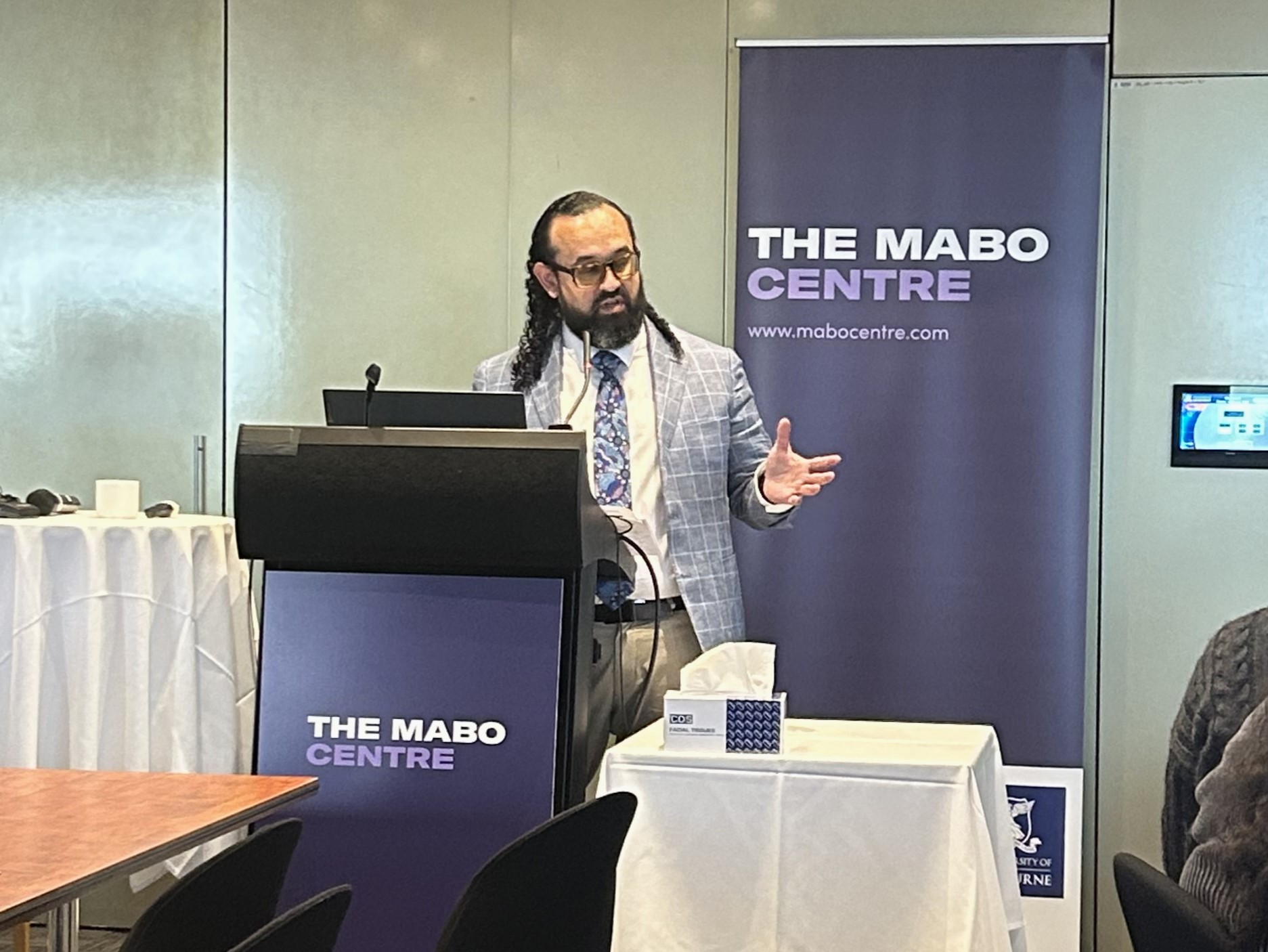
If Australia is serious about becoming a global critical minerals leader, then Traditional Owners are central to that future. Their rights, aspirations and economic interests cannot be considered after policy has been developed or projects have been designed. They must help shape both from the outset.
The symposium also reinforced that critical minerals present a fundamentally different opportunity to previous mining booms.
Unlike traditional hard rock commodities, critical minerals sit at the intersection of geopolitics, national security, defence, advanced manufacturing and increasingly complex global supply chains. Countries including Australia, the United States, Canada, Japan and nations across Europe are investing heavily to diversify supply chains, strengthen sovereign capability and reduce reliance on concentrated global processing markets.
This is no longer simply a mining conversation, it is an economic, industrial and strategic conversation.
Importantly, discussions extended well beyond exploration and extraction. Participants examined the opportunities that exist across the entire critical minerals value chain, from exploration and mining through to processing, refining, manufacturing, logistics, engineering, technology, environmental services, mine closure and the circular economy.
As Australia works towards greater sovereign capability in processing, refining and advanced manufacturing, there is an opportunity to ensure First Nations businesses and Traditional Owner groups are positioned across every stage of that value chain.
The symposium built on discussions that have been gathering momentum over the past year through my keynote at the Aboriginal Economic Development Forum hosted by the Northern Territory Indigenous Business Network (NTIBN) in Darwin in 2025 and the 2025 AEMEE Conference in Darwin, where I argued that Australia's critical minerals future must also become a First Nations economic future.
Traditional Owner leaders including Michael Woodley, CEO of Yindjibarndi Aboriginal Corporation, and Matt Burns, CEO of the Taungurung Land and Waters Council shared practical perspectives on the opportunities and challenges facing their communities.
Woodley captured the opportunity better than anyone.
"This is an incredible opportunity for us. We can look back to go forward. We can look back on the iron ore boom in the Pilbara in the '60s and say, what would we have done differently? Then put all of that into place for critical minerals."
His words resonated throughout the symposium.
Australia has a rare opportunity to learn from previous resource booms and ensure this generation builds a different economic legacy, one where Traditional Owners are positioned as business owners, investors and long-term partners from the beginning.
Tony McAvoy SC outlined the current legislative landscape, including the Australian Law Reform Commission's review of the Native Title Act, and explored opportunities for future reform that could strengthen outcomes for Traditional Owners as critical minerals projects accelerate.
One of the strongest themes emerging from the symposium was capital.
Ownership and equity remain ambitions for many Traditional Owner groups, but access to capital continues to be one of the greatest barriers.
Darren Godwell, Chair of Indigenous Business Australia, challenged participants to consider how Traditional Owner groups can utilise existing investment vehicles while also exploring mergers, acquisitions and other commercial pathways to secure meaningful equity positions in projects.
Darren Chong from the Northern Australia Infrastructure Facility and Alex Burns, Traditional Owner Economic Lead at ANZ, shared practical perspectives on the financing mechanisms and investment pathways required to support greater Indigenous ownership and equity in major projects.
International experience added another important dimension.
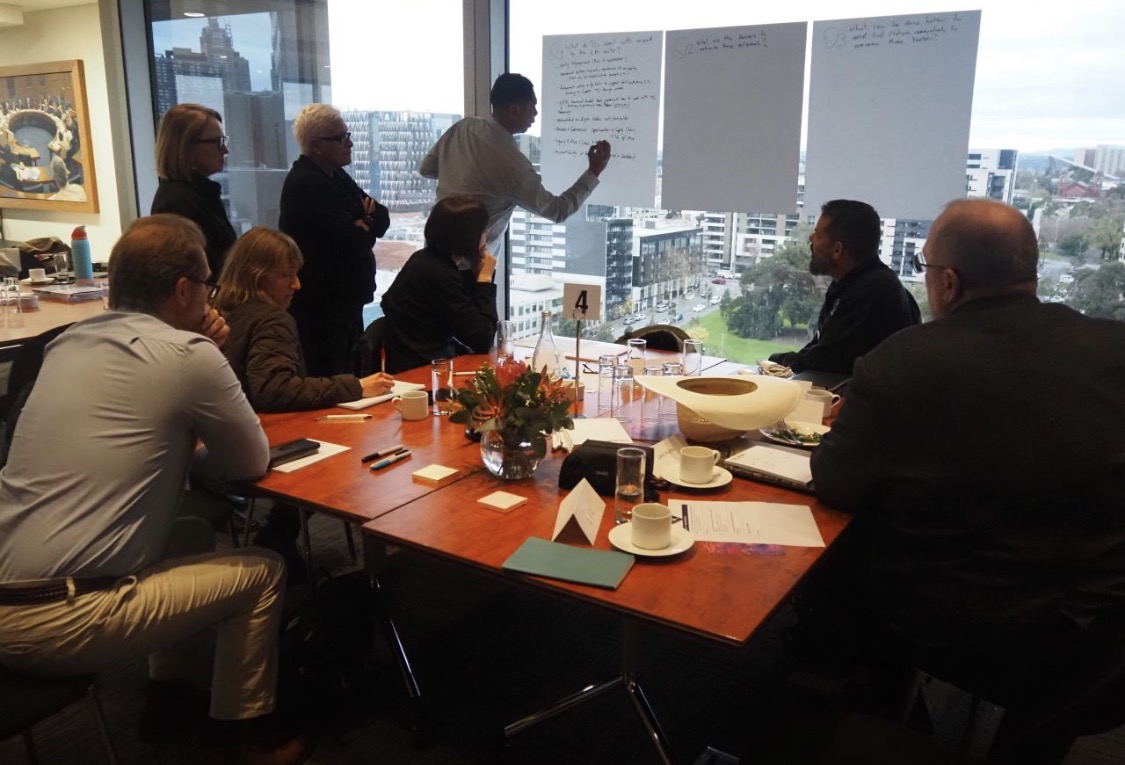
Saga Williams from Canada's First Nations Major Projects Coalition outlined Canada's ten-year journey towards establishing the government-backed Indigenous Loan Guarantee Program that is now unlocking major First Nations investments in nationally significant infrastructure projects. While the Program took a decade to establish, it has become one of the most important mechanisms for enabling Indigenous equity and ownership across Canada's major projects.
Williams also shared the Coalition's critical minerals toolkits, providing valuable reference material as Australia begins developing its own First Nations Critical Minerals Strategy.
The symposium also heard from representatives of the Commonwealth Critical Minerals Office, Geoscience Australia, CSIRO and the First Nations Clean Energy Network, reflecting the breadth of expertise required to develop a national strategy.
This ambition is also beginning to take shape through the newly established Critical Metals for Critical Industries CRC (CMCI CRC), of which AEMEE is a founding partner. The CMCI CRC has been established to accelerate Australia's sovereign capability across the critical metals value chain, providing another opportunity to ensure First Nations interests are embedded alongside research, innovation, commercialisation and industry development from the outset.
For AEMEE, these discussions are closely aligned with why the organisation was established more than twenty years ago.
Australia's resources sector contributes more than $400 billion annually to the national economy. Across AEMEE's national Indigenous Business Network, member businesses collectively generate approximately $1.3 billion in annual turnover. That represents around 0.3 per cent of the sector's annual value and demonstrates both the progress Indigenous enterprise has made and the significant opportunity that remains to grow Indigenous market share across Australia's largest industry.
Since AEMEE was established in 2005, our vision has remained simple: Indigenous businesses and Traditional Owners should share in the economic opportunities created from the resources on their own Country.
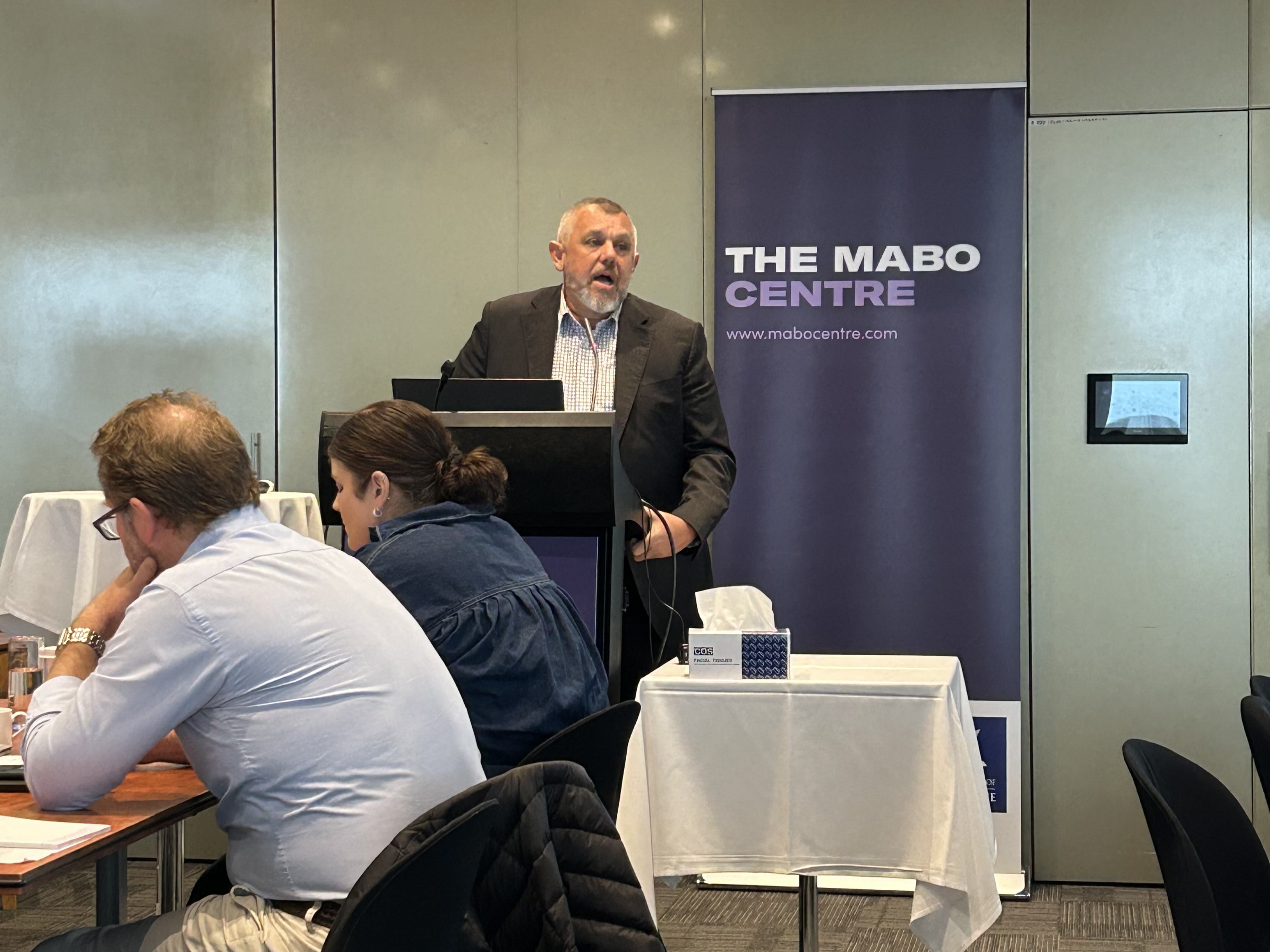
Critical minerals provide Australia with an opportunity to rethink Indigenous economic development.
If Australia is serious about building sovereign capability across exploration, extraction, processing, refining and manufacturing, First Nations people must be part of that journey from the beginning. The opportunity will increase Indigenous market share in mining, while also creating enduring Indigenous ownership, commercial leadership and wealth creation across the entire critical minerals value chain.
The next stage of this work will bring together the themes identified across the two days to inform the development of an Australian First Nations Critical Minerals Strategy. The objective is to ensure future policy, legislation and investment settings better reflect the rights, aspirations and economic opportunities of First Nations people.
Capital pathways will remain central to that work because aspirations for ownership and equity require practical financing mechanisms that enable Traditional Owner groups to invest alongside industry.
The conversations held over two days in Naarm were about far more than critical minerals.
They were about whether Australia chooses to repeat the economic patterns of the past, or whether this generation becomes the one that finally places First Nations people at the centre of the nation's next great resources opportunity.
The foundations have now been laid.
The challenge ahead is to translate those discussions into practical policy, investment pathways and meaningful action.
If we get this right, Australia's critical minerals story will not simply be about supplying the world with the minerals needed for existing and developing technologies including those related to the clean energy transition. It will become a story of First Nations leadership, ownership and long-term prosperity built on Country.
Jyi Lawton is the Chief Executive Officer of AEMEE.