



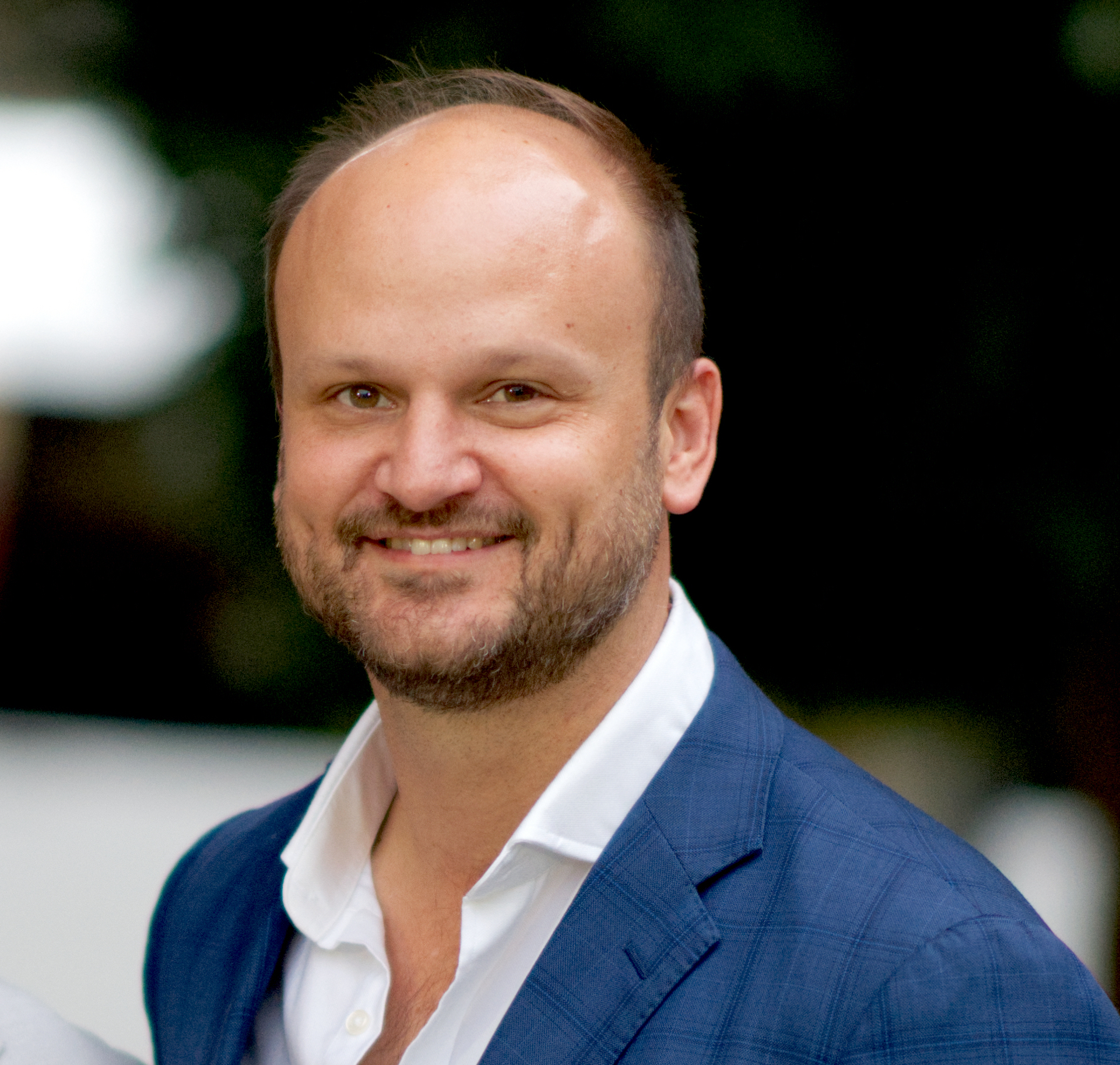

The national Closing the Gap agenda has become a "catchall" that is failing to deliver results because it lacks strategic focus, while the corporate sector has been urged to step into the vacuum left by a government that is "reluctant to challenge itself".
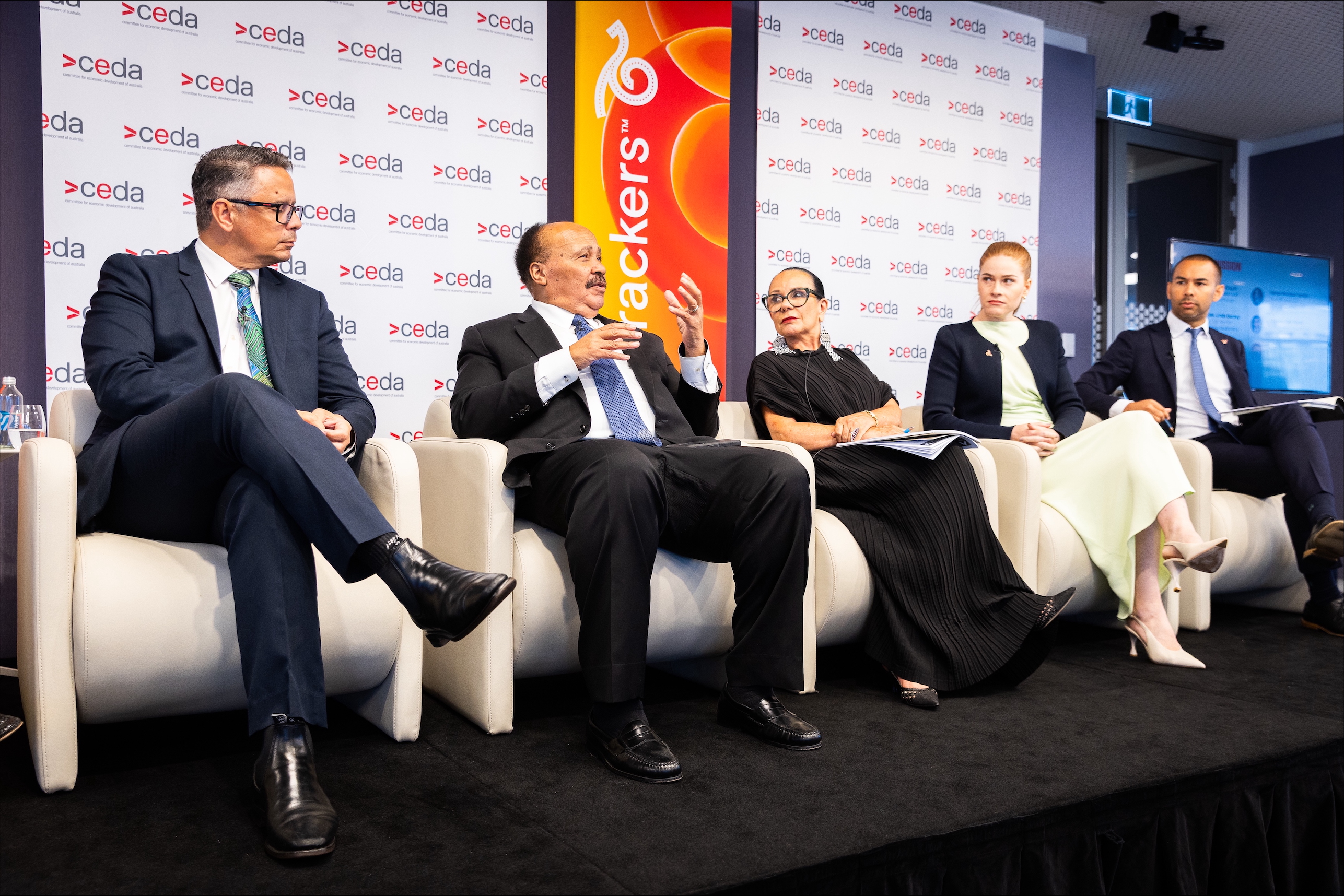
That was the blunt consensus delivered by two of Australia's most experienced Indigenous political leaders, Linda Burney and Ben Wyatt, at a major economic forum in Sydney this week.
Speaking at an event hosted by the Committee for Economic Development of Australia (CEDA) and CareerTrackers, the pair argued that the era of relying solely on government-led social targets has reached its limits. They contended that real convergence will only occur when corporate Australia uses its "natural advantage" in capital investment, procurement and wealth creation.
The paralysis of policy
Linda Burney, the former Minister for Indigenous Australians, offered a candid critique of the policy framework she once oversaw, suggesting the current approach has been weakened by its own breadth.
"It seems to me that closing the gap has become a bit of a catchall and I think it needs redefining," Ms Burney told the audience at Barangaroo.
She argued that attempting to address every issue simultaneously through the government's 16 socio-economic targets has produced a paralysis of outcomes.
"You try in government... to address every target. And when you try to do that for 16 targets all the time, invariably not much gets fixed," she said.
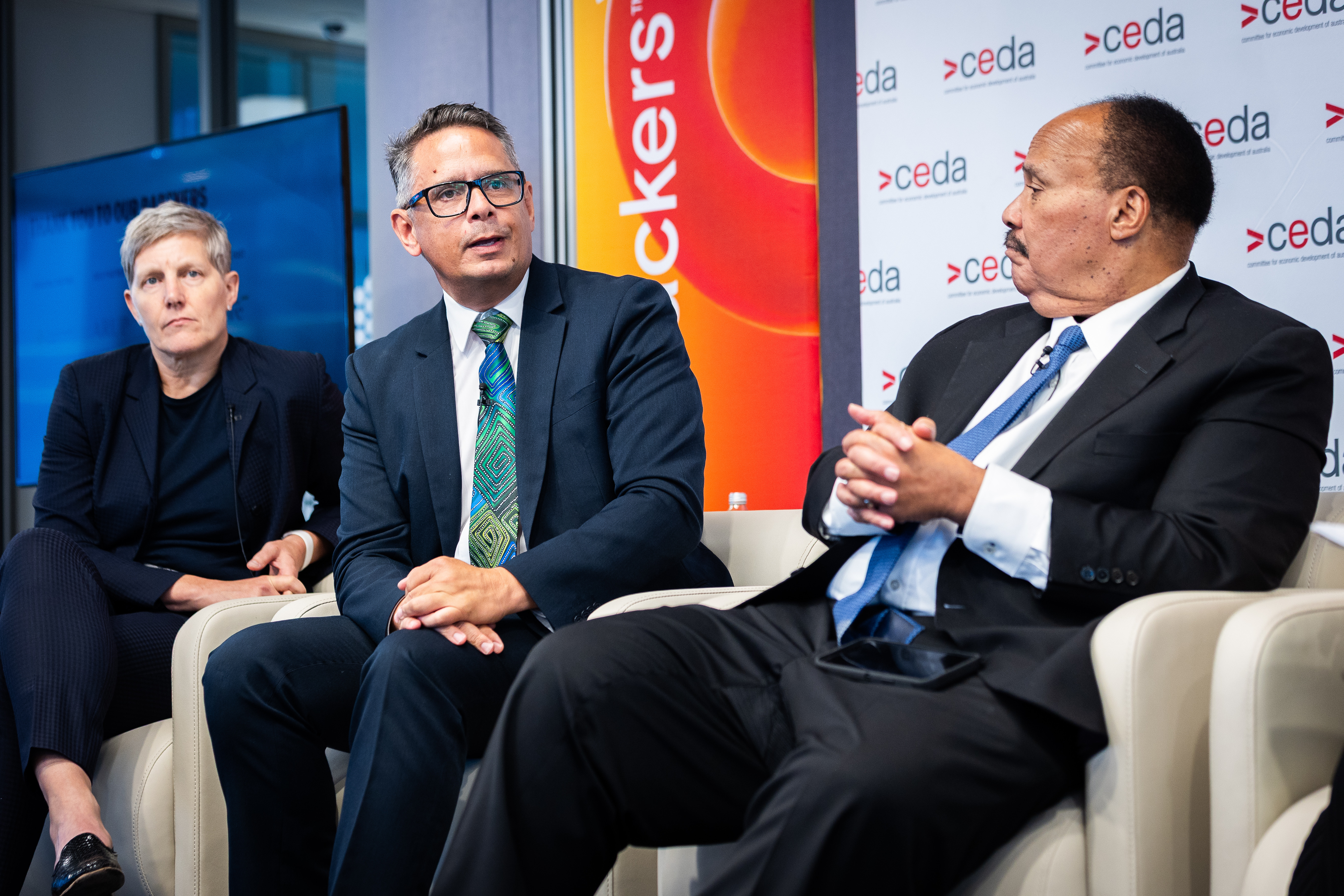
Ms Burney called for a fundamental shift away from a deficit-based model focused on "poverty... of jail and all of those things," toward one centred on economic power, governance and decision-making authority.
She revealed that her refusal to take the Aboriginal Affairs portfolio when she first entered parliament in 2003 was a deliberate attempt to challenge that narrative.
"I made a very conscious decision... that I would not take up the portfolio of Aboriginal affairs," she said.
"I wanted to prove to the rest of this country that Aboriginal people should not be pigeonholed... that we are consumers, we are environmentalists, we are union members, and we pay tax."
Her challenge to the business leaders in the room was direct: the next phase of Closing the Gap must move beyond participation and into power.
"It is not just about employment... it is also about governance where Aboriginal people are sitting at the table of decision making," she said.
The corporate "natural advantage"
Ben Wyatt, the former Treasurer of Western Australia and the first Indigenous director of an ASX-listed company, reinforced Burney's critique of government limitations. He described the state as a "big spender" of roughly $30 billion a year that nonetheless remains "always reluctant to challenge itself".
Mr Wyatt argued that while government is constrained by short-term political cycles and bureaucracy, the corporate sector is uniquely positioned to drive long-term Indigenous prosperity through its supply chains, balance sheets and investment horizons.
"How do we ensure that Aboriginal people are getting opportunities... to share in the wealth of the nation, jobs, business, investment, access to capital? That is really a space where corporate Australia can play," he said.
He noted that major corporations have "the ability to scale very quickly and invest very quickly" over decades rather than electoral terms, but that ambition is often stalled by institutional inertia.
Recounting his time in government, Mr Wyatt described the resistance he encountered when trying to mandate Indigenous procurement targets.
"The push back I used to get from agencies was, 'well we'd like to do that but there actually aren't those Aboriginal businesses out there'," he said. "In reality... a lot of that was just rubbish."
By enforcing transparency and ambition, he said the state was able to create "one of the most successful procurement policies in the country".
Mr Wyatt was emphatic that corporate engagement in Closing the Gap must be reframed from social responsibility to core economic strategy.
"If you don't do that over a period of time... that is risk to the business... that is not feel good... that is just actual economics," he said.
"Architects" of the new economy
The structural arguments advanced by Burney and Wyatt were reinforced by keynote speaker Martin Luther King III, who told the audience that the persistent underrepresentation of Indigenous people in senior leadership—currently just 0.4 per cent nationally—was the result of entrenched systems, not individual failure.
"This gap is not a reflection of ability. It's not a lack of aspiration. It's not a shortage of talent. It is the result of structure barriers," Mr King said.
Referencing his father, Martin Luther King Jr., he distinguished between charity and systemic reform.
"He said true compassion is more than flinging a coin to a beggar. It comes to see that an edifice which produces beggars really does need restructuring," he said.
Mr King placed responsibility for that restructuring squarely with corporate leaders.
"You decide who gets experience, who gets mentorships, who gets visibility, who gets promoted, who gets trusted," he said. "You are architects of the next generation of leadership."
Confronting racist assumptions
CEDA Chief Executive Melinda Cilento supported the call for a reset, acknowledging that past corporate efforts had often been undermined by prejudice embedded in organisational design.
"When you look at some of the policies and employment policies... there were racist assumptions that sat beneath what they were trying to do," Ms Cilento said. "Assumptions about what trajectory these people would have in the organization... there weren't proper career paths built."
She rejected the idea that business should retreat from social responsibility, arguing that corporations are inseparable from the communities in which they operate.
"I don't understand why we're sort of saying you should play in this space and not play in that space," she said.
From participation to power
Renee Wooton Tomlin, CEO of New Era Energy and an aerospace engineer, warned that Indigenous talent would continue to be filtered out unless systems themselves were redesigned.
"Stop assuming that recruitment, leadership, development... are managed by the systems that exist today," she said. "There is a reason why indigenous people are not your peers... It's because the systems innately leave them out."
Beth Shaw, a partner in PwC's Workforce Advisory, grounded the discussion in place and history.
"It's especially meaningful that we're gathered here at Barangaroo. This commercial precinct was named after Barangaroo who was a powerful Cammeraygal woman... a fierce advocate," Ms Shaw said. "She challenged Governor Philip directly... and insisted on being heard at a time when indigenous voices were systematically ignored."
Drawing a direct line between historical advocacy and modern economic rights, Mr King reminded the audience that "oppressed people don't become free by osmosis". He cited the Montgomery bus boycotts as evidence that economic pressure, not moral persuasion alone, drives reform.
"They did the right thing because pressure was put on them," he said. "Justice is not a zero sum game. Inclusion is not charity. Diversity is not a burden. Diversity is a competitive advantage."
Ms Burney closed with a final warning against complacency.
"Do not think that structural racism is a myth. It is not. And it happens in the public sector. It happens in the private sector," she said.
For Mr Wyatt, the challenge ahead was ultimately about self-determination.
"What do I think about when I think of self-determination? People make choices around how they live their life," he said. "And the roles that I play [are] very much in that space of economic opportunity."
As the forum concluded, Mr King left corporate Australia with a simple but demanding question: "Will you build pathways or preserve barriers?"