





In the Northern Territory, where logistics and distance shape daily life, a new Indigenous-owned crane company is establishing itself as a capable and community-focused operator.
Mick's Cranes Australia, founded less than a year ago by partners Michael Assan and Katherine Coggan, has grown from a second-hand ute and ad-hoc labouring work to a structured crane, transport and labour-hire provider supporting defence, construction and gas projects across the Top End.
The story behind that growth rests on long experience, careful planning and the determination of two people who brought different strengths into one shared business vision.
A partnership built on experience and determination
Michael is a Wakka Wakka man, born in Katherine and raised between Queensland and the Territory. He began his working life as a carpenter. When a bridge project required additional help installing beams, he moved into rigging before stepping fully into cranage. He has now spent more than twenty years in the sector, working on small pick-and-carry jobs through to major lifts in mining, gas and offshore industries.
"I was a chippy when I first moved back", he says, but over time "I just grew into the industry and loved it".
Kate's background is in fuel distribution and logistics. When the two met, she was running her own refuelling business. Their relationship, and later their business partnership, began with a simple conversation on a long drive. She asked what he wanted to do in life. "I want to own my own crane business", he told her. Within a year she closed her fuel operation and the pair committed to building that business together.
Starting without capital
Cranes are expensive assets and few companies start without significant capital. Michael and Kate's only asset was their house.
"People don't look at you unless you've got an asset", Kate says.
Their early months involved Michael taking freelance rigging and labouring jobs, driving between sites in a worn ute, while Kate handled administration and the fast-moving coordination that soon became their hallmark.
They wrote a detailed business plan and relied on relationships Michael had built over two decades. That network provided their breakthrough. A senior figure invited them to Darwin for a meeting and offered a pathway into cross-hire arrangements, allowing them to access cranes without the heavy cost of early purchases.
"We went from the one to in November having two cranes", Michael recalls. Growth followed quickly.
"It's just escalated. It's been a crazy ride. I haven't stopped yet."
Today the firm owns a small core fleet and supplements it through hire arrangements that give them reach across the Territory. They service Katherine, Darwin and surrounding regions and are preparing for further expansion as new projects emerge.
A typical day in a complex business
Crane operations require discipline, planning and detailed compliance work. Michael outlines the structure of each day. The crew meets in the yard to run through planned jobs, check rigging gear, confirm dates, tests and permits, and complete pre-starts on cranes, trucks and trailers. Before leaving the yard they call the client.
On site, they hold a high-risk meeting and review their Safe Work Method Statements to match the specific job.
"Every job's different", Michael says. "Our SWMS need to match it."
Where needed, they complete a take-five assessment before the lift. After the job, they inspect all rigging again for cuts or defects before returning to the yard.
Much of their work is rapid response. "We're very reactive", Kate says. In any given week they may be at Tindal, Bradshaw, Melville Island or supporting contractors in the Beetaloo Basin. Between larger commitments they assist small businesses and residents with shorter lifts and increasingly provide labour hire to companies that have their own cranes but lack the knowledge to operate them safely.
The company has maintained a clean safety record.
"We're at zero, which is good", Michael says, treating safety performance as a baseline expectation.
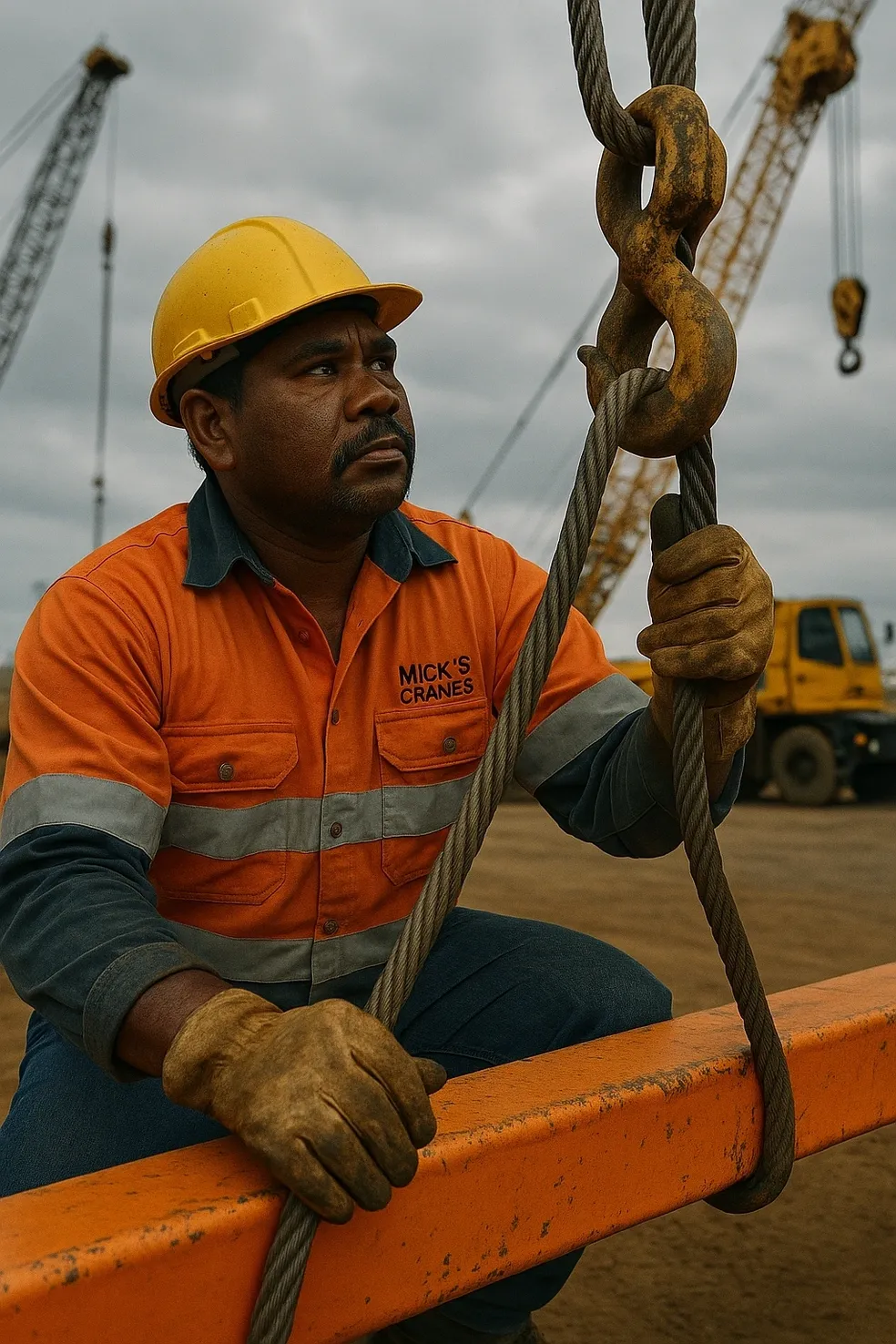
Michael Assan. Image: supplied.
Breaking into the market
Becoming the first Indigenous-owned crane company in the Northern Territory came with extra challenges.
"It's hard to prove yourself in this industry", Kate says. She recalls early feedback questioning their documentation despite Michael's extensive experience. "We've always had to prove that our safety standards are what they are."
Entry into defence work took time. "It took us ages to get into defence, get into some major projects across the NT", she says.
Even now, Michael notes, "every day we have to prove ourselves".
Despite these challenges, the company has secured work on key defence programs and is now engaged in larger construction and gas projects. Their ability to mobilise quickly, combined with the reputation Michael earned over many years, has helped them build trust. Consistent performance on smaller regional jobs has reinforced that confidence and positioned the company on more tender lists across the Territory.
Creating pathways for Indigenous workers
From the outset, Michael and Kate wanted to support Indigenous employment.
"We built MCA not just for us, but for everybody", Kate says.
The company now partners with the local CDP provider to bring inexperienced Aboriginal workers into the industry. These new entrants receive mentoring and on-the-job training.
Michael believes the crane industry offers long-term careers that many young people have not considered.
"People don't see it as a job opportunity", he says. "It's so big and it's a career."
Their growing labour-hire arm strengthens this pathway, giving workers exposure to different sites while assisting contractors that need skilled personnel.
Looking ahead
Michael sees significant opportunity over the next five years as defence, gas and civil programs expand across the Territory.
"The opportunity is there for us", he says. The focus now is on recruiting the right people, expanding their presence and maintaining safety and quality as demand increases.
Kate adds that they want to grow in a way that lifts others with them. "You need to find the right people to help you grow and help them grow too", she says.
Mick's Cranes Australia is still a young business, yet it is already contributing to local employment, supporting regional contractors and demonstrating that an Indigenous-owned crane company can compete in a demanding, capital-intensive sector. It is a story rooted in hard work, experience and a clear sense of purpose, and it is only at the beginning of its climb.