





Cyclone Fina, the first major storm of the season, swept across the Tiwi Islands with fierce winds that brought down trees, cut roads and disrupted everyday life.
In the tense days before and after the storm, Bathurst Island Housing Aboriginal Corporation showed why it remains one of the most valued organisations on the islands. What unfolded was a clear demonstration of BIHA's growth, professionalism and deep commitment to community.
Preparation began long before the cyclone made landfall. BIHA was engaged by Tiwi Islands Regional Council to support a full community clean up, led by Acting CEO Heidi Dorn.
CEO Kris Chambers explained: "BIHA assisted with removing debris, at risk trees, rubbish collections from community and a general sweep of the town. This was a three-day task."
"The leaders have been through this before and know the at-risk trees and services that will need to be sorted," Mr Chambers said.
This knowledge guided the preventative work that later proved essential in reducing the scale of damage once the cyclone hit. Tiwi workers used decades of experience to protect their own communities.
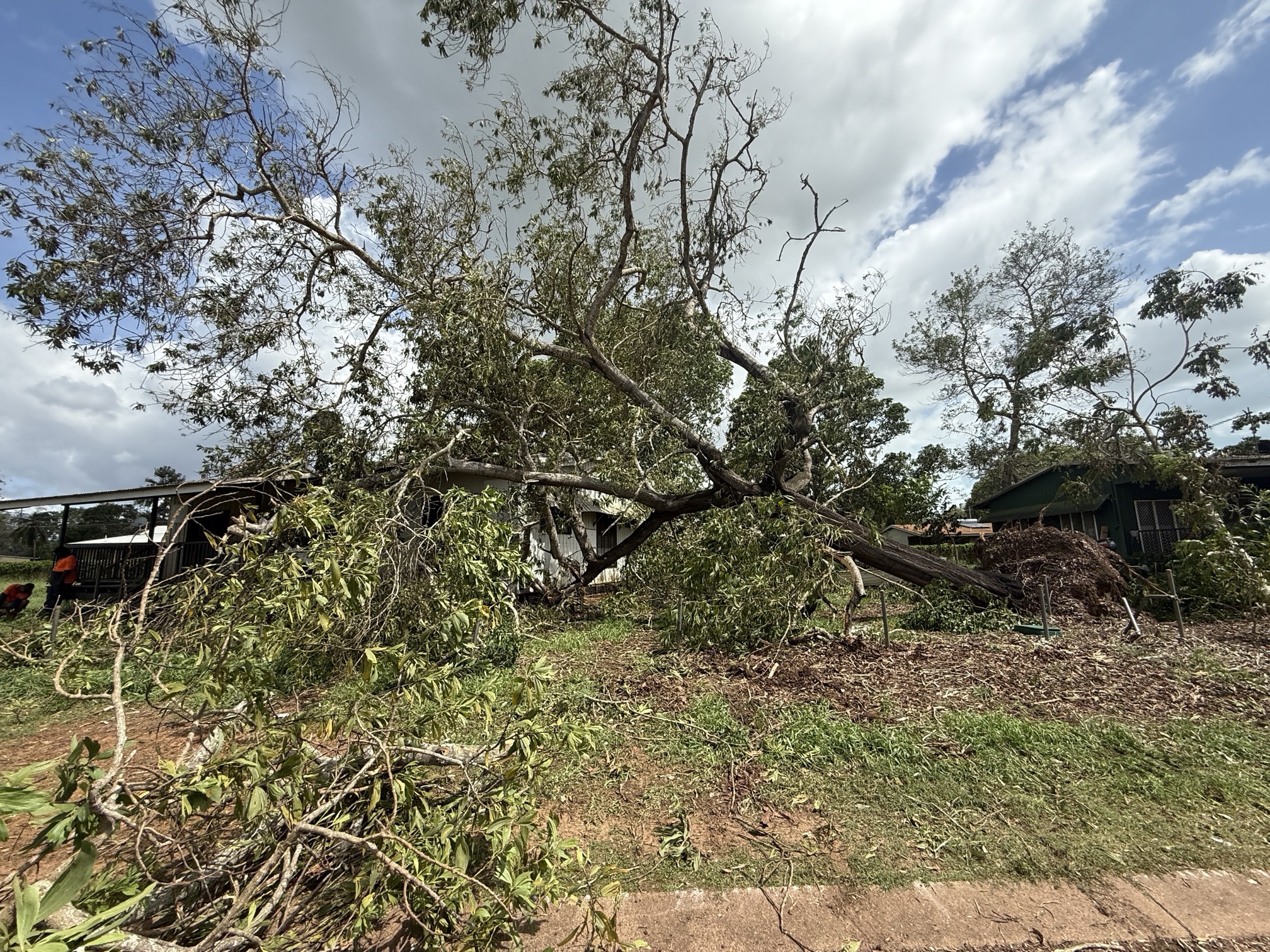
When Cyclone Fina passed, BIHA moved immediately into recovery mode. They acted as a full support arm to TIRC under Ms Dorn's leadership.
"Heidi steered us in the direction of greatest need," Mr Chambers said.
With blocked roads, impacted outstations and limited access across both islands, the priority was to reconnect communities as fast as possible.
Key BIHA staff — Gavin Ackland, Casey Canning and Jon Kelessy — worked from Sunday at 5am through to Tuesday night with barely any rest. Their commitment ensured emergency services and essential workers could reach areas that were otherwise cut off.
Melville Island was particularly hard hit. The long stretch of road to Tiwi College had trees down along nearly the entire route.
"Tiwi College on Melville Island really copped it hard with trees down along the 50 kilometre road," Mr Chambers said.
BIHA carpenter Jacob Halliwell joined emergency crews to reopen the road, restoring safe passage for teachers, health workers and supplies. BIHA's ability to deploy skilled workers quickly demonstrated the capability they have rebuilt over recent years.
Local Tiwi workers were vital to every step of the recovery. Their familiarity with the land and understanding of historical cyclone patterns allowed BIHA to move with confidence.
"Although the cyclone created lots of work and clearances, the damage really was at a minimum due to the local knowledge and preparation that went into the community pre cyclone," Mr Chambers said.
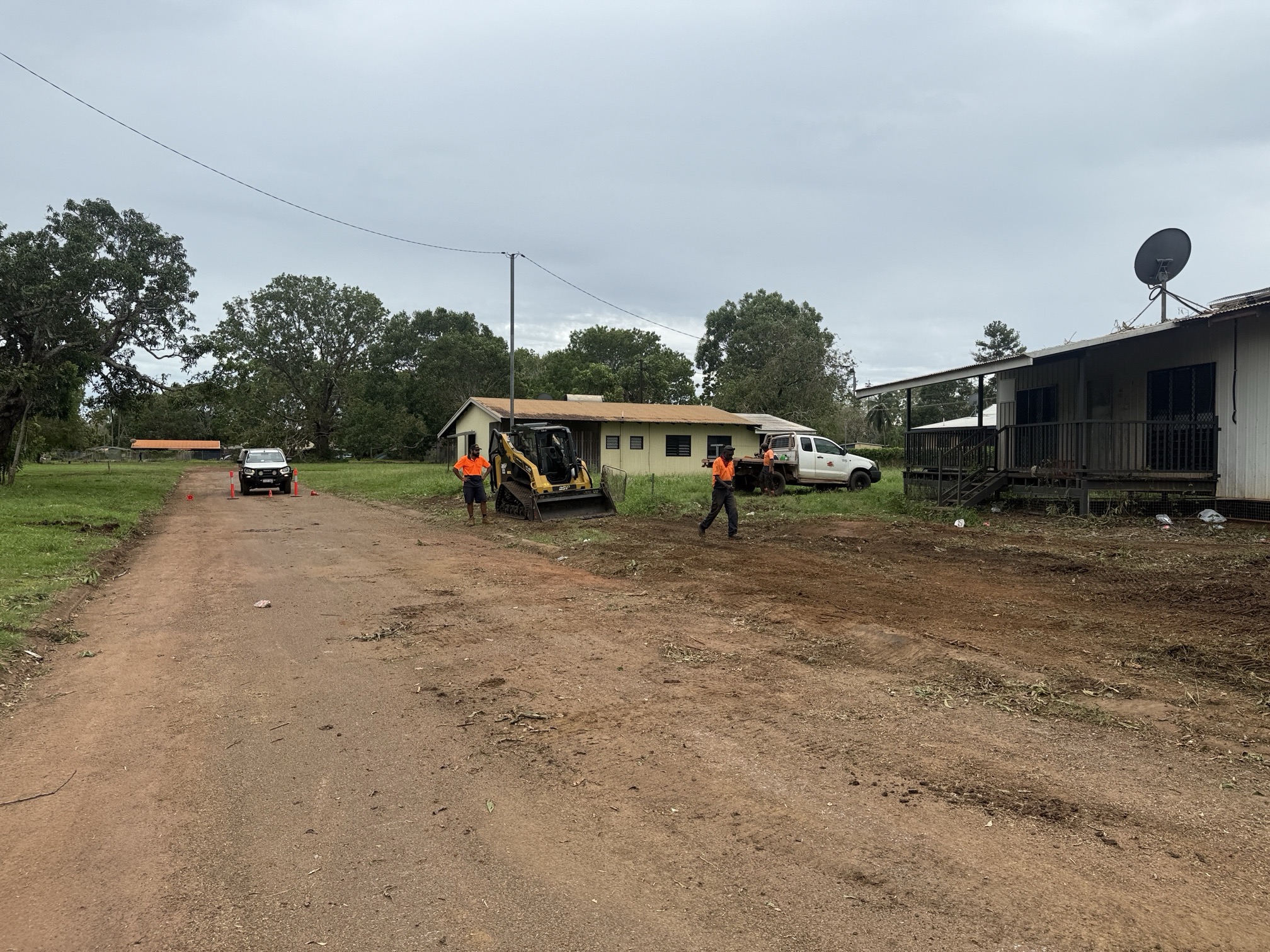
Even with strong leadership and coordination, the days after the cyclone brought significant challenges: access delays, debris volumes and communication issues. Clear direction from TIRC made the difference.
"Determining the scope and order to attack was handled by Heidi at TIRC. This allowed BIHA to simply get it done," Mr Chambers said.
With a unified approach, agencies avoided duplication and kept the focus on safety and restoration.
A turning point in BIHA's capacity has been its investment in new machinery over the past year, supported by lending partners who believe in the organisation's long-term vision. The impact of that investment was undeniable.
"Without the assistance of our lenders the community would still be laden with trees across roads, yards and houses," Mr Chambers said.
"It has been great to utilise our new assets in a positive, community-based way." This is BIHA's business model in practice — building capability not just for contracts, but for community resilience.
Cyclone Fina revealed the strength of Tiwi communities, and the transformation underway within BIHA; their preparation reduced risk, experience guided decisions, and equipment accelerated recovery. Their commitment meant families, schools and homelands were supported sooner than expected.
With more potential cyclones on the horizon, the Tiwi Islands know that resilience is a collective effort. Traditional Owners, outstation residents, regional councils, emergency services, local organisations and businesses like BIHA all play a vital role in protecting the islands.
"The partnerships on island are strong. BIHA has been lucky to have the machinery required, but it is the combined effort that makes the biggest difference," Mr Chambers said.