
Indigenous Business Australia will explore new economic empowerment initiatives for First Nations people aged 18 to 30 after its latest impact report found a generation already buying homes, starting businesses and leading change in their communities, and asking for the support to come earlier.
Key points
- Eight weeks to get a business going: the WA owner who says IBA’s loan is the only reason it exists
- “This will be a change in my family’s bloodline”: the Gamilaroi home owner in IBA’s report
- “Too often conversations focus on the barriers facing our young people. This report tells a different story.”
Indigenous Business Australia will explore new economic empowerment initiatives for First Nations people aged 18 to 30 after its latest impact report found a generation already buying homes, starting businesses and leading change in their communities, and asking for the support to come earlier.
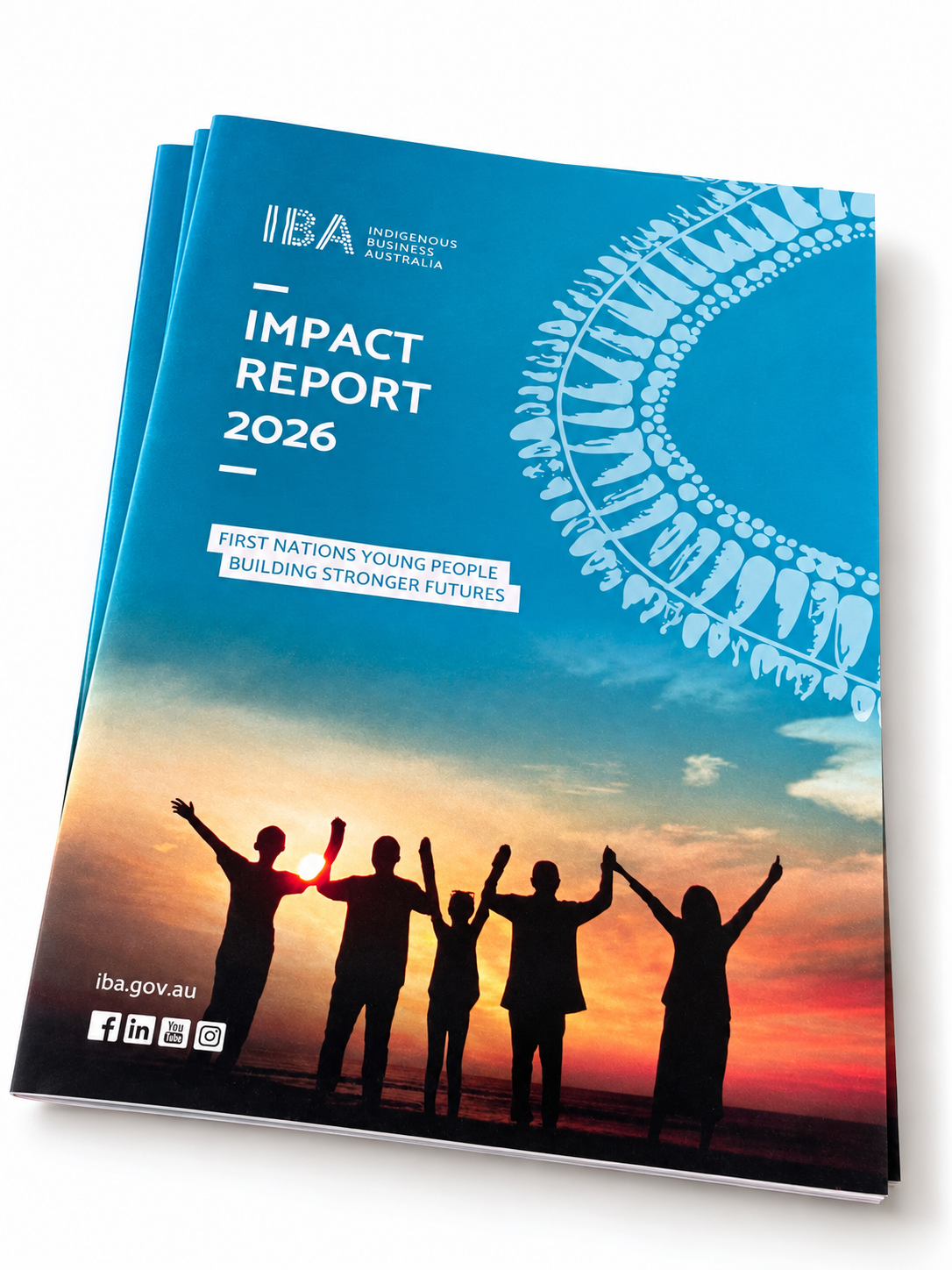
The Impact Report 2026, released on Thursday, is the fifth in IBA's impact series and the first built around young people. It counts 216,485 Aboriginal and Torres Strait Islander people aged 18 to 30 at the 2021 Census, 22 per cent of the First Nations population, and projects the cohort will reach 324,517 by 2041. The median age of First Nations people is 24, against 38.4 for the rest of the country.
"Too often conversations focus on the barriers facing our young people. This report tells a different story. It shows a generation creating opportunities, building wealth and leading economic change in their communities," IBA Chief Strategy and Product Officer Sean Armistead said.
"Our young people are already shaping strong, self-determined economic futures. The challenge now is ensuring they have access to the support, finance, and opportunities needed to realise their ambitions."
IBA manages $2.8 billion in assets, funds 89 per cent of its own budget from customer repayments and has 5,618 home loan and business customers, chair Darren Godwell told the Broome Indigenous Business Forum in May. Its Corporate Plan for 2026-27, released in August, targets more than 400 home loans, business finance for more than 180 businesses and capability building for more than 1,800 people this financial year.
First Nations researchers ran yarning circles with 32 young people on the Central Coast and in Perth, Cairns, Melbourne and the Gold Coast this year, an online survey, and in-depth interviews with 20 young IBA customers: seven alumni of the 2019 Futures Forum, seven business customers and six home loan customers. IBA describes the results as indicative.
In 2021, 17,907 employed Aboriginal and Torres Strait Islander people managed their own business, and more than a quarter of them were aged 15 to 34. Godwell said in May that the number of First Nations business owners and managers had nearly tripled since 2006, and that IBA had supported more than half of that growth.
Young people told the researchers they want to stand on their own feet, and they defined that in family terms. "I want to be in a position where I can look after myself and help my family at the same time," a young woman from regional WA said.
"We have different obligations and our needs for ourselves and families is different," a young Queensland woman said. "Housing for instance, we need to be able to buy bigger homes to look after our parents."
"Young people are not looking for handouts," the report says. "They want a fair chance, real support, and a clear path forward."
Among First Nations people aged 15 to 24, 58 per cent were fully engaged in work, education or training in 2021, up from 57.2 per cent in 2016. The Closing the Gap target is 67 per cent by 2031, and the Productivity Commission rates the measure as improving, though not yet on track.
Home ownership remains a significant aspiration, the report says. At the 2021 Census, 42.3 per cent of First Nations households owned their home, outright or with a mortgage, up from 39.6 per cent in 2016; the figure for all Australian households is 66 per cent. IBA's home loan program, established in 1975, has helped more than 23,000 First Nations people into home ownership.
"I was really close to giving up, but the renting crisis is so bad that I had to persevere. Luckily now my mortgage is basically the same as paying rent before," a NSW man said.
Gamilaroi woman Abbey, an IBA home owner featured in the report, said: "This isn't just a home; this will be a change in my family's bloodline. An opportunity to create a safe space and intergenerational wealth and healing for hopefully my future jarjums and their jarjums. Without IBA I don't think I'd have had a chance of becoming a first homeowner."
All 20 customers interviewed rated IBA's contribution to their lives as significantly positive, and none rated it negative. What they valued most was being backed.
"The funding helped, but it was having someone who believed in what I was trying to do that made the biggest difference," a business support customer said.
A young Aboriginal entrepreneur who had tried more than one business, and been told more than once that the idea was too risky, said IBA was "the first time I felt like someone actually understood the vision and wanted to support me on the journey." That customer now runs a business "with ambition for their own future and the generations behind them", the report says.
A young WA business owner said: "If IBA was not able to support us at a time where we had only eight weeks to get something going, our business would not be here today at all. None of it."
Bundjalung and Gamilaroi woman Erika Ferrier, whose Deadly Skincare took bronze for Indigenous business excellence at the 2025 AusMumpreneur Awards, is among the customers pictured in the report. "Deadly Skincare started from my kitchen table, but its spirit comes from my late Pop and Nan, who taught me the power of education, culture, and never forgetting where I come from," she said.
The findings "point to clear opportunities to strengthen its reach, deepen its impact, and uplift the next generation", the report says, and the interviews "highlighted opportunities to improve awareness and ongoing support". On awareness: "Awareness of IBA remains low among First Nations young people, particularly outside established networks and in regional areas," it says, and where young people had heard of it, the knowledge came through family, friends or a search engine.
"A lot of young people just don't know IBA is there. If they did, I think more people would give it a go," a young woman from the Gold Coast said.
"Participants generally responded positively once IBA's role was explained," the report says. IBA's 2024 impact report found customers wished they had learnt financial skills earlier, and the Corporate Plan released in August commits the agency to improving how it promotes its products and services.
On ongoing support, the report goes back to the Futures Forum. In March 2019 IBA took more than 50 people aged 18 to 30 to Murrook Cultural Centre on Worimi Country near Newcastle for a three-day Futures Forum, pitched as the start of a self-sustaining network of young people leading economic development. "Customers built networks, confidence and momentum," the report says. "Many have since gone on to lead change in their own ways."
"Young people can't dream long term when they're focused on surviving day to day," one participant said. "The forum gave space to step outside that for a moment and imagine something different."
The alumni interviewed this year asked for the relationship to continue. "It would be nice to receive an email every now and then, just to see what is going on, and more of that connection. I did not hear much with them anymore," a NSW man said.
The report sets six design principles for any youth initiative, from culturally grounded learning spaces and access to Elders and mentors to peer networks and partnerships with industry, and says the initiatives should include "earlier engagement and awareness-building through communities, digital platforms, and networks" and "long-term engagement and progression pathways that provide ongoing follow-up, coaching and support". IBA says it intends to explore "new economic empowerment initiatives for First Nations young people" that bring financial capability, leadership, entrepreneurship, home and business ownership pathways and ongoing support "into a connected and culturally grounded journey". It sets no date or budget, and says the work will build on "the strengths already identified across our existing activities".
IBA chief executive David Knights, the former National Australia Bank executive appointed in August 2025, said: "Young people have told us they want access to financial knowledge earlier, stronger pathways into business and employment, and support that reflects their lived experience."
"By investing in them today, we're investing in stronger families, stronger communities, and a stronger Australian economy for the generations to come."
Marissa, pictured in the report with a sold sign at 20, said: "I'm most looking forward to the permanency of owning a home and in 5 or 10 years time I will have children and they will grow up in the same 4 walls that I own today."
The report is available online at iba.gov.au/impact.