

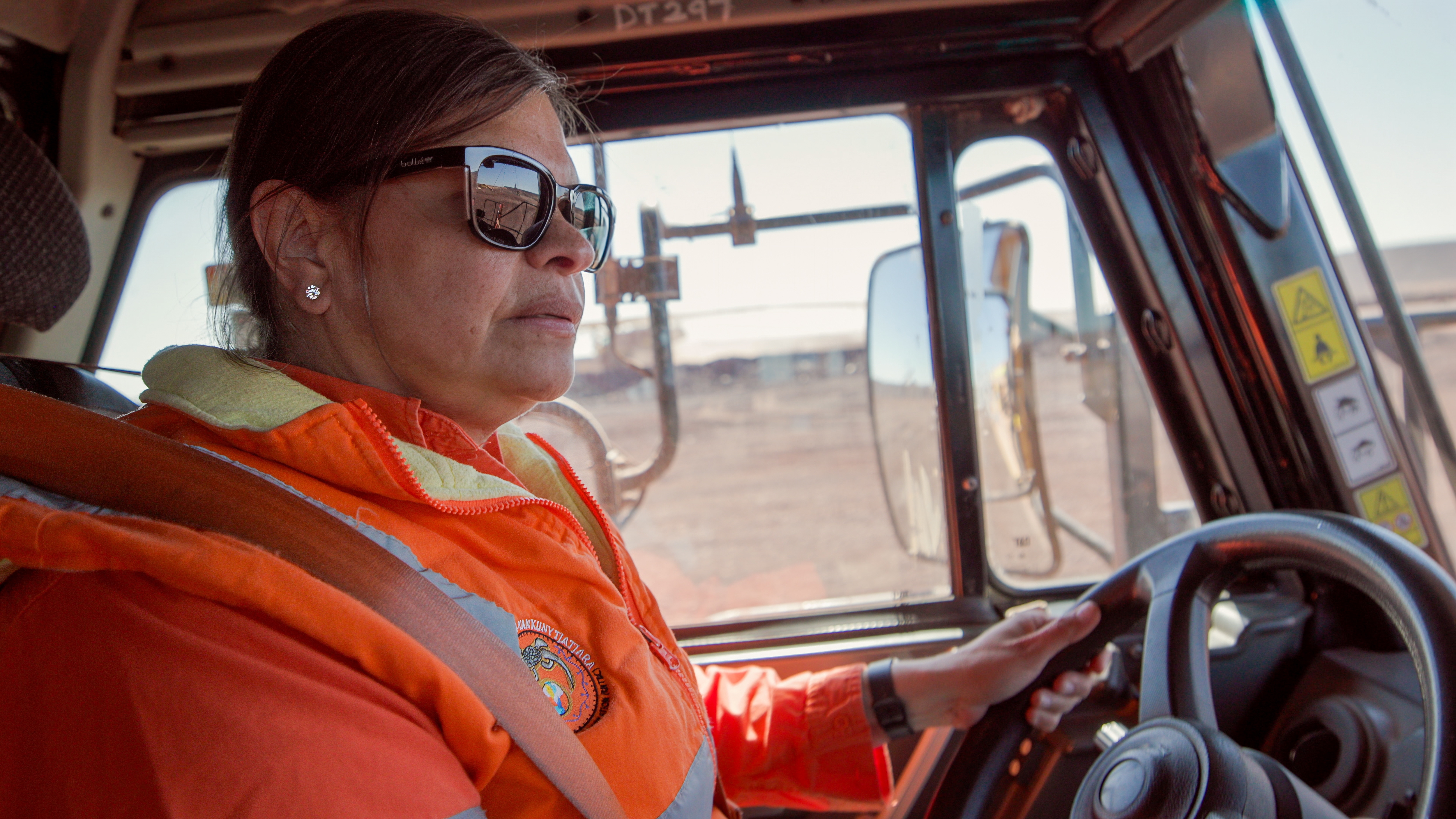
Four months into the largest standalone contract BHP has awarded to a Traditional Owner business in South Australia, AMY Nominees runs the ore feed at Prominent Hill around the clock with a workforce drawn heavily from its own people.
"About 50 per cent of our employees are Indigenous, and out of that probably 30 per cent from the local community," AMY Nominees general manager operations Lee Emmett said.
The company, the business arm of the Antakirinja Matu-Yankunytjatjara Aboriginal Corporation (AMYAC), started its five-year, $60 million run of mine contract on 1 July, after eight years building capability on the same ground.
Mr Emmett said AMY Nominees had turned over "a couple of million dollars a year" for most of the past six years.
"It's quite a big jump for us," he said. "This year alone we've put on an extra six or seven key people just to get us up to the level that we need to be."
BHP spent $112 million with Indigenous suppliers last financial year and $292 million with local businesses in the Upper Spencer Gulf and Roxby Downs, and the company continues to focus on increasing participation and opportunities for Indigenous suppliers and local businesses.
Division of Responsibility
Mr Emmett joined AMY Nominees late last year after three years in Papua New Guinea. More than a decade ago he helped set up the first Indigenous civil contract at Olympic Dam. Asked whether he had seen a resources company back a Traditional Owner business this way before, he said: "Not to the level of this one."
Asked what other native title groups should take from the AMY model, he pointed first to governance. AMYAC keeps its native title board and its business board separate, and professionals make the commercial calls.
"The decisions that are made at a business level are done by a team of people that are professionals and have long-standing experience in making those decisions," he said. "So they're not influenced by community.
"There seems to be a lot of delays and infighting sometimes with communities that get too involved in the business side of things, whereas we employ people to do that work, to make the decisions. The board still has to endorse and support them."
Mr Emmett and his executive team report to the AMY Nominees board and present to the AMYAC board three or four times a year. Some directors sit on both. The company works to two, three and five-year business plans, checks them at every board meeting, and is bringing in a policy to rotate two directors every two years.
His second lesson is systems.
"A lot of the businesses, particularly Indigenous and TO businesses, may not be at the level they need to be to undertake contracts, especially in the mining and resources sector, where you have to have a very strong management system," he said.
"You need to have the right people within your business to implement them and maintain them to a level that BHP and other large miners expect."
Wages first
Most of AMY Nominees' earnings have gone back into the business, much of it into management systems. Mr Emmett said the company had still paid more than $18 million in wages to the local Indigenous community over the past decade.
It also sponsors netball and football carnivals each year in Adelaide and Port Augusta, covering uniforms, accommodation and travel so members can compete.
"Hopefully there will be a day where we can pay a dividend back to the AMY community," Mr Emmett said.
AMY Nominees contractual business advisor Rob Gibb said the return already shows in the community.
"When you look at what goes back to community now, that's where the difference is made," he said. "Watching families grow, watching wages go back to community, watching what happens with that flow-on effect.
"It's also watching the growth of young Aboriginal people going on the site at Prominent Hill, knowing that they can hold their head up high and say, this is our land we're working on."
Beyond the mine gate
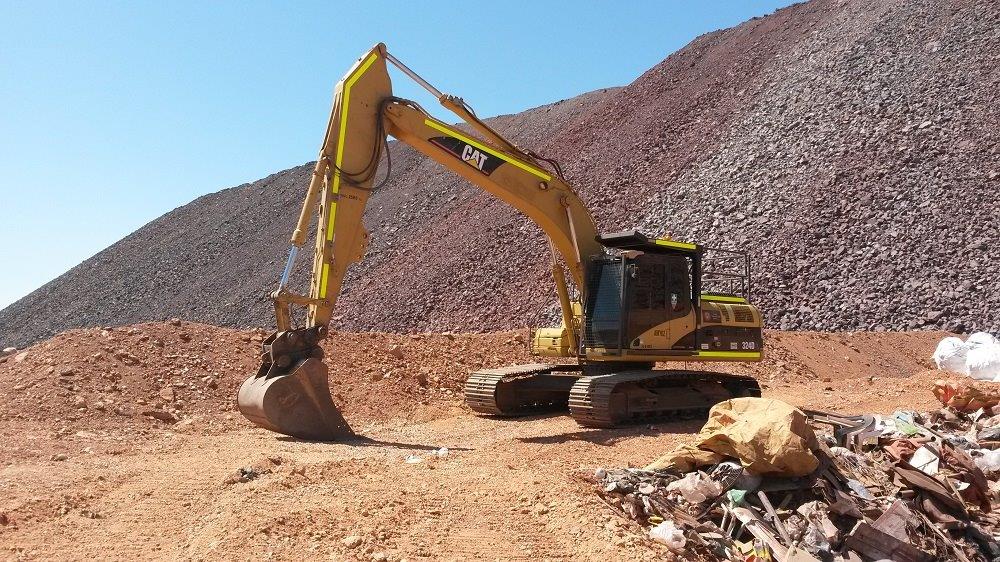
AMY Nominees' strategic plan calls for diversification, and the company has already moved beyond the mine gate. It co-owns Macweld Crane Hire in Port Augusta with Fleurieu Cranes, holds Mabel Creek Station near Coober Pedy, and this year completed a civil project in the defence sector worth $2 million to $3 million.
The station is sub-leased to a pastoralist, and Traditional Owners use it for cultural business. Mr Emmett said the longer-term plan was to upgrade its houses, sheds and infrastructure so the community could run it, with livestock and tourism close to the Ghan line and Coober Pedy.
"You'd experience not only that station working experience but also a traditional Aboriginal experience," he said.
The ROM contract has also brought miners on AMY country to the door, from early-stage explorers to operating mines.
"There's a lot of mining companies and small miners that are really keen to talk to us and understand our model and how we've managed to make it successful," Mr Emmett said.
Mr Crombie wants the partnership to take AMY people further.
"I hope the BHP partnership just continues to strengthen, and have other opportunities, not just in Prominent Hill but also outside of it," he said.