




Qantas has released a new Reconciliation Action Plan that marks a significant shift in the way the airline approaches Indigenous engagement, procurement, and cultural representation. The 2025–2028 Stretch RAP outlines measurable targets across employment, supplier diversity, and governance, indicating a deliberate move toward structural inclusion.
At the centre of the plan is a $45 million procurement commitment that will see Qantas work with more than 15 Aboriginal and Torres Strait Islander-owned businesses over a three-year period. The figure represents a substantial increase from previous years and builds on the $29 million spent with First Nations suppliers in FY24. In 2022, the airline's spend was less than a quarter of that amount.
Qantas Group CEO Vanessa Hudson described the new strategy as part of the organisation's responsibility to reflect the "Spirit of Australia" not just in branding, but in action. She said the new RAP was designed to build a more inclusive and equitable society through deliberate partnership with First Nations peoples.
The document commits the airline to annual Indigenous employment targets, increased leadership representation, and the embedding of Indigenous Cultural Intellectual Property protocols across all business units. Qantas will also expand its relationships with Aboriginal-owned carbon offset providers and Indigenous-led community programs.
Notably, the RAP introduces a governance structure that includes a First Nations Internal Advisory Council, which will oversee implementation alongside the Qantas Board and senior executive team. The Daramu Employee Network, made up of Aboriginal and Torres Strait Islander staff and allies, has also been elevated as a formal stakeholder in RAP delivery.
The plan includes measures to expand employment pathways. Qantas has set incremental workforce targets, aiming to increase Indigenous representation from 1.5 percent in 2025 to 1.7 percent by 2028. This initiative is supported by leadership development programs, mentoring frameworks, and new support systems for cultural safety and mental health.

Qantas staff gather to celebrate the launch, yesterday at Qantas Group HQ in Mascot. Image: supplied.
The focus on Indigenous procurement reflects a broader movement across corporate Australia to address long-standing barriers in supply chain access. Qantas has pledged not only to increase spend with Indigenous businesses, but also to incubate new suppliers through direct mentorship, procurement training, and barrier reduction within its procurement policies. This includes a formal review of all procurement practices and a revision of the Qantas Supplier Code of Conduct to align with the UN Declaration on the Rights of Indigenous Peoples.
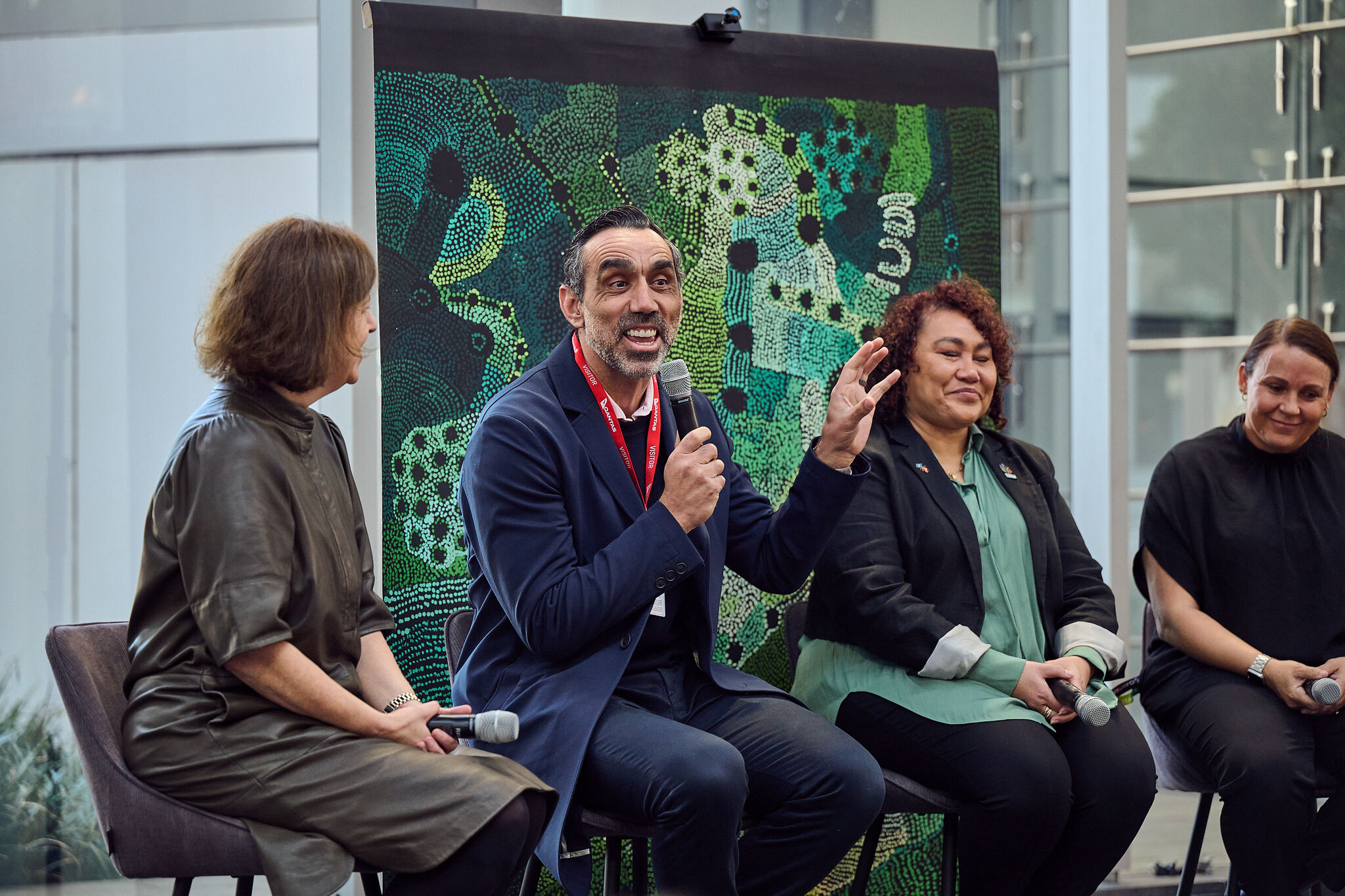
Event panelists including Qantas Advisor and retired footballer Adam Goodes
Environmental initiatives have also been incorporated into the new RAP. Qantas has committed to sourcing 25 percent of the carbon credits for its voluntary offset program from Aboriginal and Torres Strait Islander-owned projects, subject to market availability. The airline's partnership with Arnhem Land Fire Abatement has already delivered more than 64,000 tonnes of carbon abatement through traditional burning practices that also generate employment and cultural outcomes.
"Qantas' commitment of purchasing ALFA carbon credits as part of its Voluntary Carbon Program provides income that not only helps to maintain the ongoing cultural fire practices, but also helps to underpin activities like rock-art restoration, the protection of important flora and fauna species, and more broadly supporting the Healthy Country Plans of the ranger groups involved in the projects," ALFA chief executive Dr Jennifer Ansell said.

Arnhem Land Fire management (supplied).
Beyond internal operations, Qantas has committed to enhancing the visibility of Indigenous culture across the customer journey. Acknowledgement of Country will remain part of all domestic and international flights, and cultural content will continue to feature in inflight entertainment and lounge services. In addition, Qantas will collaborate with Indigenous tourism operators and cultural institutions to strengthen its promotion of First Nations experiences.
Qantas's partnership with Bangarra Dance Theatre marks one of the airline's longest-standing cultural collaborations, now in its 25th year. Since 2000, the relationship has supported Bangarra's national and international touring, community engagement programs, and the promotion of Indigenous storytelling to a global audience.
Qantas's RAP identifies Bangarra as a key cultural partner in its truth-telling and storytelling objectives. This includes continued promotion of Bangarra performances and stories through Qantas channels, alongside other initiatives that aim to embed First Nations perspectives throughout the customer journey. The partnership underscores Qantas's broader strategy to support Indigenous cultural institutions not only through financial investment, but by amplifying their work across platforms that reach domestic and international audiences.
Louise Ingram, Bangarra Executive Director and Co-CEO, said: "With Qantas's partnership, we have expanded our creative reach - touring ambitious stage works, nurturing new creative voices, and delivering deeper engagement through residencies and workshops on Country. Together, we have built a model of partnership grounded in mutual respect and shared purpose - driving cultural change and deepening public understanding of First Nations cultures in this country."

Bangarra Dancers (supplied)
Public storytelling is also being addressed. For the first time, Qantas has committed to work directly with Indigenous-owned media outlets to share company updates and community partnerships. This move responds to longstanding calls from Indigenous media for corporate Australia to invest in community-based communications and coverage.
The plan builds on decades of cultural engagement, most visibly expressed through the airline's Flying Art Series. In late 2023, Qantas unveiled its sixth aircraft in the series, featuring a livery designed by senior Pitjantjatjara artist Maringka Baker and produced by Indigenous design firm Balarinji. The artwork, titled Minyma Kutjara Tjukurpa, tells the Dreaming story of two sisters travelling across country and has been described by the airline as a visual statement of its reconciliation commitment.
In February 2025, the Indigenous Business Review reported that QantasLink had named a Dash 8-400 aircraft in honour of Ngurupai (Horn Island), using both the Kaurareg traditional name and the English name. The naming ceremony was conducted on Country and included performances and a community gathering organised by the Torres Shire Council and local Elders. It marked one of the few examples in Australian aviation where traditional language has been formally recognised on aircraft livery.
The new RAP suggests that Qantas is now working to embed reconciliation across its systems, rather than rely on high-profile visuals alone. The company's decision to introduce ICIP protocols, expand Indigenous representation in decision-making, and publish annual RAP progress reports reflects a maturing approach.
Karen Mundine, CEO of Reconciliation Australia, commended the plan, noting that Qantas was one of the earliest adopters of the RAP framework and remains influential across the business community. She said the new plan demonstrated "deep listening, critical self-reflection and an unwavering commitment to do better."

Reconciliation Australia chief executive Karen Mundine
Qantas's 2025 - 2028 RAP can be viewed here: https://www.qantas.com/au/en/qantas-group/sustainability/reconciliation-at-qantas.html