





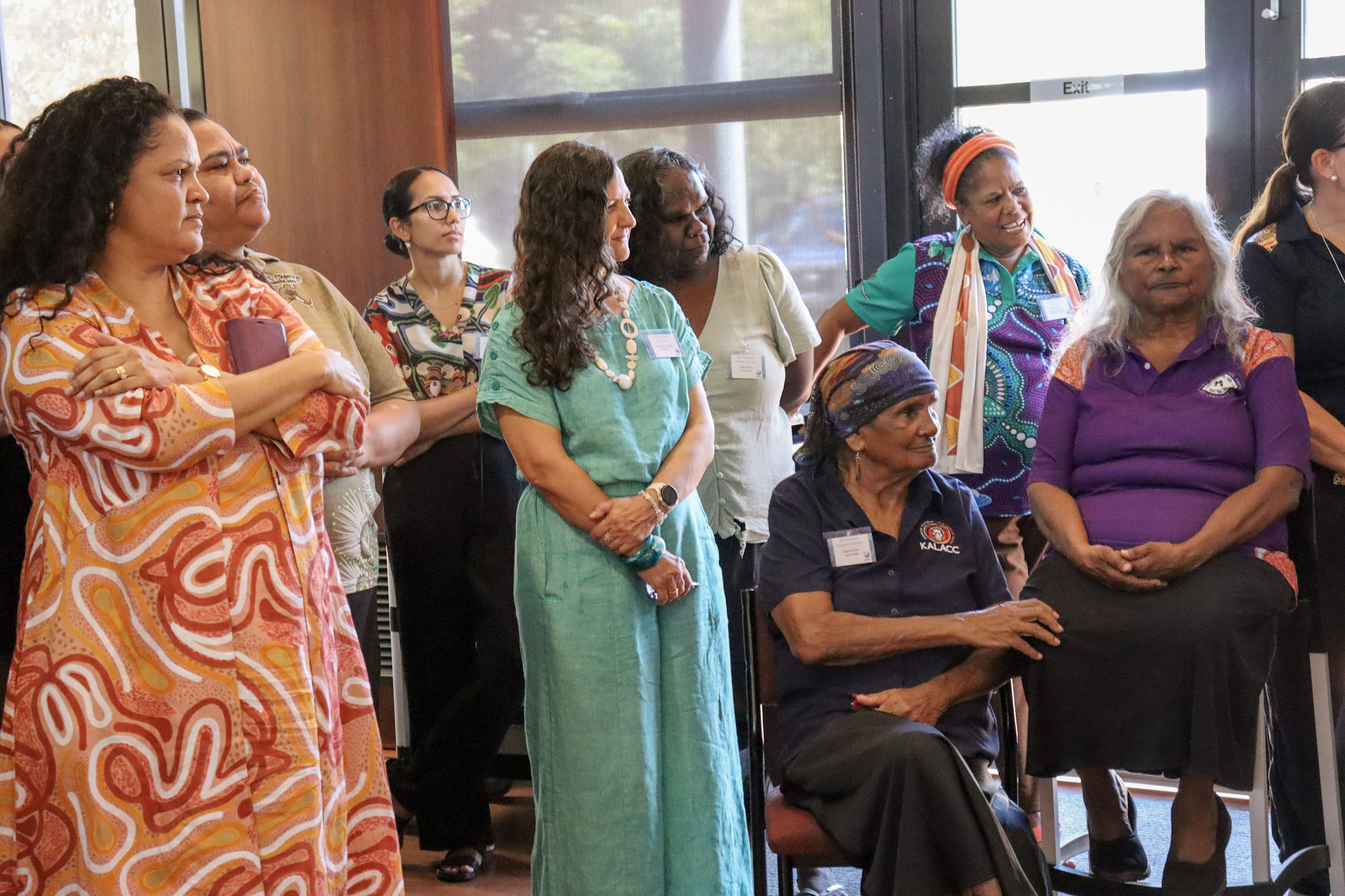
On Yawuru Country in Rubibi (Broome), more than one hundred Aboriginal matriarchs and emerging women leaders from across Australia gathered for the 2025 Kimberley Aboriginal Women's Council roundtable.
Together, they laid out a roadmap to place Aboriginal women at the centre of child protection, family safety and economic decision-making.
Now in its seventh year, the three-day event was held under the theme United in Purpose: Governance, Solidarity and Voice.
Ancestors — women who led, nurtured and shared their stories — were at the forefront of the room's reflections, a reminder that today's change is rooted in the strength of past generations.
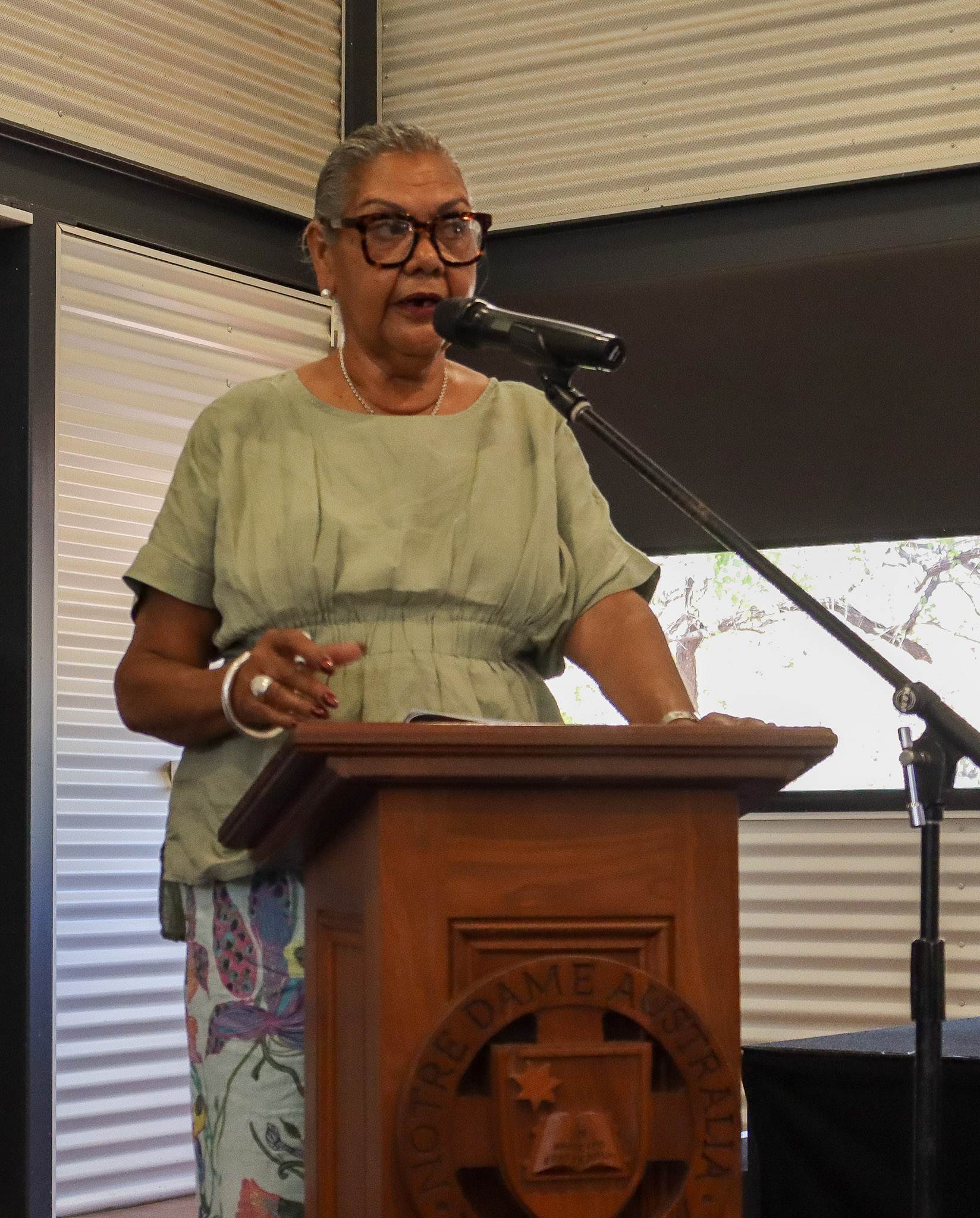
Bunuba woman and chair of the Wiyi Yani U Thangani Institute for First Nations Gender Justice at the Australian National University, June Oscar, said "this round table is not just a meeting".
"It is a continuation of a movement, this round table is part of their legacy," she said.
Change, according to Ms Oscar, must rest on a foundation of peace; the quiet, deliberate work of creating harmony within communities.
"As women, our roles in weaving the social fabric together means we are peace builders,It's the work of actively creating the world we want to occupy," Ms Oscar said.
The meeting set out a cycle of reform: Cultural healing first, then service redesign led by local women, and finally, system change.
.
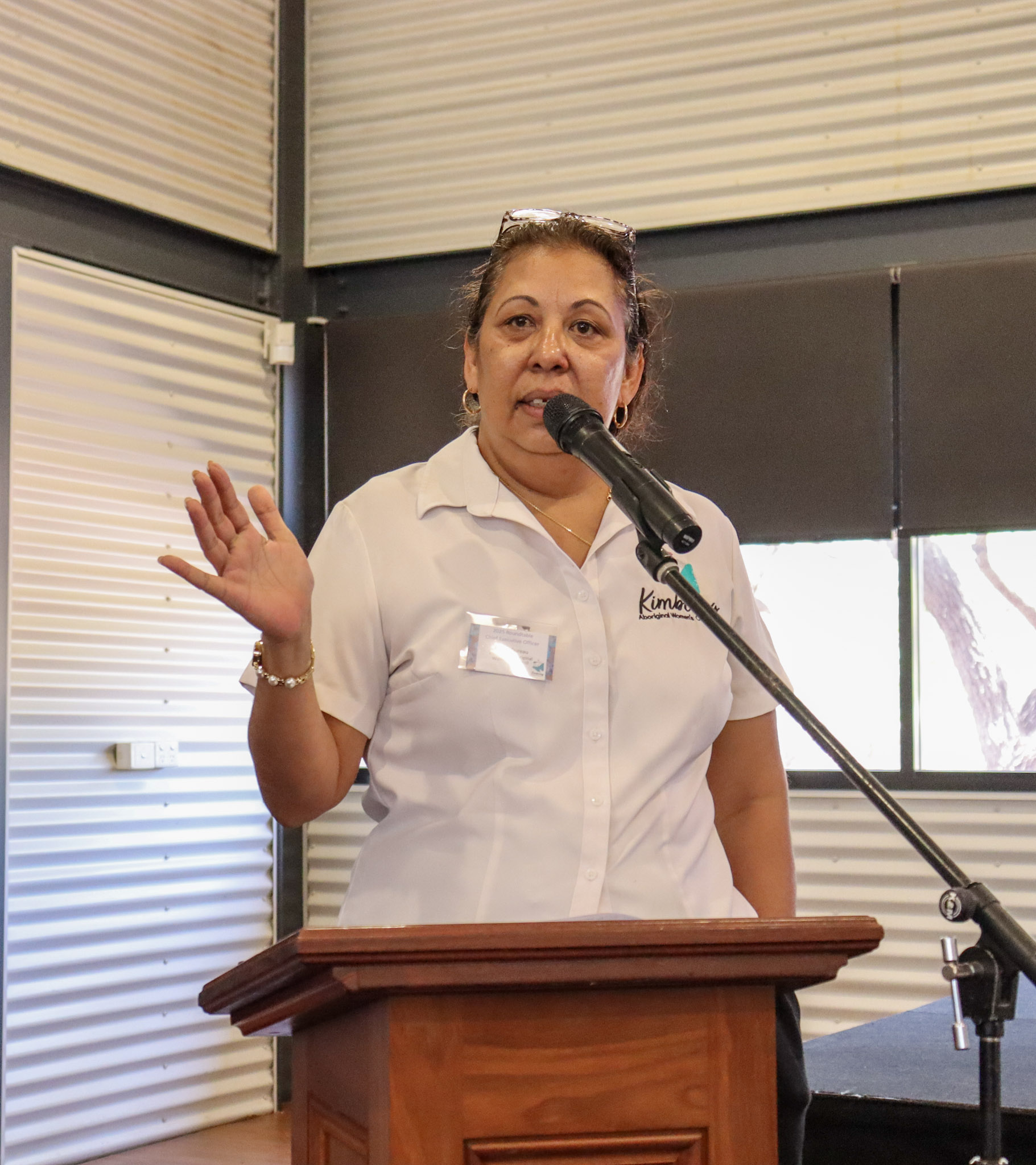
Nyikina and Bunuba woman and KAWC chief executive Janine Dureau urged self-determination through voice, cautioning of the cost when Aboriginal women are excluded from government and policy decisions.
"Family violence policies are written without centring Aboriginal women, decisions are made without the voices of mothers," Ms Dureau said, warning that the Kimberley is grappling with rising family violence, youth crime and child removals.
Independent reviews echo parts of that picture.
A 2025 Human Rights Watch report found Aboriginal women in WA often avoid seeking help for domestic violence for fear their children will be taken, calling for stronger, culturally safe supports.
Meanwhile, a SNAICC review found that in 2022–23 only about three per cent of WA child-protection spending went to Aboriginal Community Controlled Organisations, underscoring how little design and delivery power rests with Aboriginal-led bodies.
Ms Dureau's theory of change rejects a linear, government-first model.
Instead, she outlined a practical path for turning reform into real-world action.
"It is not a pyramid or a straight line, it is a circle," she told the women.
"When culture is strong, it makes our services stronger, when services are strong, they influence the system."
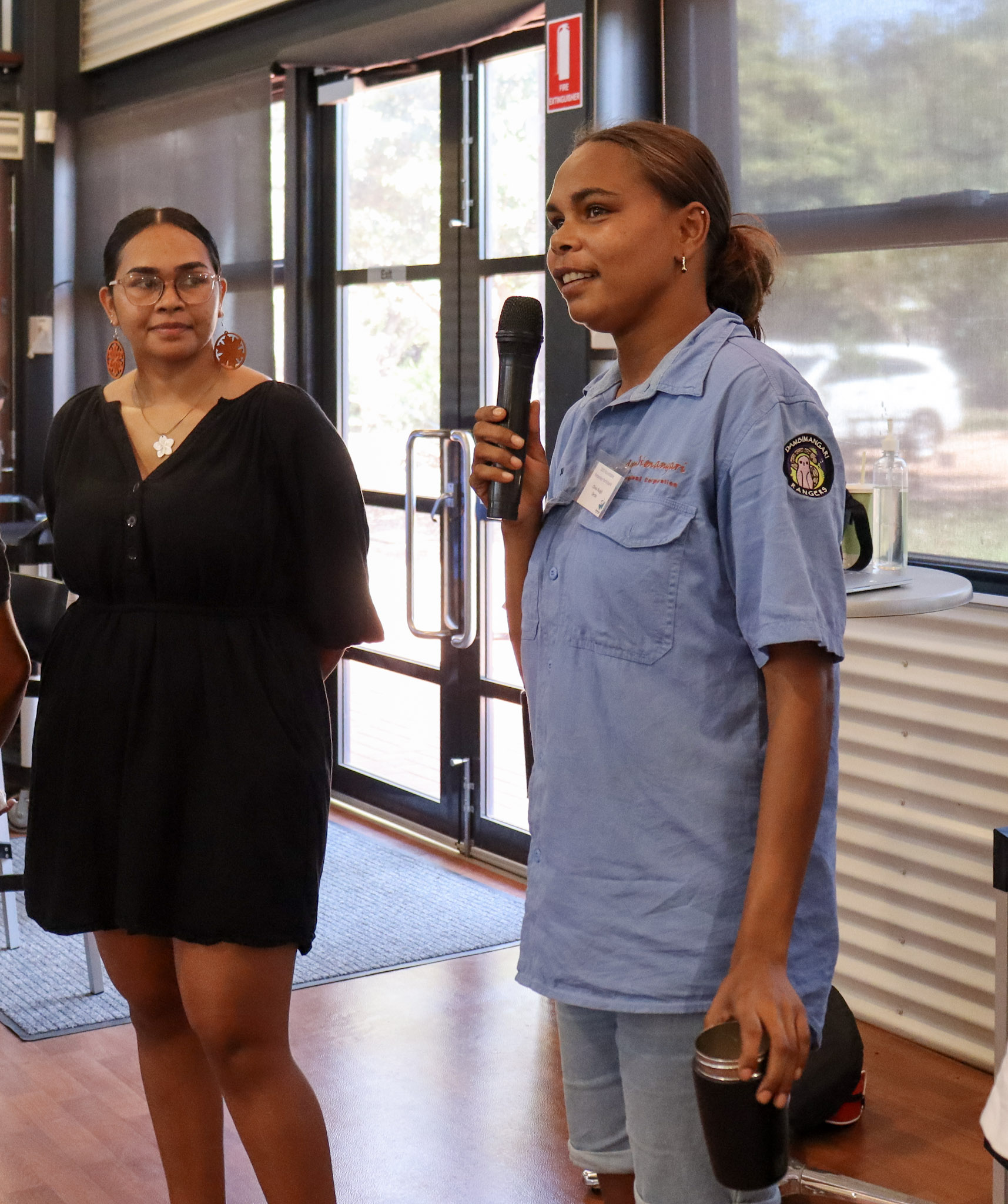
"And when systems change, they protect and resource our culture. Each part feeds the other, and together, they drive self-determination."
The importance of Aboriginal women in business as a vehicle for self-determination and economic independence was highlighted by Jaru woman and Kimberley Jiyigas founder Natasha Short.
"Through entrepreneurship, we reclaim our narrative, harness our creativity and assert our right to economic independence," she said.
Ms Short also runs the Maganda Makers Business Club (Maganda means tomorrow in Yawuru).
The network is pivotal in uplifting small Aboriginal women's businesses that are often overlooked for financial backing, and enterprise support.
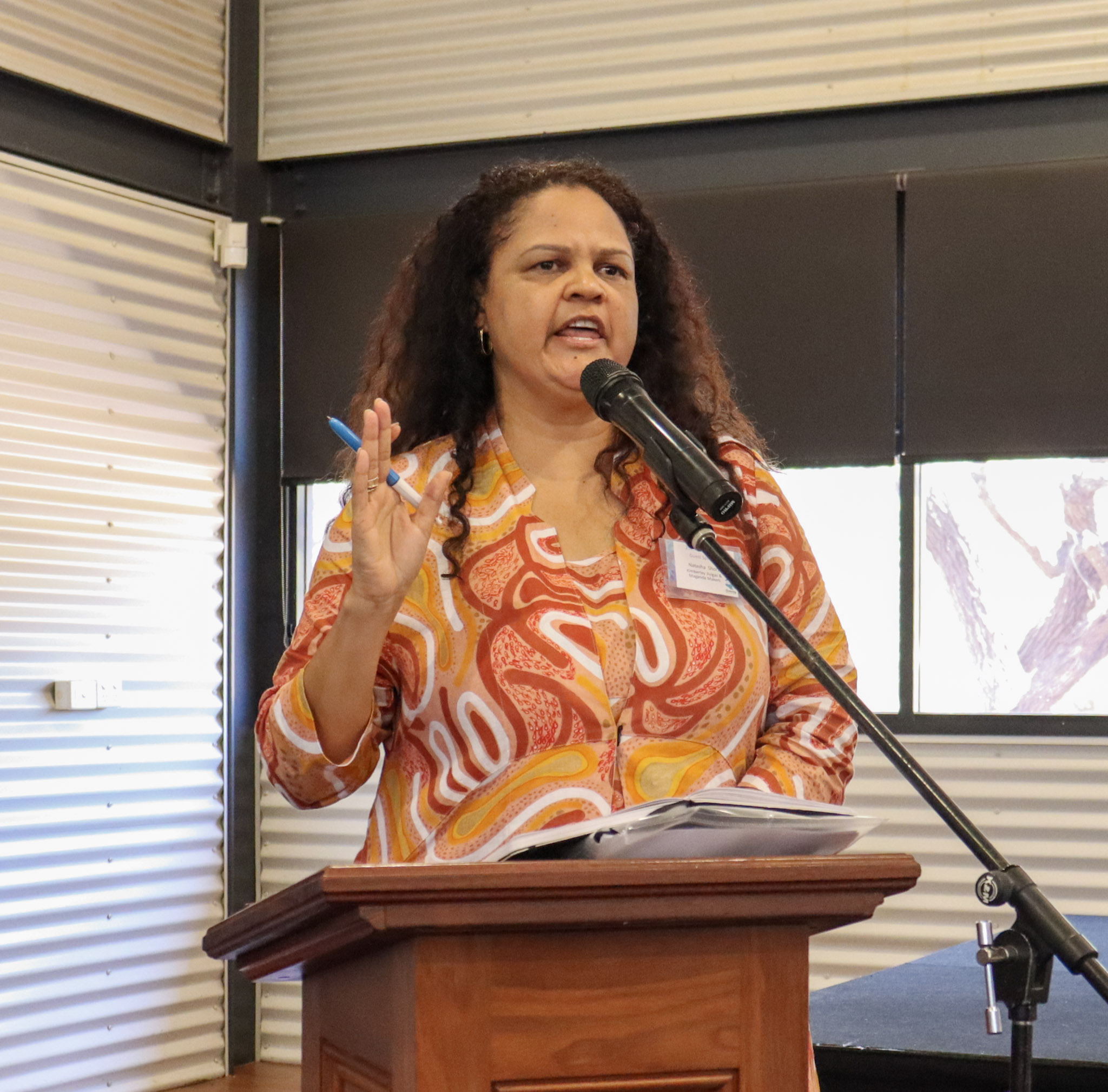
"This Maganda Makers movement is not only about individual success," she said.
"It is about building a collective legacy of prosperity, sustainability and resilience."
Business, she argued, is "a means of sovereignty", not a side hustle.
She spoke about the autonomy and flexibility that come from running and owning a business as an Aboriginal woman.
"Most of us have been in employment, but business is producing an outcome. That's what I do in business. That's what others are doing. They design their own life."
Another lever in Aboriginal women's enterprise is intellectual property, said Jaru woman and inter-cultural strategic planner Vanessa Elliot.
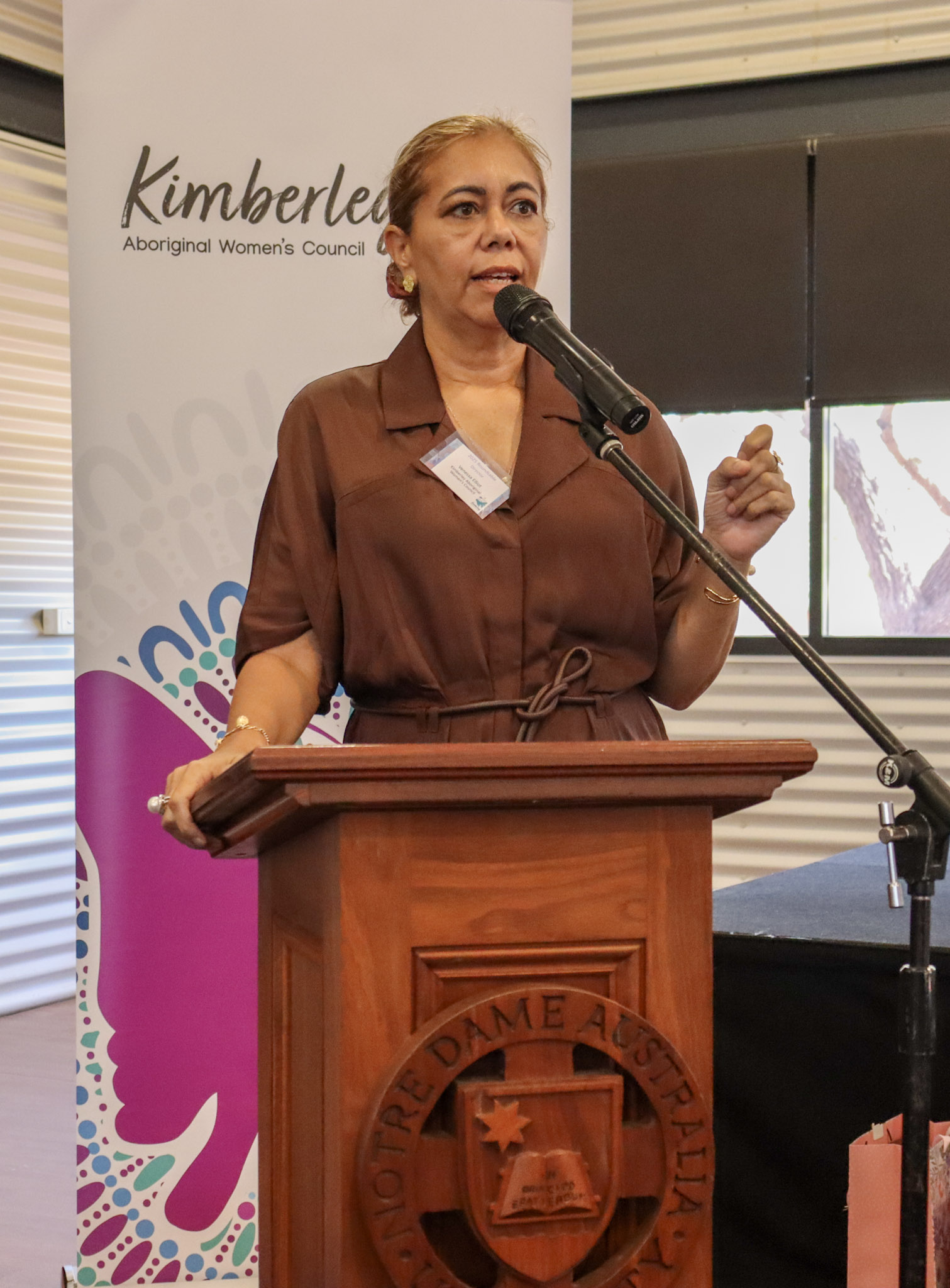
She urged women in the crowd to protect language and designs.
"There's phraseology that we have as Indigenous women that has high net worth, you can start trademarking that."
Ms Elliot outlined her own business model, designed to be culturally informed and to give back to community — one-third board work, one-third commercial, one-third volunteering — built to multiply both impact and time.
"Don't ever let anyone tell you your worth based on what you earn today," she said, describing how running a business allowed her to spend time with elders in care while sustaining her income.
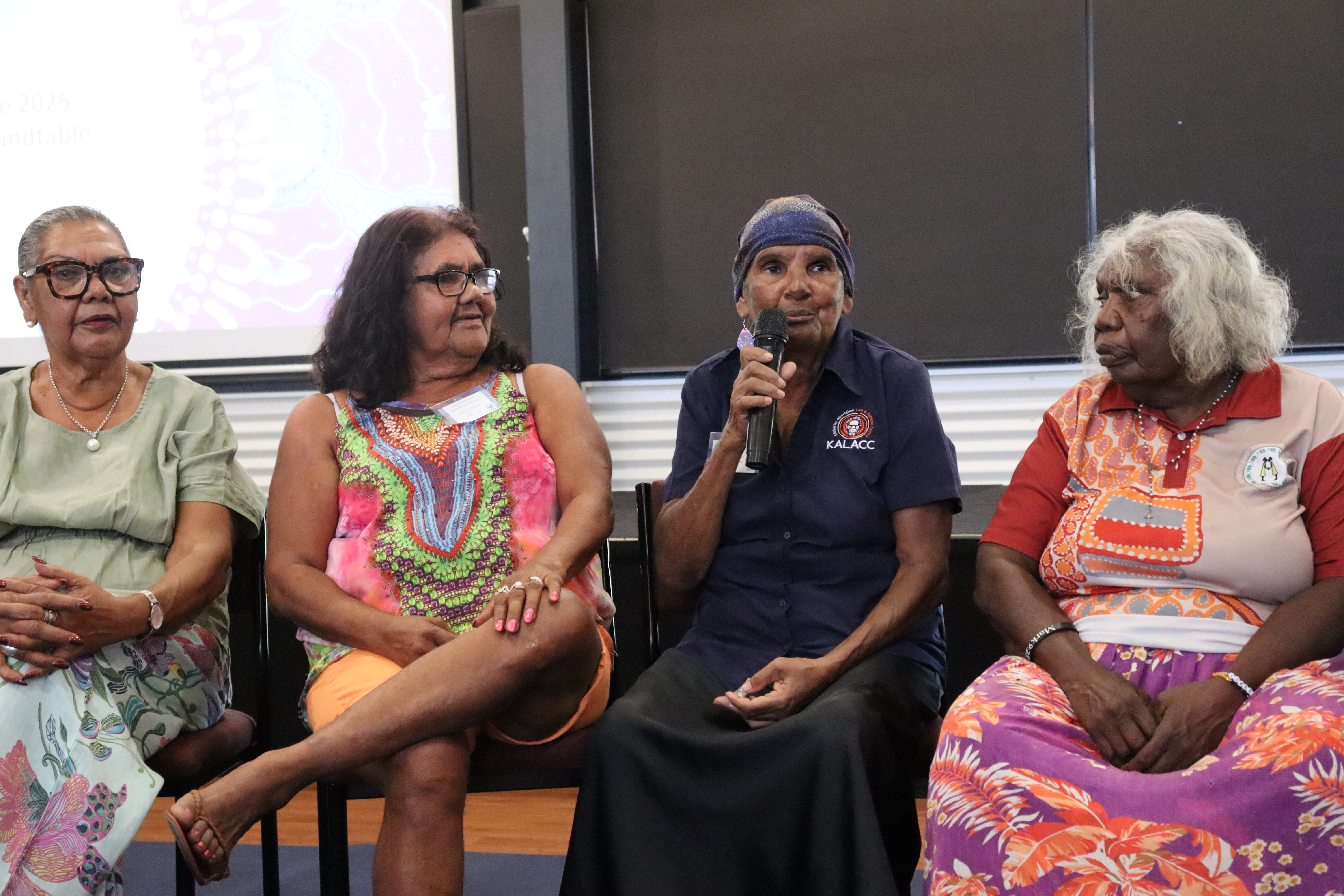
KAWC's next steps are immediate and political: meeting ministers, pushing for women-governed Aboriginal services, and building a WA Aboriginal Women's Alliance to embed women's leadership in state reform.
As Ms Oscar said, "what is decided here over the next few days will not stop here".
"It will flow into every corner of the Kimberley, across WA, across the country and onto the global stage."