





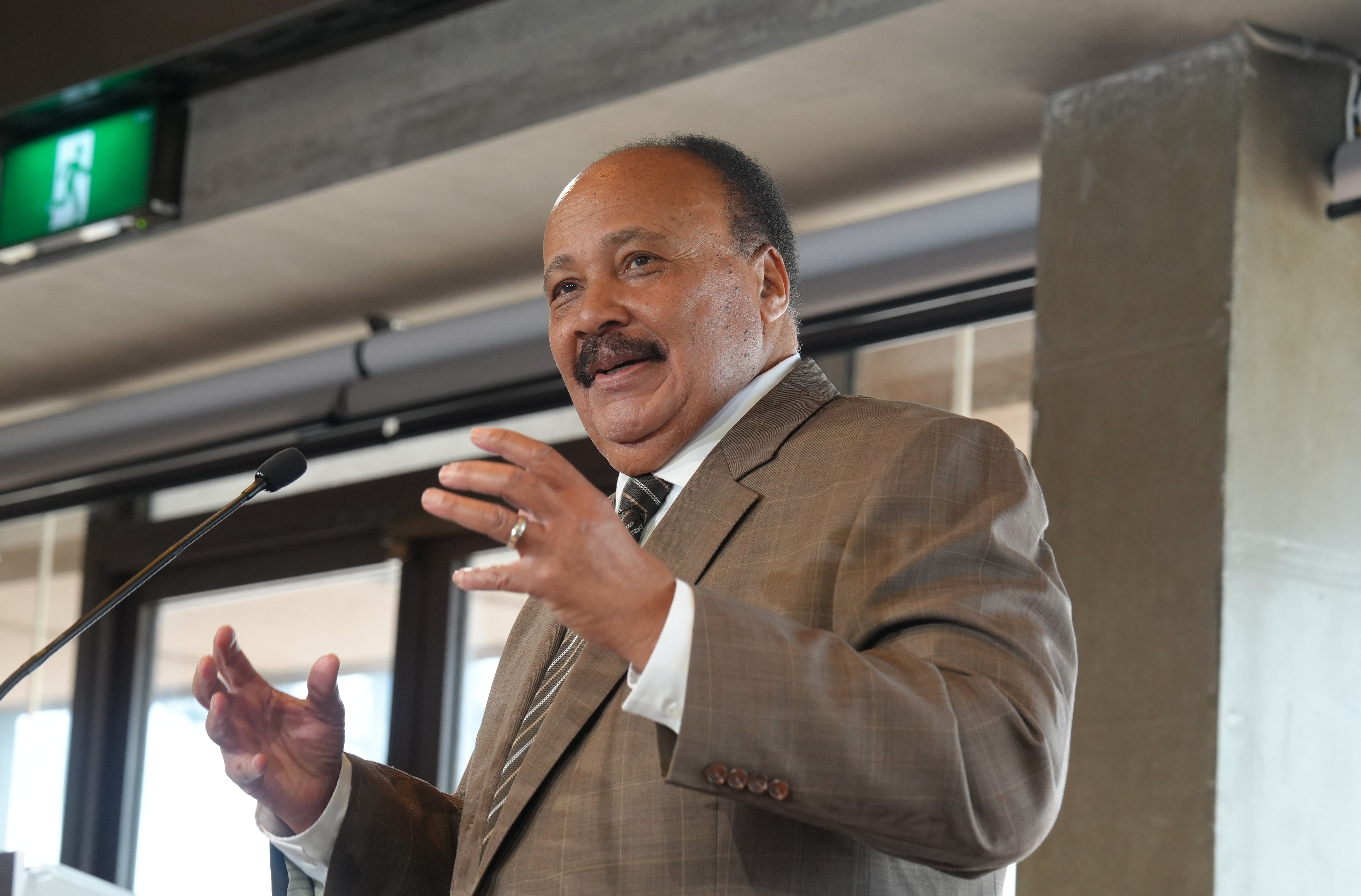
Martin Luther King III was formally welcomed at Sydney Opera House on Gadigal Country on Tuesday, marking a historic moment for First Nations economic empowerment as the globally recognised human rights advocate launched his Legacy and Leadership tour in partnership with First Nations non-profit organisation, CareerTrackers.
The Legacy and Leadership tour is a four-day event uniting First Nations students, employers, universities and leaders from across the nation from 3 January to 6 January.
Featuring leadership development opportunities, networking events and galas celebrating Indigenous leadership, achievement and representation, it aims to spark a national conversation about First Nations equity, opportunity and economic participation.
"This is a historic week for CareerTrackers. It's a historic week for Indigenous Australians, and it's a historic week for the employers, the universities and the people in those institutions who have for decades gotten us to this point of advancement in higher education and employment," said CareerTrackers chief executive Adam Davids.
Martin Luther King III was formally welcomed by respected Elders Aunty Barb Simm and Uncle Dean Kelly, alongside Mr Davids, with a traditional smoking ceremony and dance performance at the Sydney Opera House.
"I'm honoured to be a part of advancing the dialogue, to advance the opportunities, to advance in whatever way I can, because that's who my father and mother were, and that's who my wife and I are, and even our daughter," Mr King said.

His visit connects the King family's civil rights legacy with the economic empowerment of First Nations Australians - celebrating First Nations achievement demonstrated by CareerTracker alumni, while promoting systemic change.
At the heart of the partnership is a shared belief in equal opportunity and empowerment - two fundamental components of what Mr King says is a "better world".
"CareerTrackers affirms what my father believed in very deeply - that Justice must be paired with opportunity, and that young people must be provided with opportunities to lead the quest for a better world in which all people can live together in peace with justice and mutual understanding," said Mr King on Tuesday.
"Together, we can build brand new bridges of hope and opportunity together. We can heal the hurting and disadvantaged people in our communities together. We can rise, and together, we shall overcome."
His advocacy has long argued that racial justice cannot be achieved without economic justice, understanding that the two are inextricably intertwined.
"When you think about economic empowerment, it is about being able to take care of yourself, to take care of your family and to take care of your community. And if you have no economic opportunity, it's very challenging, not impossible, but very difficult," Mr King told National Indigenous Times.
"That's why they go hand in hand with civil rights - it's about treating every human being with dignity, with respect and like they're human beings. When that climate is created, it makes for a better nation and a better world."
This pursuit of economic equity is a principle that sits at the core of CareerTrackers' work in paving long-term, sustainable career pathways for First Nations university students.
"Our job is to support them, to believe in them, to understand their potential and back it. We harness organisations and employers, leading employers from across Australia who believe in their development, who want to create opportunities for them to grow professionally and become future contributors to their organisations," Mr Davids told National Indigenous Times.
"But importantly, the long-term vision is that we want to see mob into positions of leadership. We have a long history and lineage of legacies that span the continent for tens of thousands of years. And in modern history, we've seen incredible success stories in the arts, in sports and culture.
"And what we want to do is build on that legacy and support mob into positions of influence and leadership. They've got incredible talents that have not yet fully been unlocked, and we're here to create that reality."
Mr Davids said hosting Mr King is both a privilege and a reminder of the organisation's foundations.
"Our model was born from a vision of Dr King, and we're here to pay homage to that. Hosting Martin Luther King the third, Dr King's son, is a distinct privilege... paying homage to him and his family and the civil rights leaders is an incredible step that we can take," he said.
"He has inherited, arguably, one of the most significant legacies in modern human history. And so do Indigenous students.
"Indigenous students stand on the shoulders of giants, and they are inheriting a legacy which is the oldest continuous culture on Earth, which is an incredible legacy to inherit.
"From that, I hope that this incoming generation of young people will take inspiration and really think about the legacy that they want to build, the legacy that they want to leave, and the things that they want to carry from the generations from before them."
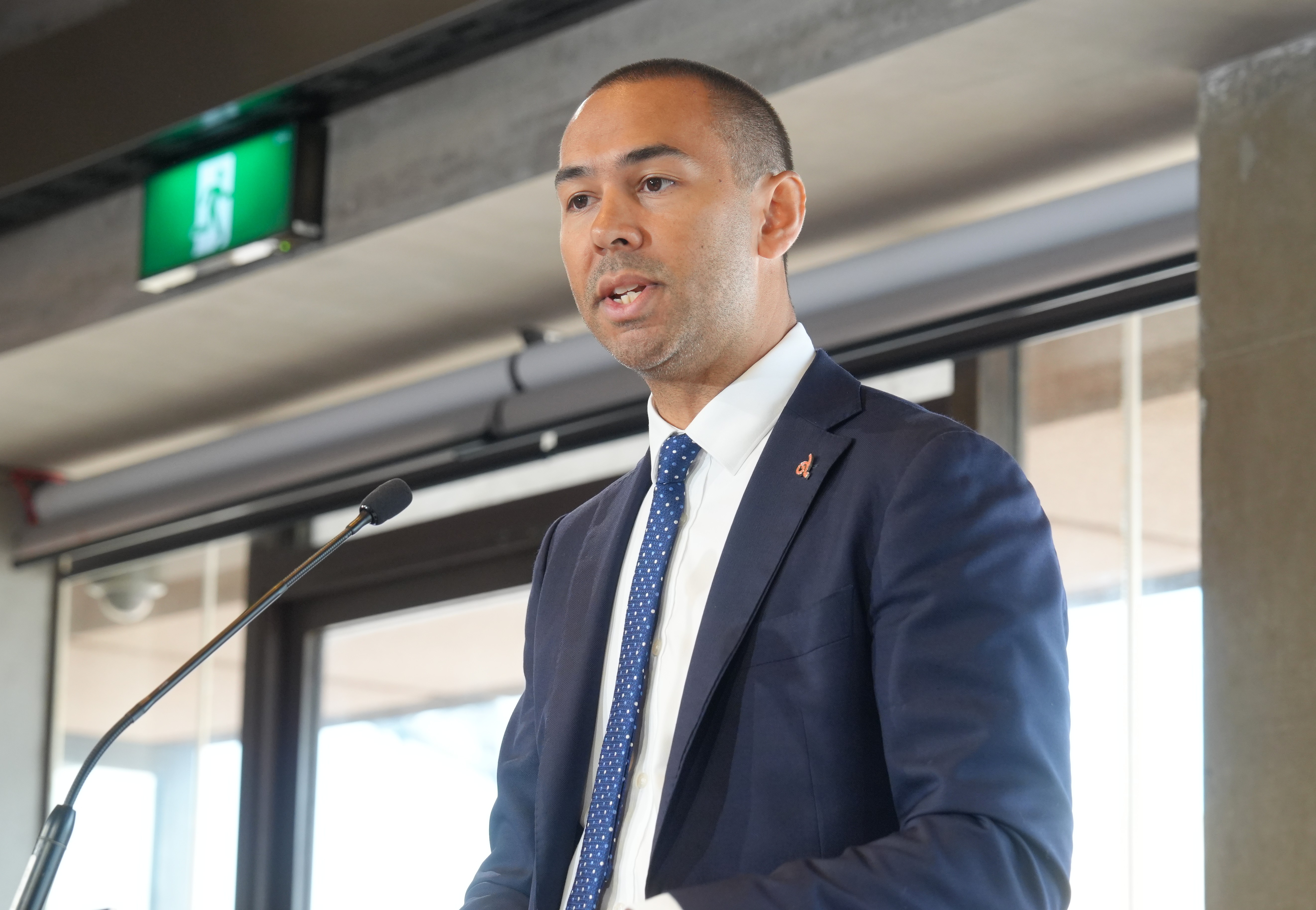
Faith in the next generation is a sentiment shared by Mr King, who believes that the youth are key to a prosperous future for all.
"The young people of Australia have a vital role to play in creating a better world for all humanity, and [CareerTrackers] are providing the pathways for Indigenous youth to play leadership roles in this endeavour," he said.
"My dad, Martin Luther King Jr, became a cutting-edge leader of America's freedom struggle when he was just 25 years old. And when you look at struggles for freedom and human rights all over the world, throughout history, again and again, we find young people in the forefront of these social change movements."
While the tour focuses on a brighter future, Mr King also urges young people to reflect on history and lead with intention and care when advancing justice.
"Both of our nations also share a long history of racial oppression and a legacy of continuing resistance to racial discrimination. The young people of our two nations must find new and creative nonviolent ways to overcome racial injustice. I believe that only nonviolence can win the support of people of goodwill that can ensure success," he said.
"It's a daunting challenge to rise up from the legacy of oppression without self-destructive bitterness and violence, but it's a challenge. It certainly is a challenge worth fighting toward and for."