



What began as a creative outlet during a time of hardship has grown into one of the most compelling Indigenous business success stories in Australia.
Rooted in cultural values and driven by a clear sense of purpose, Emu Nest is a family-led group of companies transforming not just the Pilbara economy, but the way Aboriginal business is imagined across the country.
Founded in 2007 by the Kwaymullina family—Palyku Traditional Owners from Western Australia's inland Pilbara—Emu Nest began as a cooperative writing project. Through a family trust, members co-authored children's books, pooling royalties to support relatives in need.
From this humble and deeply cultural starting point, Emu Nest has grown into a multi-million dollar investment group, employing more than 140 people and generating over $150 million in economic value for the Pilbara region over the past decade.
Today, Emu Nest stands as a powerful example of what happens when Aboriginal values, kinship networks, and entrepreneurial thinking combine to build sustainable, culturally grounded businesses.
A Different Way of Doing Business
The early days of Emu Nest were not about business in the conventional sense. They were about storytelling, family, and sharing resources. But through this creative work, the Kwaymullina family began to gain valuable experience in managing revenue, intellectual property, and collaboration.
By 2012, they were exploring microenterprises; small ventures that served as testing grounds for everything from governance to market strategy. These early enterprises weren't just profitable; they were culturally affirming. And they taught the family something crucial: that economic success and cultural integrity need not be in conflict.
"There was never a moment where we separated business from our values," says Dr Blaze Kwaymullina, Emu Nest Chairman.
"Every decision we made, we asked ourselves: how does this serve our people, our Country, and the spirit of who we are?"
This guiding philosophy remains central to Emu Nest's operations today. The group's investments are assessed not only on commercial merit, but on their capacity to generate value—economic, social, environmental, cultural, and spiritual—for Aboriginal communities.
North West Alliance: The Cornerstone
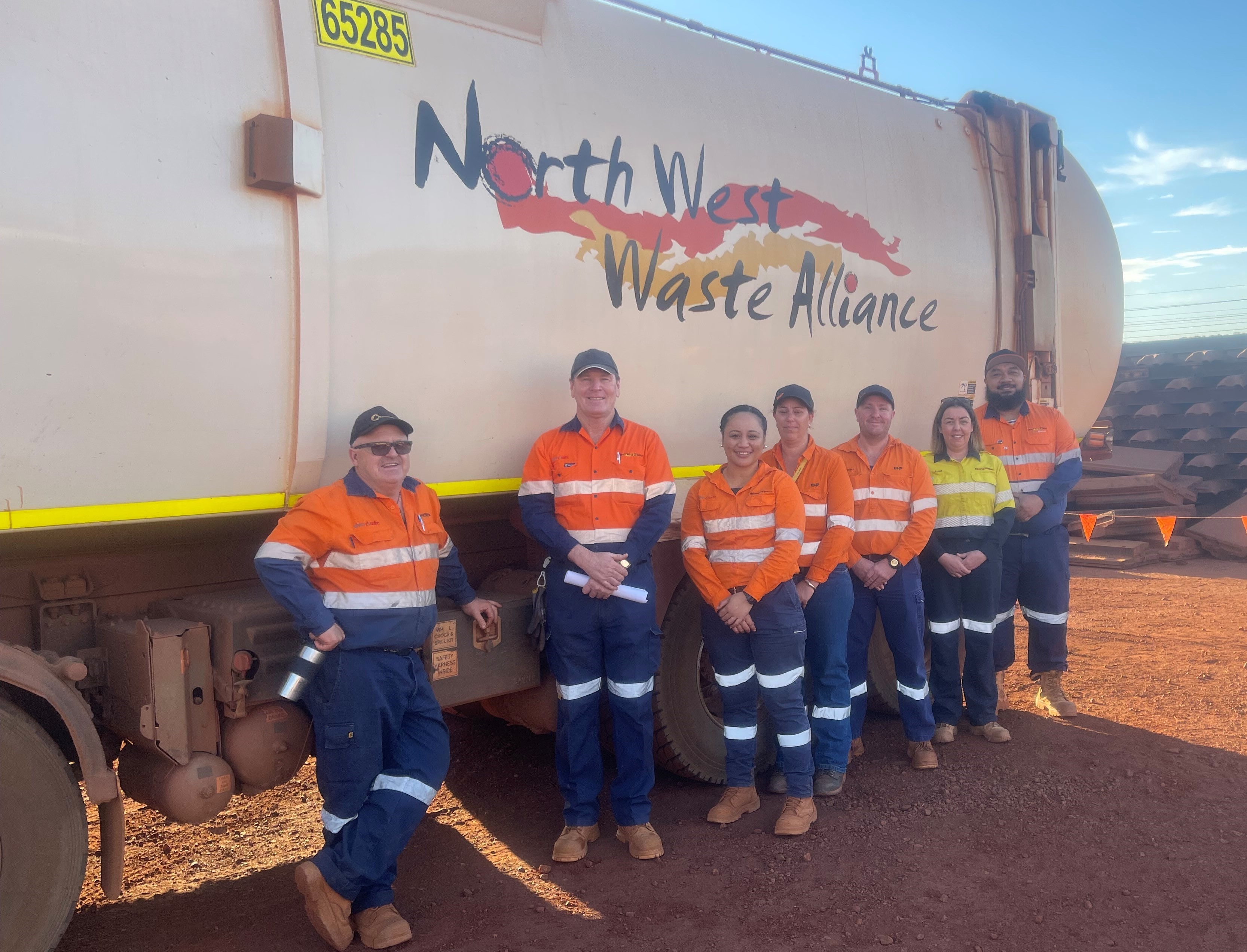
A turning point came in 2013 with the formation of North West Alliance (NWA), an Aboriginal-owned and operated company that would soon become the region's largest Indigenous waste services provider. The group's first major customer was BHP, who in December 2014 awarded NWA an integrated waste management contract across all its Pilbara operations. That initial investment and trust from BHP was pivotal; it provided NWA with the commercial foundation and operational scale needed to grow, build capability, and deliver lasting regional impact.
"North West Alliance gave us a platform," says Managing Director Ezekiel Kwaymullina. "It allowed us to co-invest with other Traditional Owner families and start building real long-term value, not just for ourselves but for the wider community."
Today, NWA operates four waste transfer stations and delivers industrial-scale services to some of Australia's largest resource companies. But beyond its size, what distinguishes NWA is its model: one that integrates employment, supply chain development, and pro bono community services into a single cohesive business strategy.
From Garbage Bags to Gourmet Blends
One of Emu Nest's more unexpected ventures emerged from a casual conversation with a catering company. While discussing waste services, the officer asked if the family could also supply coffee. They could, and they did.
That exchange led to the creation of Australian Indigenous Coffee, now supplying BHP offices and sites across Australia, as well as a growing number of national clients. The business has also become a platform for Aboriginal baristas, roasters, and entrepreneurs, offering training, mentoring, and employment opportunities.
"Coffee is a conversation starter," Blaze says. "But it's also a vehicle for building capability, brand, and belief in what Aboriginal enterprise can be."
Like all of Emu Nest's businesses, Australian Indigenous Coffee exists not just to generate profit, but to circulate value. It supports employment, builds skills, and reinforces the idea that Aboriginal businesses can lead in any sector—if given the opportunity.
Measuring What Matters
For Blaze and Ezekiel, impact is more than a buzzword; it's a discipline. The group has developed a formal Impact Framework that quantifies its direct Aboriginal economic contribution. That includes Aboriginal wages, subcontractor payments, pro bono services, and dividends to Aboriginal investors.
While others may opt for complex social return models, Blaze prefers a simpler metric.
"Just count the money going into Black hands," he says.
"That's where the impact starts. The rest is important, but if we're not creating real, measurable wealth in our communities, then we're not really shifting the dial."
This practical lens also guides Emu Nest's critique of government policy—particularly around procurement. While preferential procurement has been instrumental in creating market access, the family argues it's often misunderstood as an endpoint rather than a stepping stone.
"Preferential procurement is a bridge," Ezekiel says.
"But the question is: a bridge to what? If it's not leading us to Aboriginal-owned, culturally strong, high-performing enterprises, then it's just tinkering at the edges."
The Vision: Aboriginal Economy 8.0
To answer that question, Emu Nest has developed a bold vision for the future: Aboriginal Economy 8.0. It's a strategic framework that maps out what a thriving, self-determined Aboriginal economy could look like in the decades ahead.
Economy 8.0 envisions:
Connection: Strong networks between Aboriginal families, businesses, Native Title groups, and global Indigenous communities.
Control: Governance structures that put economic power firmly in Aboriginal hands, resisting black cladding and tokenism.
Mobilisation: Active participation in high-value sectors—waste, energy, agriculture, tech—guided by kinship and cultural reciprocity.
"We don't want to slot into someone else's model," Blaze explains.
"We want to design a system that starts from who we are and what we need. That's where real power lives."
This vision is not abstract. Emu Nest is actively implementing it through its investments, business models, and collaborative partnerships. Their approach challenges mainstream assumptions about risk, scale, and structure; and replaces them with culturally driven models of value creation.
Challenging the Status Quo
But the road hasn't been easy. Blaze is outspoken about the challenges facing Aboriginal businesses under current regulatory and funding structures. He points to how narrow definitions of "Aboriginal business" can sometimes penalise those seeking capital or scaling their impact.
"The whole space is being approached from a very narrow aperture," he says. "We're squeezing business structures together to meet arbitrary definitions—often in ways that stifle innovation or limit autonomy."
He argues this has contributed to an "ecosystem of scarcity" where lateral violence is inadvertently amplified, and true collaboration between Aboriginal businesses is discouraged by competitive funding environments.
"To get out of this cycle, we need to build something bigger. We need a shared vision that's not controlled by government or industry; but by us."
Partnership Done Right
One example of that shared vision in action is Emu Nest's enduring partnership with BHP. Through a purposeful procurement approach, RISE, BHP spent a record $700 million with Indigenous businesses in 2023–24—a 75 per cent increase in just one year. North West Alliance is one of BHP's longest-standing Indigenous contractors.
"Our relationship with NWA spans more than a decade," says BHP's Head of Global Indigenous Procurement, Jessica Simpson. "They're not only thriving; they're also lifting others up along the way creating commercial and social values simultaneously."
Emu Nest's story demonstrates what's possible when procurement is paired with real investment, shared values, and long-term commitment.
A Model for the Future
Ultimately, the Kwaymullina family doesn't claim to have all the answers. But they do offer a model—and a mindset—that others can learn from.
They hope other Aboriginal families will see what they've built and adapt it to their own needs, values, and visions.
"Business is ceremony," Blaze says. "It's how we bring spirit into the world."
In Emu Nest's case, that spirit is collaborative, courageous, and unapologetically Aboriginal. It's a business model grounded in reciprocity, not extraction; in kinship, not competition.
And it may just be the golden egg for building a better kind of economy—one designed by and for Aboriginal people, for generations to come.