



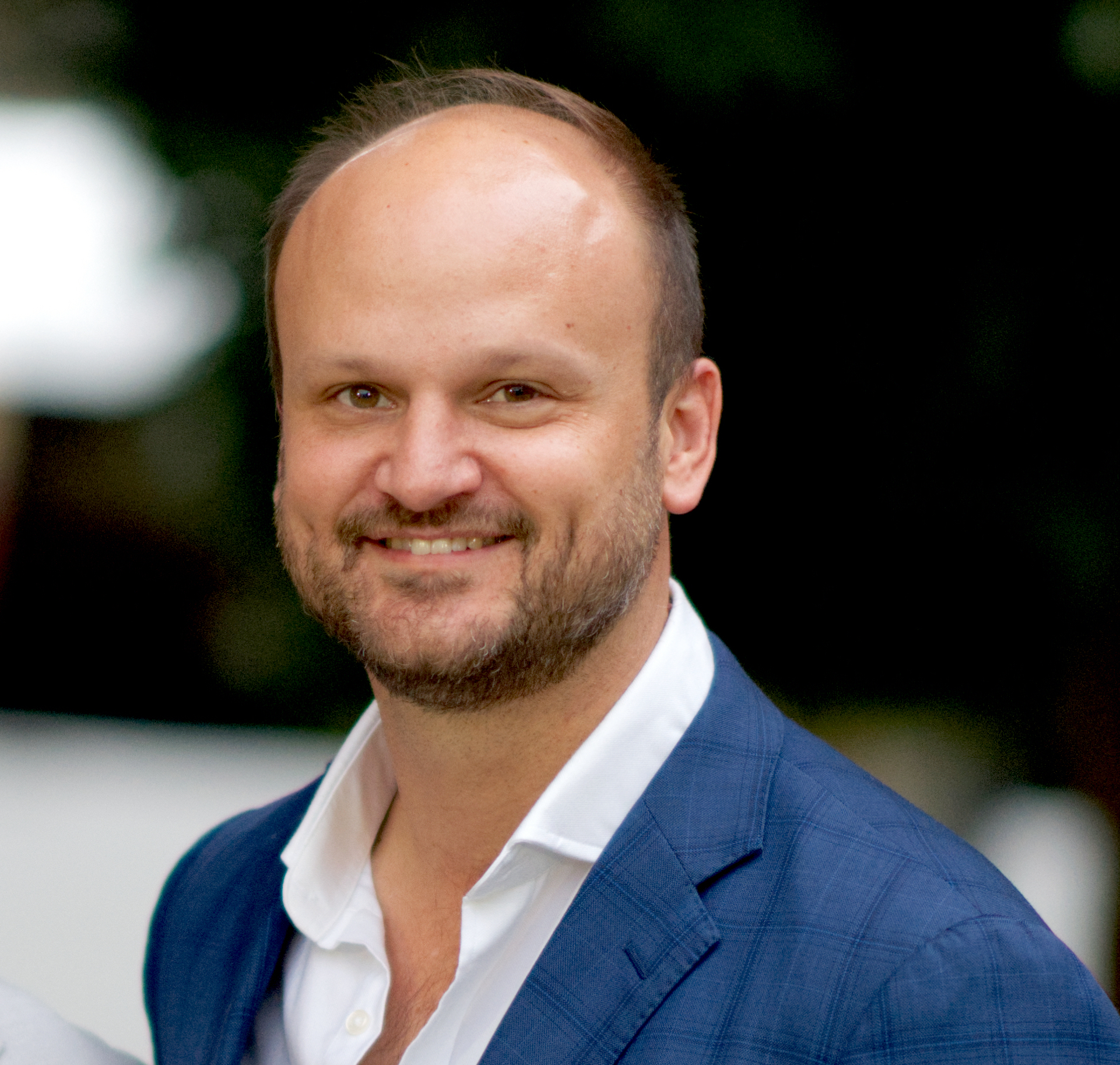

At this year's AEMEE Conference on Larrakia Country in Darwin, a panel led by AEMEE Chair Derek Flucker confronted the harder truths that continue to hold back Indigenous economic self-determination: mistrust, fragmentation, and the lingering legacy of imposed systems that still shape how Aboriginal and Torres Strait Islander enterprises engage with one another.
Flucker, who has led AEMEE for more than a decade, opened with a challenge that resonated across the room.
"We've got that mission mentality going on still today," he said. "A lot of Blackfellas have grown up on missions being told by white folk how to live, how to work, how to be. So when we meet another black business that can perform just as well, we don't know how to work together. That's what's killing us."
He described what he called "the elephant in the room": that many resource companies, and sometimes Indigenous organisations themselves, continue to prefer partnerships with non-Indigenous contractors.
"That's what's happening, and we can't hide from it," he said. "We've got to change the narrative that Blackfellas can't work with Blackfellas. Because right now, that story is costing us the future of our economy."
Flucker's words reflected frustration born of experience. As a business owner and former leader of the Wik Development Corporation in Queensland, he has seen capable Indigenous companies falter not through lack of skill or effort but because of rigid systems and internal division.
"When I had my own company, we built it up to over a hundred people," he said. "But when we tried to move into another project area, the structures didn't allow it, and we lost a lot of those businesses."
Finding Strength Beyond the Fence Line
From Arnhem Land, Damien Djerrkura, Chief Executive of the Rirratjingu Aboriginal Corporation, echoed those concerns. His community's experience shows that isolation remains both a practical and cultural barrier.
"In order for us to diversify and provide benefits back to community, we're looking at other regions," he said. "It's about how we complement others and help them build capacity. But there are still barriers: divisions between traditional owner groups, lack of training, high costs, and language challenges. You have to address all those issues before real partnership can happen."
Building on Flucker's call for unity, Djerrkura described the slow work of breaking down mistrust between Aboriginal organisations created by historical processes that advantaged some groups and excluded others. His focus now is on "bringing different resources together" and developing local skill sets in parallel with new commercial opportunities. In East Arnhem Land, that includes new training programs and local procurement partnerships designed to increase community control over major contracts.
Territory and Trust
The discussion on jurisdiction and identity, and who has the right to work where, was expanded by Jenny Lou Campbell, a mining and engineering specialist from Ontario, Canada, representing the First Nations Major Projects Coalition.
She drew parallels between Canada and Australia, noting that Ontario alone has 133 First Nations, each with its own traditional territory.
"Sometimes there are struggles between communities when one community's business gets to bid on a project outside its traditional territory," she said. "Then the community where the project sits feels left out of the opportunity to participate and bring those benefits home. It often comes back to how government defines its duty to consult and who it recognises as having rights in a project area."
Lou Campbell said that, despite high Indigenous employment rates in Canada's mining sector, participation remains concentrated in labour-intensive roles rather than technical or leadership positions.
"We recognise there's a huge gap in capacity," she said. "We need more engineers, more developers, more people operating these spaces."
Her organisation is working to embed education and training directly into projects, introducing students to mining pathways and supporting community members to pursue qualifications that lead beyond entry-level roles.
"It's as simple as running an introduction to mining course in the community," she said. "That's how you build the next generation of technical leaders."
Frequent turnover in Indigenous political leadership adds another layer of complexity.
"Our chief and council make the decisions about whether we participate in a project," she explained. "By the time new leadership gets up to speed, it can be election time again, and you start from scratch. So we're investing in the support staff, the people who stay, so that the knowledge stays with the community."
Partnerships with Purpose
For Bobby Cole, founder of Arnhem Plastics in Kakadu National Park, the lessons are more practical but no less profound. His company, which turns waste plastics into recycled building products, was born from difficult negotiations with traditional owners and government agencies in one of the country's most tightly regulated World Heritage sites.
"When you get into these partnerships, the most important thing is an exit strategy," he told the audience. "You've got to make sure everything's set up properly - logistics, training, relationships - before you start. Otherwise people get left behind."
Cole said that many partnerships fail not because of bad faith but because of mismatched capacity and unclear responsibilities. "Some organisations just don't have the workforce ready," he said. "That's where you've got to do the groundwork and build people up before the work starts."
Arnhem Plastics has since become a model for sustainable industry on Country, employing local people and recycling material that would otherwise go to landfill. But, as Cole stressed, progress depends on realistic expectations and mutual respect between partners.
"It's hard country, hard work," he said. "You've got to know who's in the team, where the gaps are, and how you're going to get the ball down the field."
A Call for Real Collaboration
As the discussion closed, Flucker brought the conversation back to what he called the heart of Indigenous enterprise: collaboration built on honesty, not hierarchy.
"It's about doing the gap analysis early," he said. "Knowing what's missing, being patient, and standing above the noise. You'll cop it along the way, but once you deliver and people see the result, that's when you start changing the system."
The panel's reflections carried a shared message: Economic sovereignty cannot be achieved through policy frameworks alone; it relies on trust between Traditional Owners, between businesses, and between generations.