



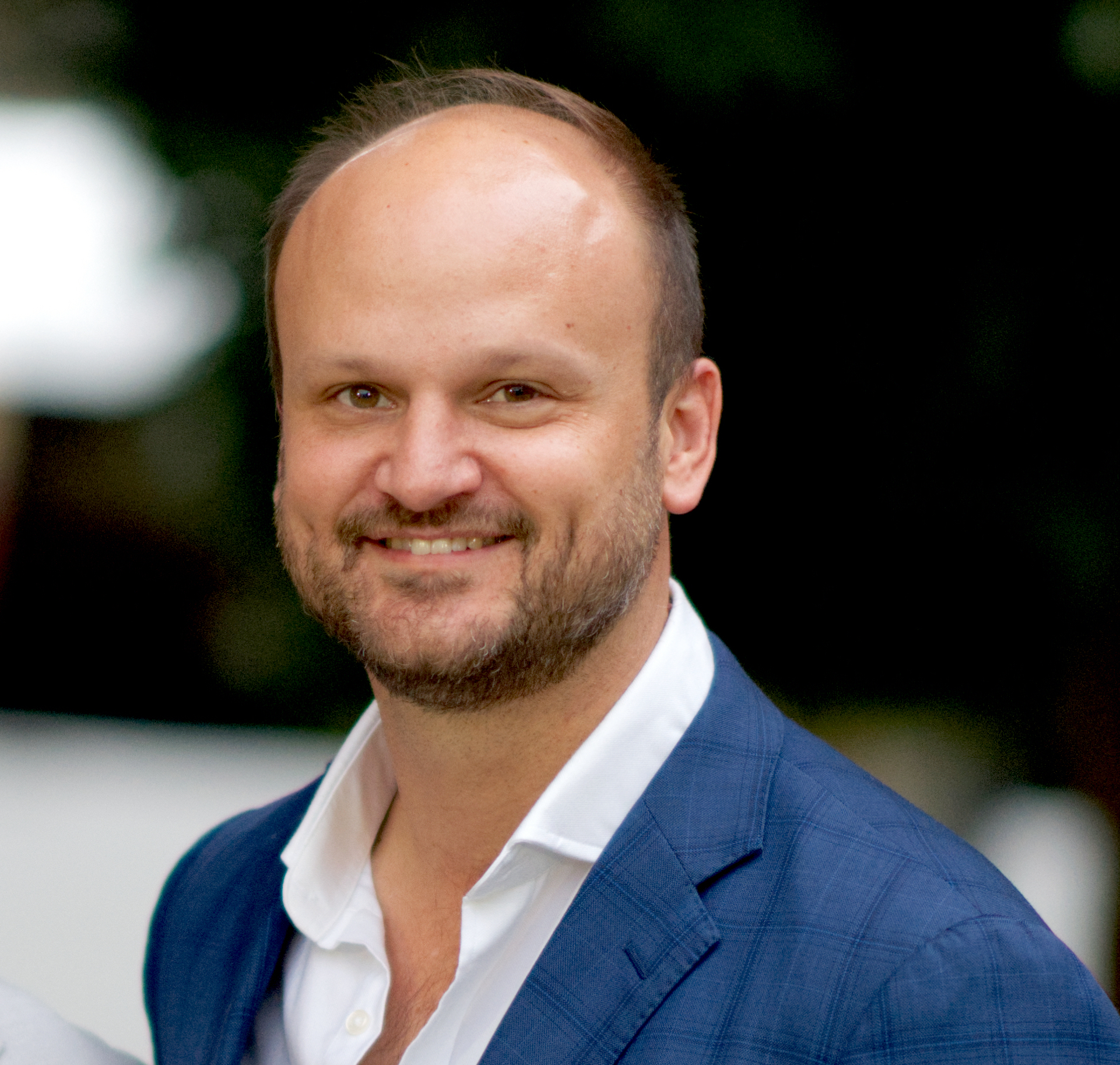

When Narelle Anderson talks about recycling, she does not frame it as a lifestyle choice or a moral gesture. She talks about systems, incentives, and responsibility.
"For us, this work is caring for Country," she says. "But it's also about people. Jobs. Opportunity. That's where the real impact is."
As the founder of Envirobank, Anderson has spent more than two decades building one of Australia's largest Indigenous-owned recycling businesses, operating across New South Wales, Queensland, Victoria and the Northern Territory. Today, Envirobank processes tens of millions of containers each year. The scale is significant, but the harder work was building a business long before the market, and the policy framework, were ready for it.
An early instinct for independence
Anderson left school at 16 and entered the workforce even earlier, securing her first job at 14 and nine months after counting down the days until she was legally allowed to work. She did not follow a university pathway. Instead, she learned business on the job, developing a work ethic shaped by necessity rather than credentials.
She has often traced her sense of identity and independence to an early government program that paid Aboriginal students a small weekly amount to attend school. The payment itself was modest, but the impact was not. It made her conscious, at a young age, of her Aboriginal identity and the responsibilities that came with it.
"I learned early that opportunity doesn't always come dressed the way people expect it to," she has said. "You take it, and you build from there."
Her entry into waste management came almost by accident. While waiting to start a corporate role, Anderson crossed paths with the owner of a small waste business. She quickly saw what it needed: stronger sales, tighter financial discipline and a clearer commercial direction. When the owner decided to exit, Anderson negotiated a deal to buy the business through sweat equity.
"I didn't have any money," she recalls. "So, I had to structure a deal that relied on hard work."
She ran that first business for nine years before selling it to a public company. What stayed with her was not the exit, but a recurring frustration she saw again and again.
Public place recycling, she realised, was failing. Bins were contaminated. Signage was confusing. People wanted to do the right thing, but the system made it difficult.
Seeing what Australia had not yet built
The idea that would become Envirobank emerged from that frustration. A young employee mentioned that in the United States, recycling was incentivised through deposit schemes and reverse vending machines. Anderson did not wait for validation. She boarded a plane.
In the US, she encountered reverse vending technology for the first time and secured distribution rights to bring it to Australia. The logic seemed obvious. Reward people, and behaviour changes.
What she underestimated was how far ahead of the policy curve she was operating.
At the time, South Australia was the only jurisdiction with container deposit legislation. Beverage manufacturers were hostile, and elsewhere there was no regulatory framework to support large-scale deployment.
"My naïvety was thinking that because it was a good idea, it would automatically get traction," she says.
Instead of retreating, Anderson adapted. In the absence of deposit legislation, she built a digital rewards platform, Crunch, allowing people to earn value from recycling even without a formal container deposit scheme. For four years, she worked without drawing a salary while the business took shape, reinvesting every dollar back into the company.
That persistence led to early commercial partnerships, including with 7-Eleven, which was seeking a way to recover branded Slurpee cups before container deposit schemes existed in New South Wales. Envirobank reprogrammed its machines to read barcodes rather than eligible containers, creating a closed-loop return system tied to customer rewards.
"That's always been our strength," Anderson says. "Using technology to solve problems even when the framework doesn't exist yet."
Growing with the system
When container deposit schemes eventually rolled out across Australia, Envirobank was ready.
Today, the business operates as both a technology company and a bricks-and-mortar recycling operator. It runs depots, reverse vending kiosks and pickup services across four jurisdictions. In the Northern Territory, Envirobank also acts as a scheme coordinator, helping facilitate depot licensing and material flows, including in remote communities.
The volumes are substantial. In the past year alone, Envirobank processed around 38 million containers in New South Wales, approximately 20 million in Queensland and close to 70 million in Victoria.
But Anderson is clear that container deposit schemes are not simply environmental programs. They are markets. Clean, source-separated materials become commodities rather than waste, creating value that underwrites the system.
"If it's contaminated, it's rubbish," she says. "If it's clean, it's a resource."
That distinction explains why Envirobank has consistently invested in technology, logistics and data rather than treating recycling as a low-margin service. Through its digital platform, customers can manage their earnings, donate to charities or convert refunds into other benefits, reinforcing the idea that waste, handled properly, becomes currency.
A people-first enterprise
Despite the technical complexity of the business, Anderson is clear about what matters most.
Envirobank employs around 120 people nationally. "That's 120 families," she says. "You don't take that lightly."
Many staff have been with the business for a decade or more. Anderson attributes that longevity to a leadership approach grounded in respect and open dialogue.
"I might have the idea," she says, "but it's my team's job to tell me whether it's a good one."
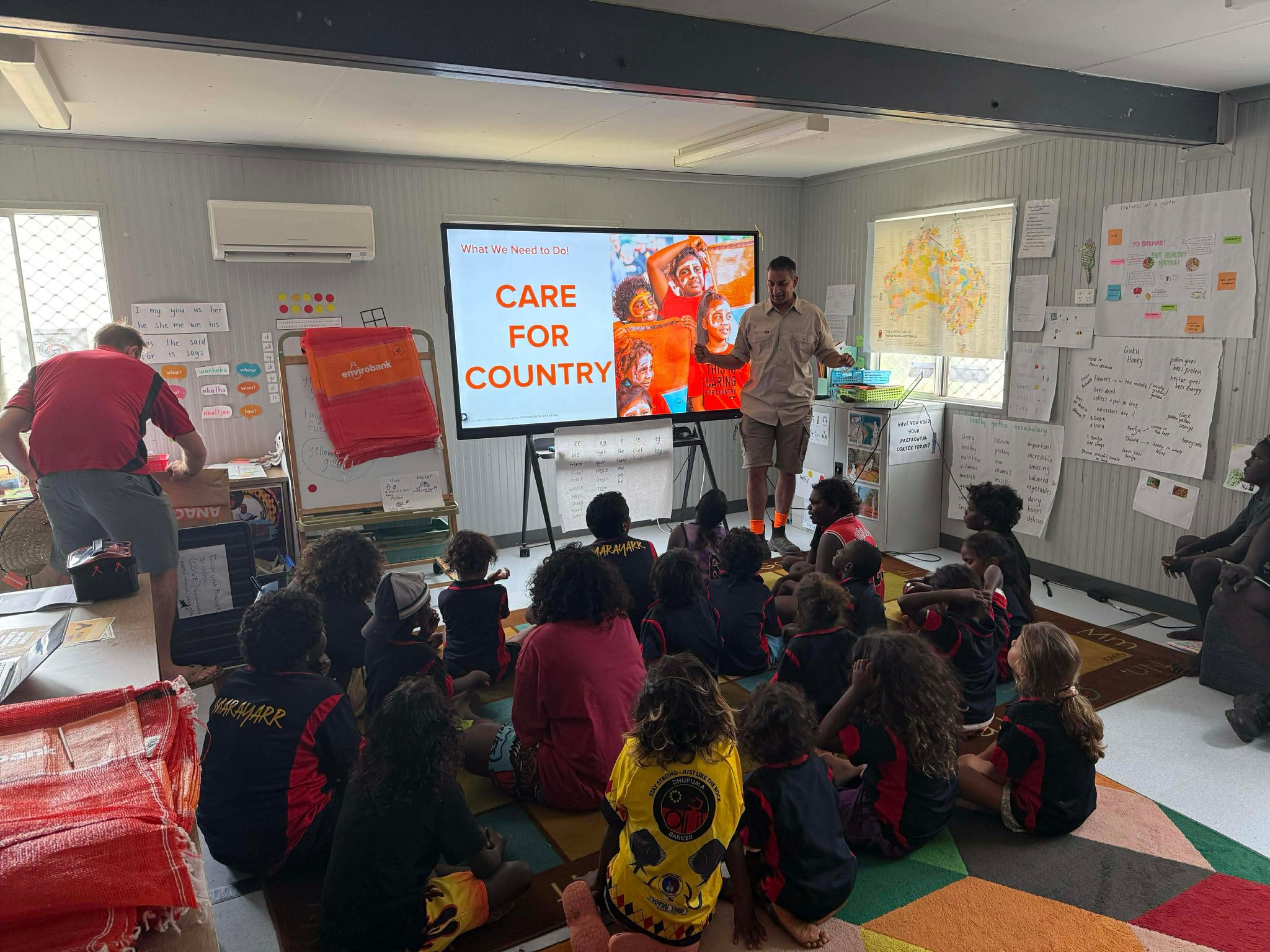
That philosophy extends to Envirobank's community partnerships. The company works with social enterprises, disability organisations and Indigenous communities, not as beneficiaries but as genuine partners. In the Northern Territory, Envirobank has supported councils and communities, including in Arnhem Land, where container collection provides both environmental outcomes and vital income streams.
"If we're going to say we're values-led, then we have to pay properly," Anderson says. "Otherwise, it's just branding."
Indigenous ownership and integrity
Envirobank's status as an Indigenous-owned business is not incidental to its mission. For Anderson, recycling and circular economy work sit naturally within cultural obligations to care for Country. But she is equally direct about the need for commercial discipline and integrity.
She has been outspoken about the damage caused by black cladding, where large companies create Indigenous-branded entities to access contracts without transferring control or value.
"It's insulting," she says. "We worked hard to build a sector, and now we see it hollowed out."
Her position is pragmatic. Indigenous businesses are not asking for grants, she argues, but for genuine access to contracts that allow sustainable growth.
"If you give us real work, we'll build real businesses," she says. "That's how you create intergenerational opportunity."
Looking forward
Three years ago, Anderson appointed a chief executive to manage Envirobank's day-to-day operations, freeing her to focus on mentoring, culture and long-term strategy. Her priorities remain firmly domestic.
While international expansion remains a possibility, she believes Australia still has significant work to do, from expanding commercial pickup services to addressing emerging waste streams.
"My mum used to say charity begins at home," Anderson says. "There's still a lot we can do here."
After more than two decades in the sector, Anderson's legacy is not simply that she built a recycling company. It is that she turned an environmental idea into market infrastructure, while demonstrating what Indigenous women's leadership looks like at scale: commercially rigorous, people-centred and uncompromising on integrity.