





Across generations, Aboriginal women have carried knowledge quietly, carefully and with responsibility. Knowledge of plants, healing, seasons and survival. For a long time, that knowledge was overlooked, dismissed or taken without consent. Today, women are reclaiming it on their own terms and building futures from it.
Paaru is one of those stories.
Founded by three women including Malyangapa and Barkandji Elder Aunty Deb Evans and Emmie Smith, Paaru is a powerful example of what happens when Aboriginal women lead with culture, integrity and vision. Their business is grounded in traditional plant knowledge passed down through family lines, knowledge that has always existed to care for people and Country. What sets Paaru apart is not just what they are producing, but how they are doing it, with cultural authority, respect and community wellbeing at the centre.
Through a partnership with CSIRO via its Kick Start program, Paaru worked to strengthen the way their plant extracts are produced. The aim was never to commercialise culture for the sake of profit. Instead, Aunty Deb and Ms Smith were focused on creating a process that honoured traditional practice while meeting modern manufacturing standards. It was about protecting cultural knowledge, keeping production on Country, and ensuring Aboriginal women remained in control of their intellectual and cultural property.
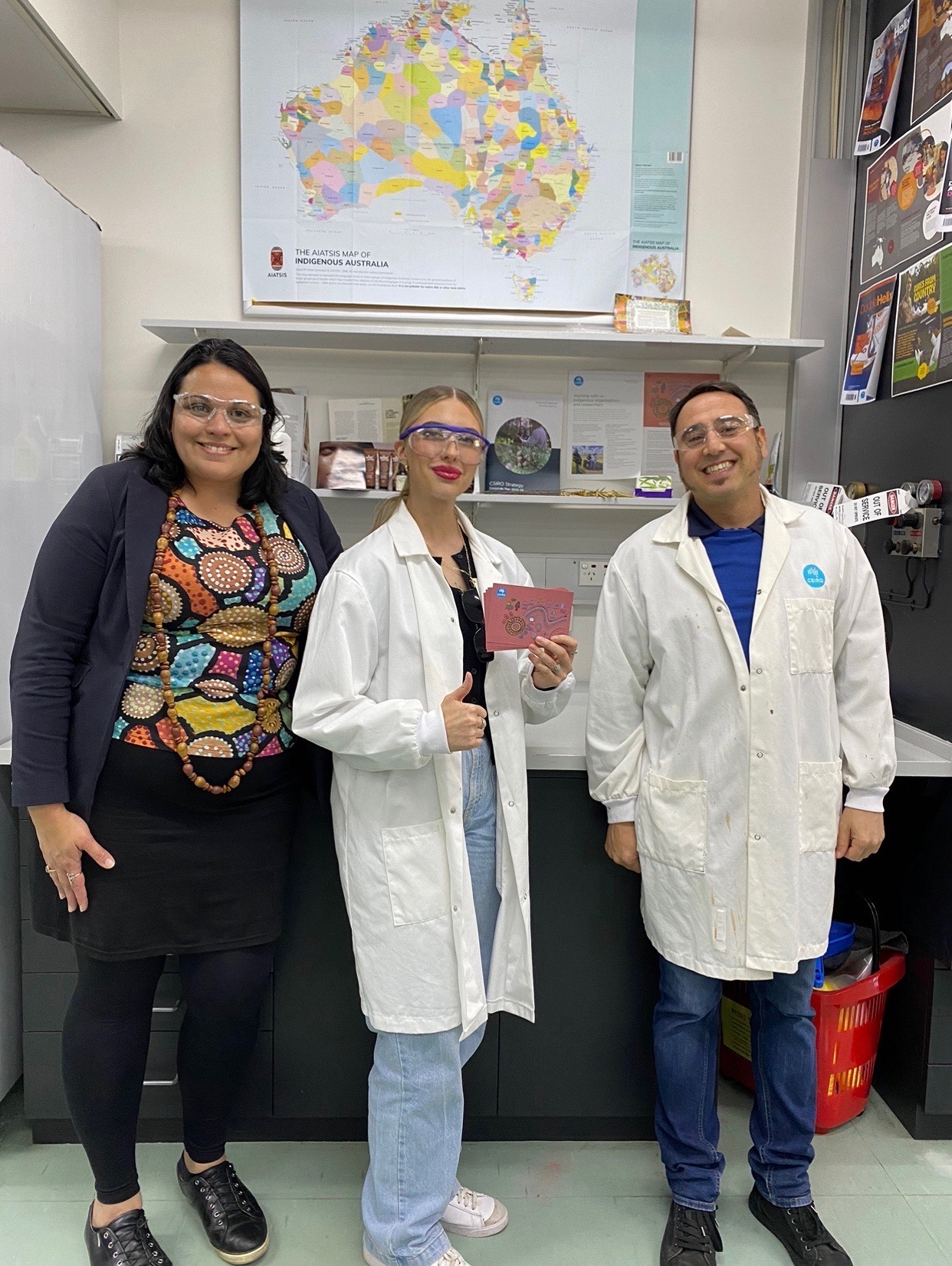
From the outset, cultural safety mattered. Trust mattered. The collaboration was built with strong agreements that ensured Paaru retained ownership and authority over all cultural knowledge shared. Even the identity of the plant involved in the research remained protected. This was not science extracting from culture. It was culture guiding science.
The partnership became a genuine two-way exchange. Aunty Deb Evans and Ms Smith brought deep cultural knowledge, lived experience and responsibility to Country. The researchers brought technical expertise and analytical capability. Together, they tested different extraction methods, explored processing techniques and refined approaches to improve consistency, strength and stability of the extracts, all while respecting the cultural foundations of how these plants have always been prepared.
For Aunty Deb, the process reinforced the importance of working with partners who understand the weight of Indigenous knowledge and are prepared to safeguard it. Knowing that their knowledge was being respected and protected created the conditions for open collaboration. The collaboration remained grounded in community values and long-term aspirations, alongside delivering strong outcomes.
The result was a significantly improved extraction process that is both efficient and culturally aligned. The new method produces a stronger, more reliable extract and can be carried out using simple equipment suitable for remote locations. This is critical. It means production can stay on Country, creating opportunities for employment, skills development and economic independence within community.
Beyond the technical outcomes, the impact runs deeper. The experience strengthened Paaru's confidence in navigating regulatory systems and engaging in future partnerships. With this foundation in place, Aunty Deb and Ms Smith are now exploring new product pathways, including opportunities in food and skincare, guided by the same principles of care, protection and responsibility.
This story is ultimately about women. Women who hold knowledge. Women who protect it. Women who choose collaboration without compromise. Paaru demonstrates what is possible when Aboriginal women are trusted, resourced and respected as leaders and knowledge holders.
They are not just building products. They are building a model. One that shows economic development and cultural responsibility can walk together. One that proves Aboriginal women can lead innovation without sacrificing culture. And one that reminds us that some of the strongest leadership in this country has always been carried by women, consistently and with purpose.