




Tammy O'Connor walked into a bank a decade ago and was knocked back for a $40,000 car loan. On Tuesday morning, opening Supply Nation's Connect 2026 conference in Boorloo, the KingKira Group founder named her next target: a billion dollars.
"I want to become a billionaire," the Palyku and Nyiyaparli businesswoman told delegates in her keynote address. "I didn't think like that before, but I see a lot of people up in the Pilbara and across Australia, people like Andrew Forrest, that have become multi-millionaires. So why can't we do that? BHP says think big. So I'm going to do that, BHP."
She told the room where it started. Learning the waste industry inside a joint venture, she asked to restructure the shareholders agreement to reflect a new industrial services contract. Her colleague refused.
"He said there will never, ever be an Aboriginal business that can go out there and buy assets at that scale, and we're not going to do that," she said. "I said, excuse me, what did you say? Say that again. And I said, well, yes, there will. It'll be me. I'm going to become your competitor, and I'm going to become a lot bigger than the business that you work for."
Twelve months later she bought her first vacuum truck. Three or four more followed the year after. Years on, the same man, by then at another company, approached her in Melbourne.
"He goes, oh, would you do a joint venture with me? I said, I thought you said people couldn't do this. And he said, I'm sorry I said that. And I said, no, I thank you. You challenged me to want to do it, and to go out and do what I've been able to do."
O'Connor delivered the opening address as Supply Nation brought its flagship event to Western Australia for the first time. Connect 2026, themed Journey, runs Tuesday and Wednesday at the Perth Convention and Exhibition Centre on Whadjuk Noongar country.
Raised in Marble Bar, she started out in education, working at a community school near Fitzroy Crossing while driving back to Hedland for native title negotiations, where she helped strike an early land access agreement with Fortescue. She left teaching for construction work on a BHP rail expansion, and when Andrew Forrest began talking up billion dollar opportunities for Aboriginal businesses in 2010, she was watching.
"I could see some of the good things and I could see the bad things," she said. "There was a lot of black cladding, a lot of our mob not understanding business. In order for me to help our mob get the opportunities that we deserve as Aboriginal people, I needed to understand it."
The $40,000 rejection came in those early years. "I was heartbroken. It's very confronting when you're going in there and getting rejected. I don't deal with that bank now. They keep coming to me with $20 million and I'm like, no, not yet. But at some stage I will use them."
She named the business after her daughters, Kingston and Kira, and halved her salary to go back on site as a trainee.
KingKira now employs 350 to 400 people and runs more than 250 assets. The client list includes BHP, Rio Tinto, Fortescue and Roy Hill, and last year the company took sole control of Fortescue's total waste contract after five years in joint venture.
"I have, not $40,000, but maybe a $40 million debt," she said. "It is hard, but we've got there."
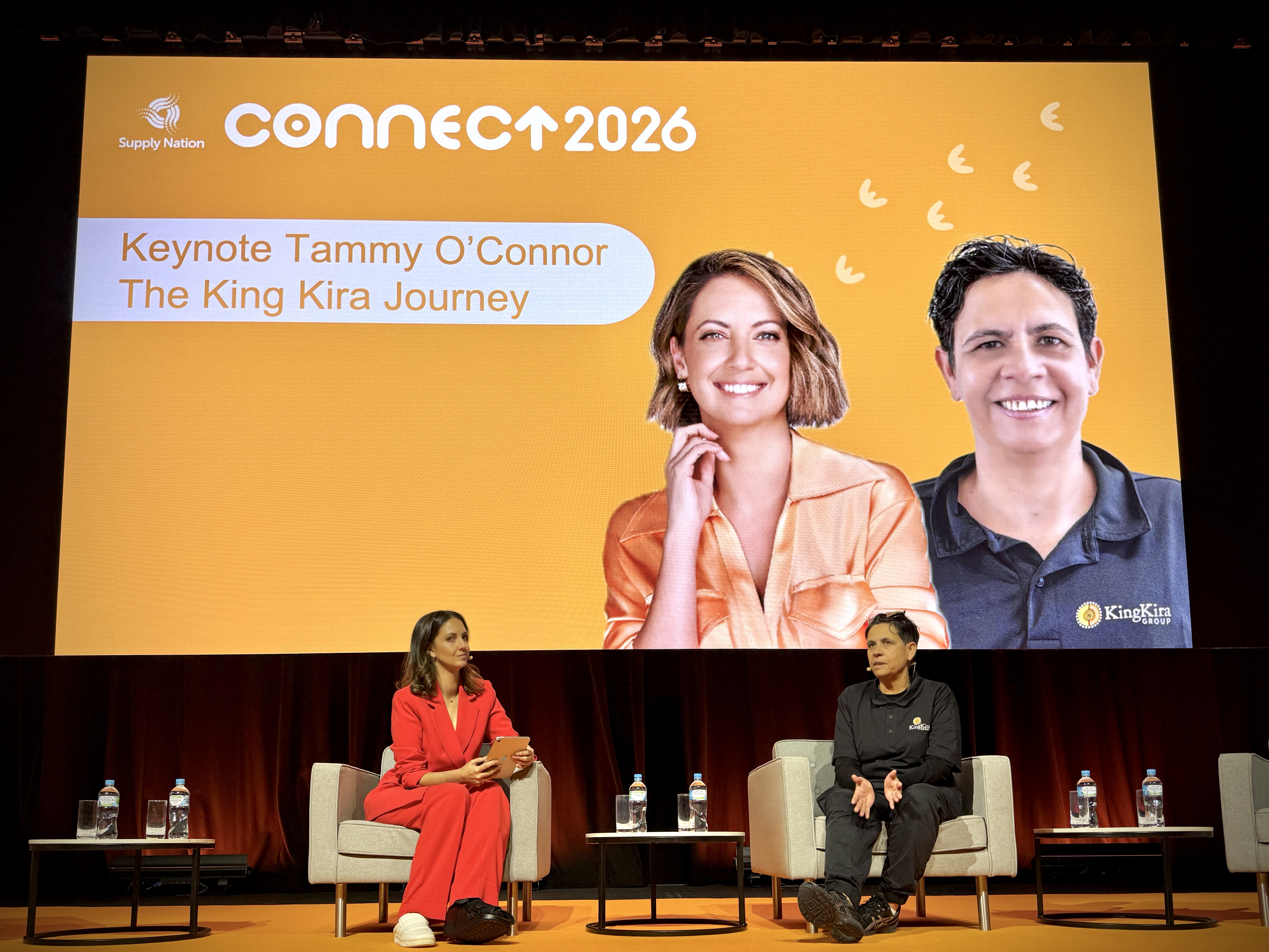
In a Q&A with journalist Brooke Boney after the address, she said the money stayed in the business from the start. "When I was in the joint venture, I didn't take any money outside of KingKira. I just kept putting it back in. It is important to just keep the money coming back in so you can build capability."
"I've got 20 other Aboriginal businesses that have assets in my contracts, where I've helped them go and get bank loans through us," she said, urging newer operators to pool assets, labour and equipment with established businesses. "We can help each other. Aboriginal people back in the day, that's what we were about. We all helped each other where we could."
Among those assets is a washdown unit that cut a shutdown job from three to five days of scaffolding work to 17 minutes. "That's a big achievement in itself for KingKira."
About 20 per cent of the workforce is Indigenous, and O'Connor recruits through the prison system.
"We've had ladies where they've come out of prison and they've been working with us for the last five years. That's a big achievement for us. Being female, I believe we do a better job of leading, so I make sure we have got that leadership in there with the ladies."
"I look at my generation, we didn't finish year 12," she told Boney. "My daughter's just about to graduate in law and politics. She graduates in November. My youngest daughter graduated high school last year and is working for me. It's proud to see all our kids out there becoming doctors, becoming lawyers, doing things differently."
Her native title work runs on three principles: protect heritage, protect the environment, secure opportunities.
"It's just not about a job anymore. It's business. Aboriginal people want to work for Aboriginal businesses, and that's what's going to change our communities."
Asked for one piece of advice, she said: "I've never made it about the money. I've made it about changing people's lives. If someone like myself can do it, anybody can."
She wants Aboriginal businesses running major contracts as tier one operators, and told the room her door is open. "Lots of coffees? We don't want to do coffees. We want to talk business. So come and see me."