




Key points:
- Doomadgee secured a second year of consultation on its new hospital after rejecting Queensland Health's twelve-month timeline.
- More than half the community's power now comes from a local solar farm, with a target of 100 per cent off-grid by 2040.
- A large portion of Doomadgee's population is aged 30 or under.
Queensland Health gave the Doomadgee community twelve months to consult on its new hospital. Kelly Barclay told them it would take two years, and the community is now well into the second. The deadline troubled Queensland Health, not the community.
"It was our way and it was for us," Barclay said. "So we had to be strong on what we wanted."
Ms Barclay, the Community Services Manager at Doomadgee Aboriginal Shire Council, addressed the Indigenous Empowerment Summit in Meanjin / Brisbane this week about consultation, community development and self-determination in her remote home community in the Gulf of Carpentaria, where the Gangalidda, Waanyi, Garrawa and Yunjulla people are Traditional Owners.
Her central argument was that real consultation runs on community terms, which means being slow, being present, and being prepared to be wrong.
She opened with her authority to speak on behalf of community: "Traditionally, it's not my role to stand up and talk about culture," she said. "So I have special permissions. Permissions from my community, permission from my old people, and permission from my shire council to be able to talk to you about this stuff."
Going where people already are
Ms Barclay's method was to reach people where they were, on their time. Consultation days were timed to community rhythms, not office hours.
Her team set up at the sports centre in the afternoons to catch young people, given a large portion of the population is 30 or younger. They sat with old people on days they were "lively" and awake, and not during feed time. They even ran consultation opposite the courthouse on court day.
"We borrowed a barbecue, got some biscuits and said hey come for a feed," Ms Barclay said. People drifted in for the food and stayed to talk. "I will say that nobody missed out on their court appearance because of our consultation," she said.
For people with low literacy, the team built a feedback system which needed no writing. Pictures of facilities and ideas drawn from other communities went up on the walls, alongside post-it notes and prompts.
People marked what they thought with stickers: a green dot for what they liked, a red dot for what they did not. A local helper or consultant was on hand to write down anything more detailed for those who wanted it.
"It really opened up the consultation particularly for our older men and middle-aged men who don't like writing anything," Ms Barclay said. "You barely get them to write their names."
That system also showed Ms Barclay she could be wrong about her own community. Before one session with a group of teenagers, the consultants had asked her what images to show for the recreation facilities under consideration, among them a water park and a skate park.
Ms Barclay pushed hard for a rock-climbing wall. "I reckon get a big rock climbing thing, because our kids bloody climb on everything," she said. "No matter where you are, you always saying get down, get down." She was sure of it.
The teenagers worked through the pictures and left. When Ms Barclay packed up, the verdict was unanimous.
"That rock climbing picture was just full of red," she said. She went to her daughter, then 16, to ask what had happened.
"She said, 'Mum, just because you climbed trees when you was young don't mean we want to'". There was not one green dot anywhere near it.
"I assume because I'm a local woman and I see kids stuff that that's what they were like. And I was wrong," Ms Barclay said. "Don't try and push your ideas if people don't like it or don't want it just because you're from there."
Consultancy timelines which don't fit the country
"By the time you're ready to fly out on the Thursday, people are just finding out," Ms Barclay said of the three-day fly-in visits that pass for consultation.
In a community where word spreads slowly and by mouth, they reach almost no one.
"If it doesn't fit into our timeline, then you can't really count it as consultancy if you haven't spoken to all the people that you need to speak to," she said.
That caution has deep roots.
"We've never been involved from scratch on any project," Ms Barclay said.
Education, police and health are the only bodies other than government which own land in the community, and they arrive with plans already drawn.
The hospital was the first build where Doomadgee was asked what it wanted from the ground up, and the community used the opening. It negotiated a bush tucker and bush medicine garden, and outdoor spaces for palliative care.
"Our people don't want to be in a room in their last moments," Ms Barclay said. "They want to be outside. They want to be on Country."
A late, hard history
Doomadgee's recent past sits inside living memory. The community came under Queensland government control only in 1983, moved to local council administration in 1985, then to a grant and trust arrangement in 1987.
"I was already 3 years old then," Ms Barclay said. "So it's all living memory for people at my age group in the 40s back."
The community formed late and under pressure. It did not become a community until 1933 on the coast, migrated inland between 1936 and 1938, and stayed under strict brethren church authority well into the 1970s.
"That isolation was not only to keep our people in, it was to keep people out," Ms Barclay said.
Ms Barclay framed resilience as inheritance rather than achievement.
"They took the dirt from underneath our feet," she said. "They killed our people. They cut down our medicine trees. They blocked our rivers, dredged our seas, and polluted our air."
That the community is still here, still on country, still consulting on its own terms, is the point.
"It's in our blood," she said. "It's just that every now and then we've got to remind each other of the superpower that we all have as Indigenous people all across the country."
Opening up
Doomadgee is now turning outward. It opened its first Indigenous centre this year and is lobbying for funding on a future planning project. Opening country to tourism remains contested.
"We've never had to share our country with anybody. It's always been ours," Ms Barclay said. Not everyone agrees, "but enough of our community agrees that we can progress with our ideas".
Isolation is also literal. The community lost road access for four months last year when two rivers came up two days before Christmas and did not drop until April. Food and fuel had to be flown in.
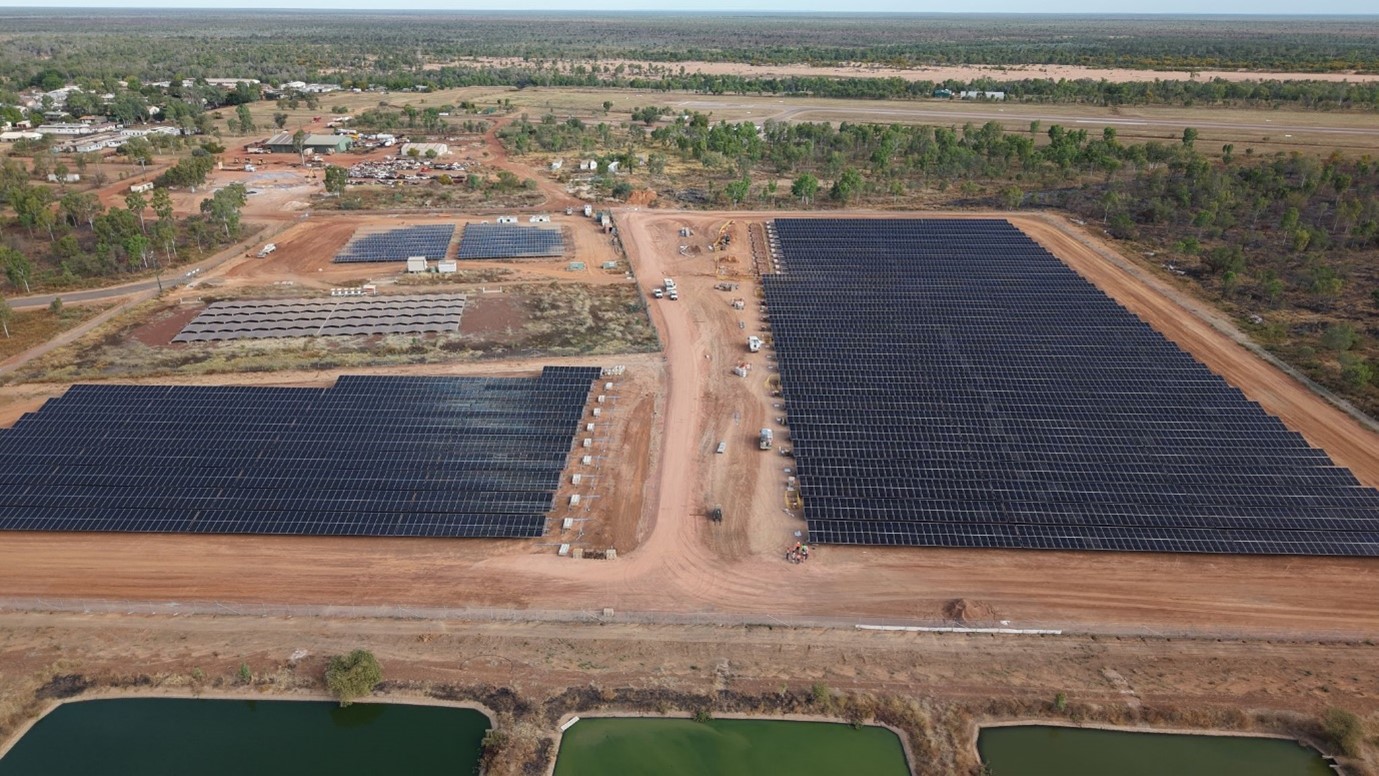
The response was a solar farm constructed by energy provider Yurika. More than half the community's power now comes from it, with a target of 100 per cent off-grid by 2040.
Asked what one thing she would change with a magic wand, Ms Barclay did not reach for infrastructure or funding.
"For all of our people to work together. We can do anything when we do that," she said. "Everything else is pie in the sky stuff. What we really need as a people is for all of us to be on the same page."