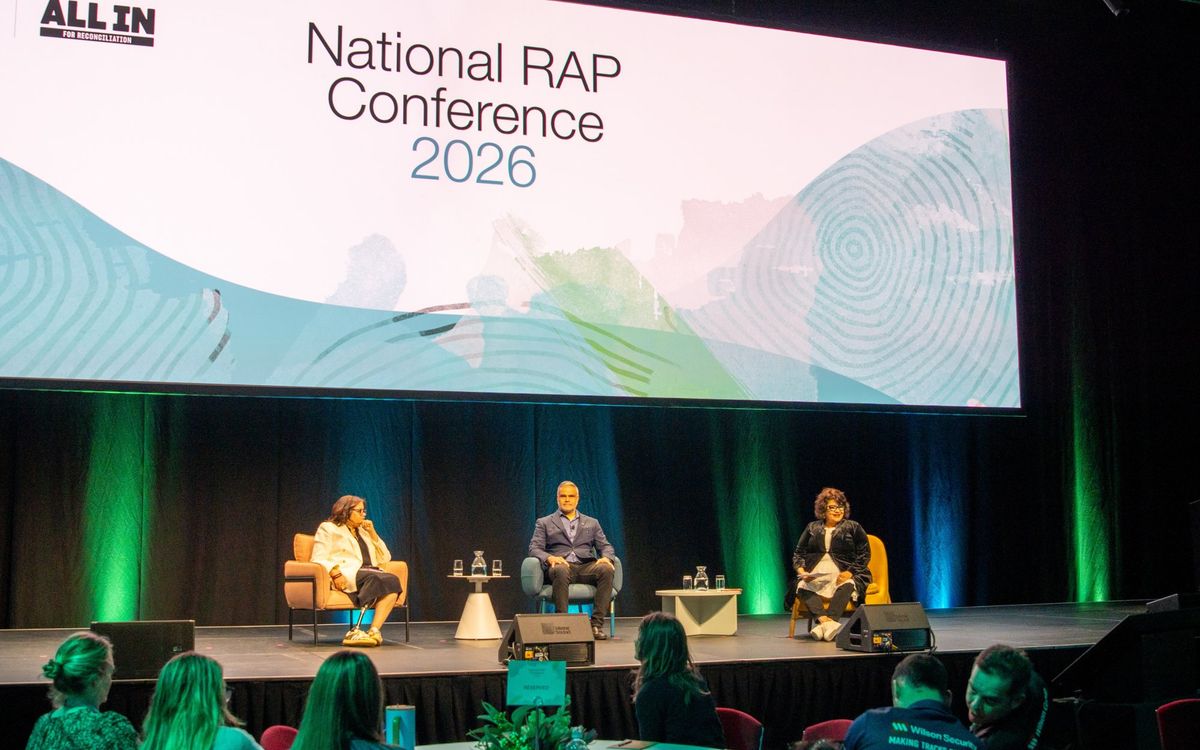
First Nations leaders, organisations and reconciliation advocates gathered on Kaurna Country in Tarntanya (Adelaide) this week for the 2026 National Reconciliation Action Plan (RAP) Conference, with discussions focused on truth-telling, racism, self-determination and accountability.
Held at the Adelaide Convention Centre across Thursday and Friday, the conference brought together representatives from across government, business, education and community organisations under the theme 'All In for Reconciliation'.
The event also marked 25 years of Reconciliation Australia and 20 years since the first eight organisations committed to developing a RAP.
Today, more than 3,300 organisations have RAPs, employing 62,000 Aboriginal and Torres Strait Islander people and spending $5.6 billion with First Nations-owned businesses.
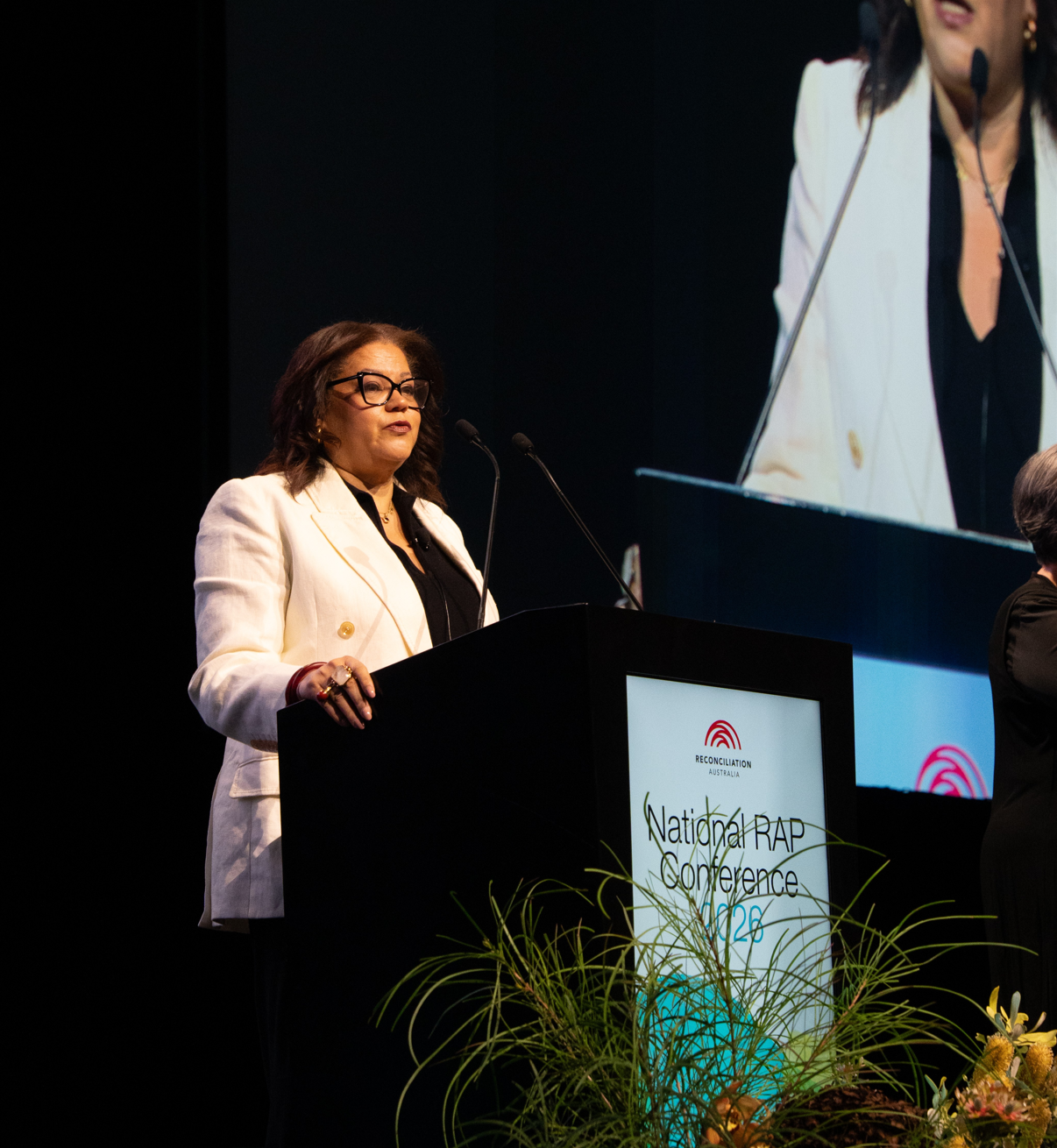
Reconciliation Australia CEO and Bundjalung woman Karen Mundine opened the conference by encouraging organisations to examine their commitments and take responsibility for delivering change.
The opening keynote featured Torres Strait Islander woman and GO Foundation director Tanya Hosch alongside Kaurna, Narungga, Ngadjuri and Ngarrindjeri man and South Australia's Commissioner for Aboriginal Children and Young People, Dale Agius.
Their discussion focused on the need to move beyond symbolic commitments and ensure reconciliation initiatives deliver outcomes for Aboriginal and Torres Strait Islander communities.
Ms Hosch questioned why racism remained difficult for many Australians to acknowledge and challenged the tendency of organisations to defend their existing reconciliation initiatives rather than confront discrimination.
She called on allies to actively challenge racism instead of relying on First Nations people to raise concerns themselves.
"At the very least, think of one anti-racist thing you can do every day," Ms Hosch said.
"I do an anti-racist and a feminist thing every single day."
Mr Agius challenged organisations to strengthen their RAPs and reconsider approaches that fail to meet community needs.
"We're no longer here looking to be saved," he said.
"We're here to expect you to deliver."
The discussion also examined the incarceration of children, with both speakers encouraging organisations and individuals to advocate for raising the age of criminal responsibility.
Governor-General Sam Mostyn addressed delegates through a recorded message, highlighting the growth of the program and its influence on Australian workplaces.
More than 5.9 million Australians now work or study in organisations with a RAP, compared with just 200 registered plans in 2010.
Ms Mostyn reflected on the program's influence beyond reconciliation.
"It's fair to say these steps towards broader recognition and inclusion exist because RAP started the process 20 years ago," she said.
"They provided a framework to set goals and measure and report progress year on year."
The discussion also addressed the need for a national anti-racism framework, with Ms Hosch highlighting the importance of clear targets, leadership and accountability.
Reflecting on the years following the Voice referendum, she emphasised the responsibility of current generations to continue working towards reconciliation.
"What we're doing now isn't for us, it's for the future," Ms Hosch said.
"That's what we've got to think about."
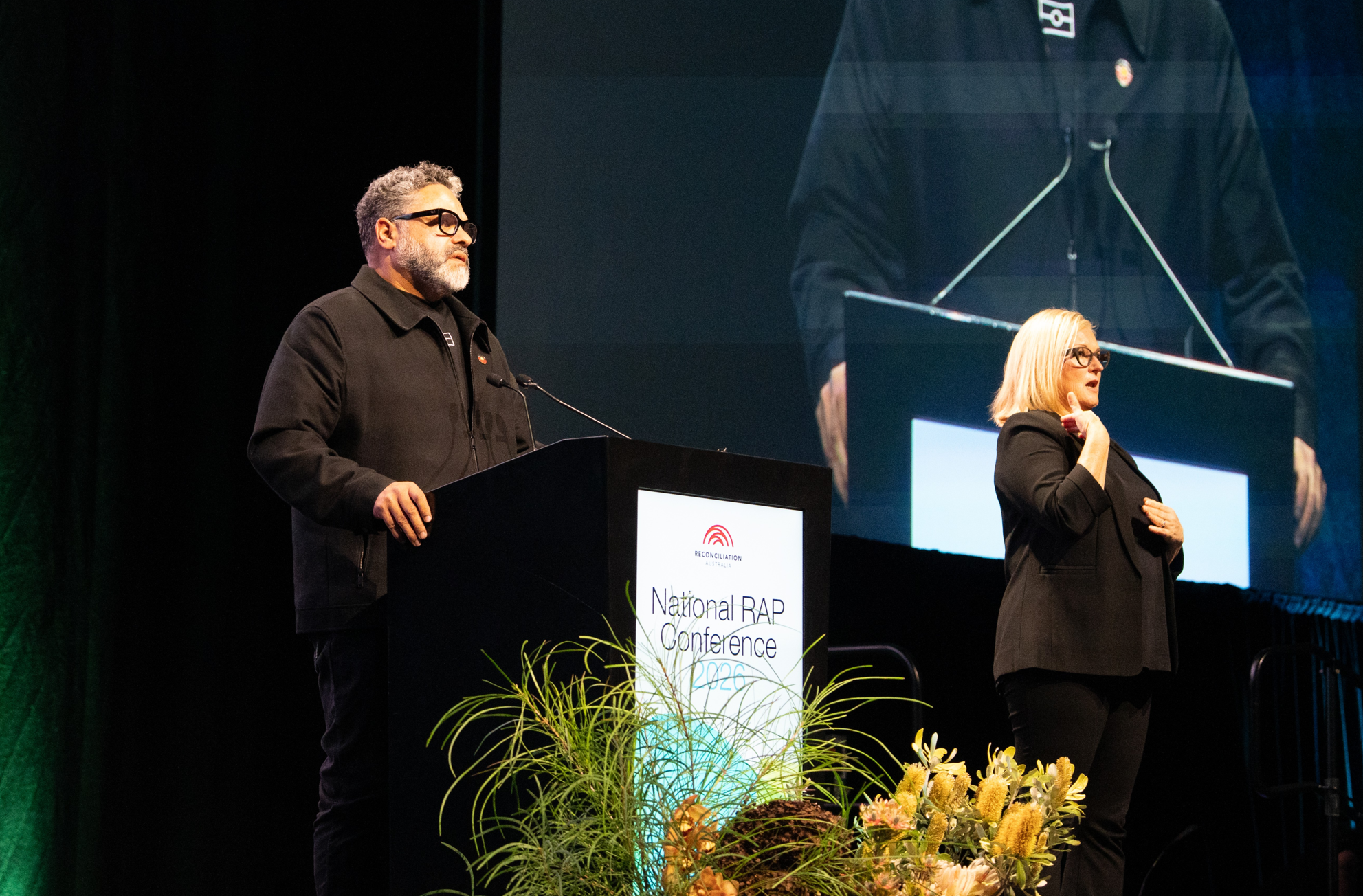
Reconciliation South Australia CEO and Ngarrindjeri man Clyde Rigney Jnr also addressed the gathering, reflecting on the challenges facing reconciliation following the 2023 Voice referendum and the dismantling of Queensland's Truth-telling and Healing Inquiry.
He highlighted the importance of collaboration despite political and social setbacks.
"But I think the power of this gathering is that we are the internal workings of reconciliation," Mr Rigney said.
"Our job is to continually think about how it is that we navigate those external factors."
Truth-telling was another focus, with a panel featuring Bidjara and Birri Gubba Juru woman Dr Jackie Huggins, Gunditjmara man Travis Lovett and First Nations media executive Tanya Denning-Orman.
Dr Huggins discussed the continuation of community-led truth-telling in Queensland despite the closure of the state's formal inquiry.
She pointed to work continuing in Cherbourg and Minjerribah (North Stradbroke Island), with plans for further community discussions next year.
The long-time reconciliation advocate urged communities not to abandon the process.
"The fire is not out," Dr Huggins said.
"And the fires are still burning in Queensland, not only in those two communities, but everywhere else."
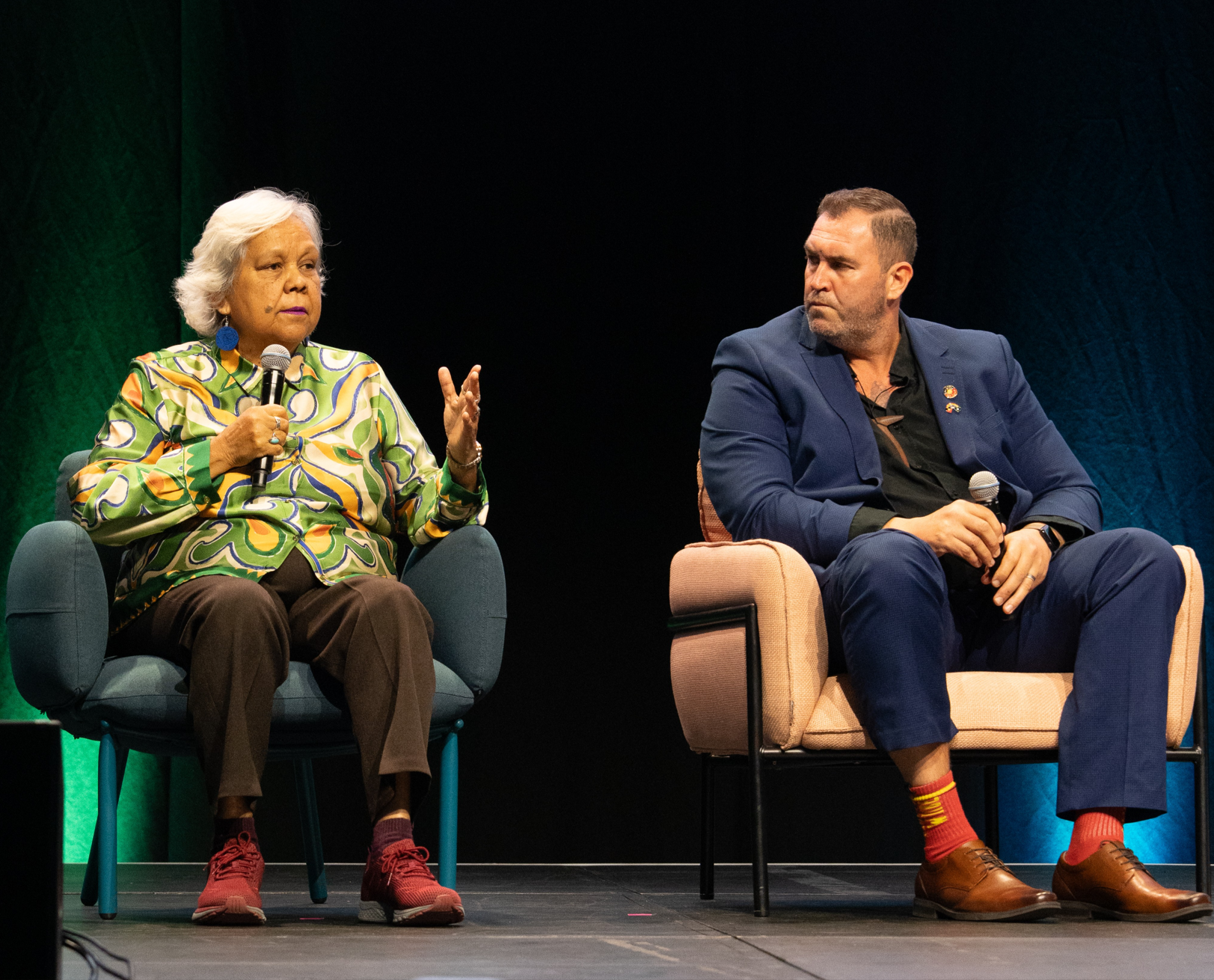
An anti-racism panel also examined discrimination across workplaces, schools and communities, including evidence gathered through a Senate inquiry into racism, hate and violence directed at Aboriginal and Torres Strait Islander people.
Muthi Muthi and Wamba Wamba woman Senator Jana Stewart discussed evidence presented to the inquiry, including accounts of racism experienced by First Nations students.
The conference coincided with the 2026 Indigenous Governance Awards, recognising First Nations-led organisations and community governance.
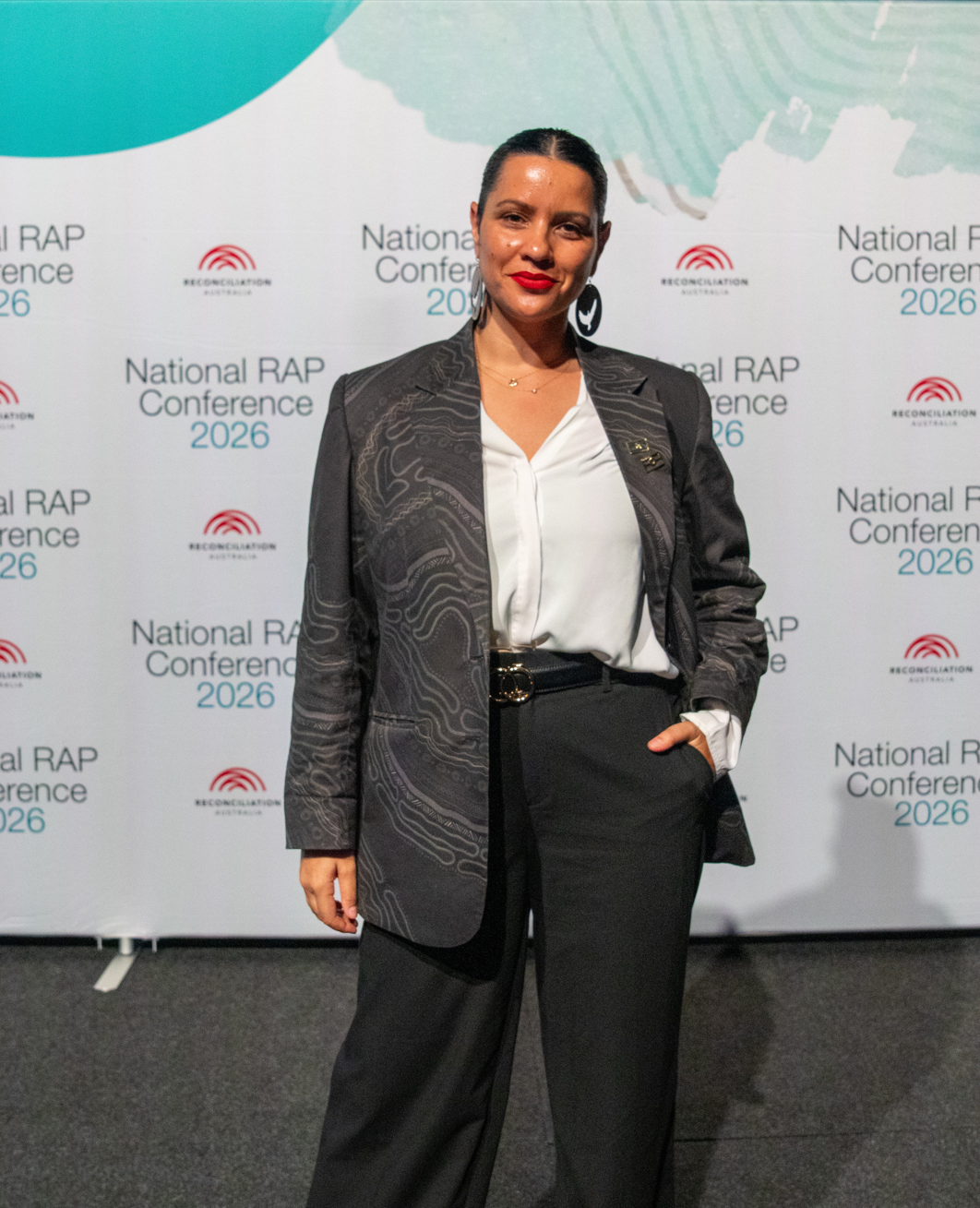
Across the two days, speakers repeatedly emphasised that reconciliation requires more than written commitments, with organisations encouraged to turn discussions into measurable action.
The message was reinforced by Ms Mundine during her opening address.
"The success of this conference will be judged on what happens next," she said.
"Let First Nations priorities guide your work and hold yourselves accountable."