
- Why a conference which once drew 40 people is now bursting at the seams
- The Kimberley corporation that told AEMEE to stop leaning on miners
- What Albert Wiggan wondered while watching a footy clinic on Cable Beach
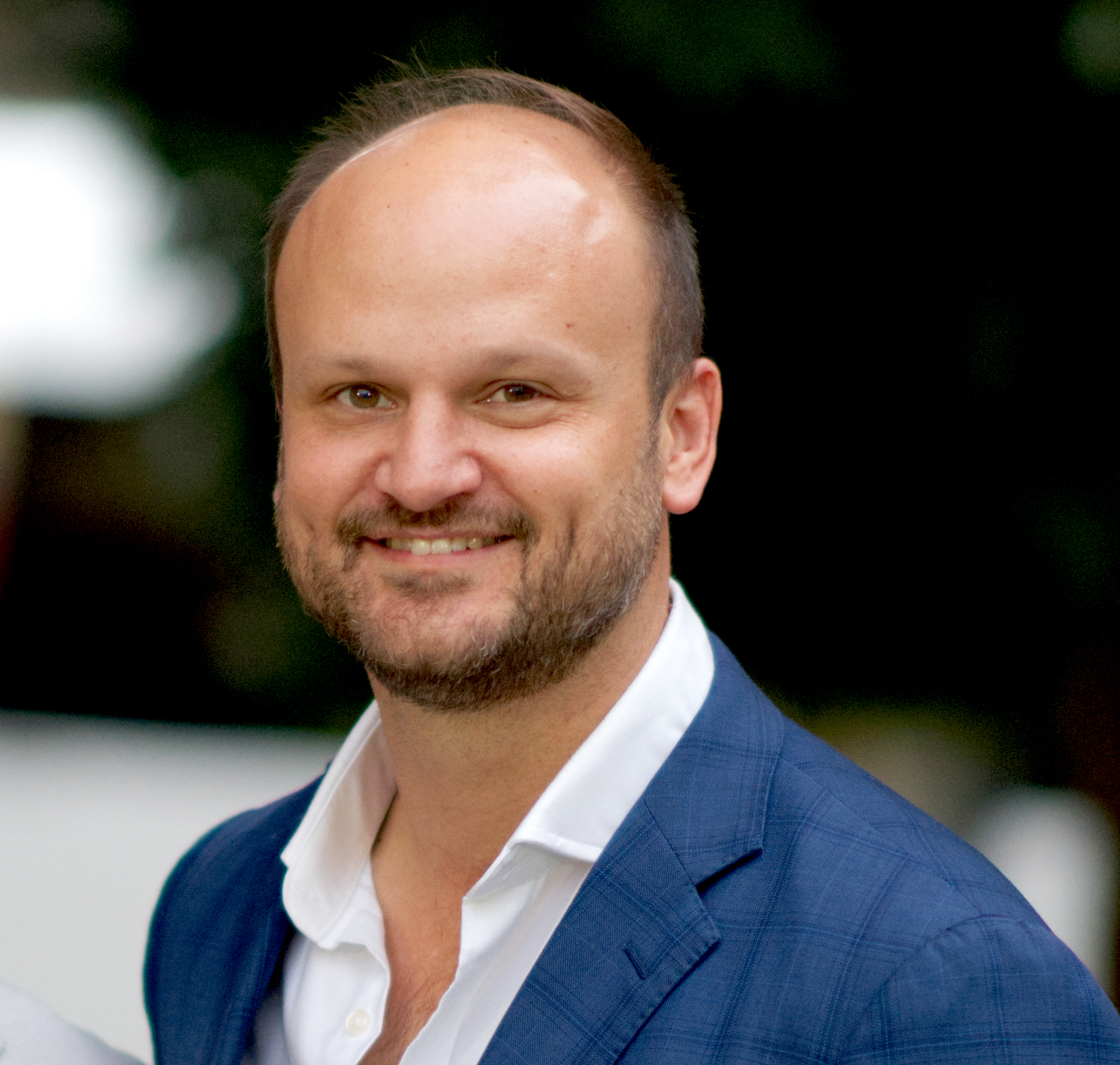
The chair of Aboriginal Enterprises in Mining, Energy and Exploration (AEMEE) says Aboriginal businesses funding the organisation is the clearest sign of how far Indigenous enterprise in the resources sector has come.
Derek Flucker opened the 19th AEMEE conference in Rubibi (Broome) on Wednesday. He named Djarindjin Aboriginal Corporation as one of the first groups to put its own money behind AEMEE, so the organisation would rely less on the industry it set out to break into.
"They were one of the early businesses that said, 'We'll put money towards you so you don't have to continually rely on mining companies and resource companies'," Mr Flucker said.
"For me, that's an economic transition that's occurred, and that economic transition is beautiful to watch."
About 250 delegates are in Rubibi (Broome) for the two-day conference this week, held under the theme The Next Era: Leadership, Ownership and the Future. Organisers closed ticket sales early due to demand.
AEMEE was set up in 2005 to gain "true market share for Indigenous businesses across the resources sectors". It brings together Traditional Owner groups, Indigenous enterprises and resources companies. Its annual conference usually moves between capital cities, and the board chose Broome because of its long relationship with Djarindjin, which is now AEMEE's legacy partner.
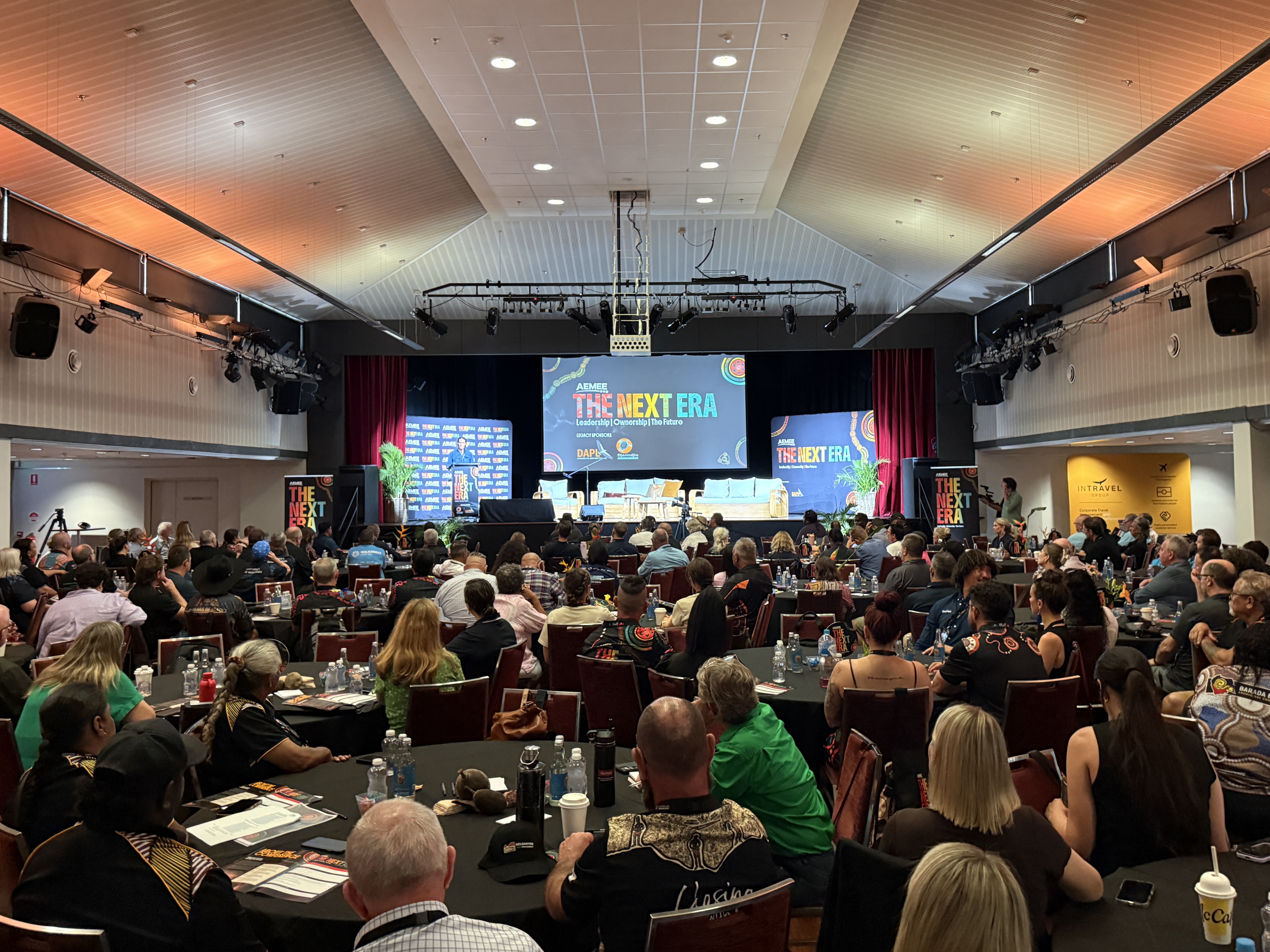
Mr Flucker said early events drew "30, 40, 50 people", mostly from government. He has run businesses in the mining sector since the late 1990s and came to his first AEMEE event 16 years ago.
"I felt very alone," he said. "I didn't grow up with mentors or people in business, so it was very foreign in our family to have someone doing business. And then I turned up to an AEMEE event and I said, 'Wow, there's other people actually doing this stuff'.
"I wouldn't be here where I am today without that first event 16 years ago."
He told delegates the conference was about direction more than achievement.
"This conference is not about where we're at; it's about where this is going," Mr Flucker said. "We're going to another level, which is what we're going to talk about a lot during this event: how do we get from A to B and move to the bigger stage."
AEMEE chief executive Jyi Lawton, a Bidjara man from Central West Queensland, gave the figures. AEMEE now has more than 140 members across the country, with combined turnover of nearly $2 billion. Together they employ "over 3,000 of our own mob".
"We tell industry and government that we are a strong, capable sector, but we need data behind it," Mr Lawton said. "That sets an important testament to the power in the room."
Over the past year, AEMEE partnered with BHP to put 12 Indigenous businesses in front of 12,000 people at IMARC. It also started work on mine closure and critical minerals, and hired Daniel Segura to help members get access to capital, finance and equipment. Mr Lawton visited the Argyle diamond mine with the Gelganyem mob and Mika McLennon of MDM Mining and Civil, where he saw majority-Indigenous truck fleets and rehabilitation work on Country.
Earlier this week, the AEMEE board visited Djarindjin on the Dampier Peninsula.
"Seeing the commercial operations of the airport, the local mob employed there, hot fuelling helicopters while propellers are spinning, the roadhouse, and their business ventures: their approach to economic empowerment is nation-building," Mr Lawton said.
The visit also showed the gaps in living standards, basic services and infrastructure.
"All of us in this room have a responsibility to champion that all our mob have access to basic services," he said.
Lawton defined the theme in commercial terms: "Ownership is building business and securing a greater economic stake on our Country."
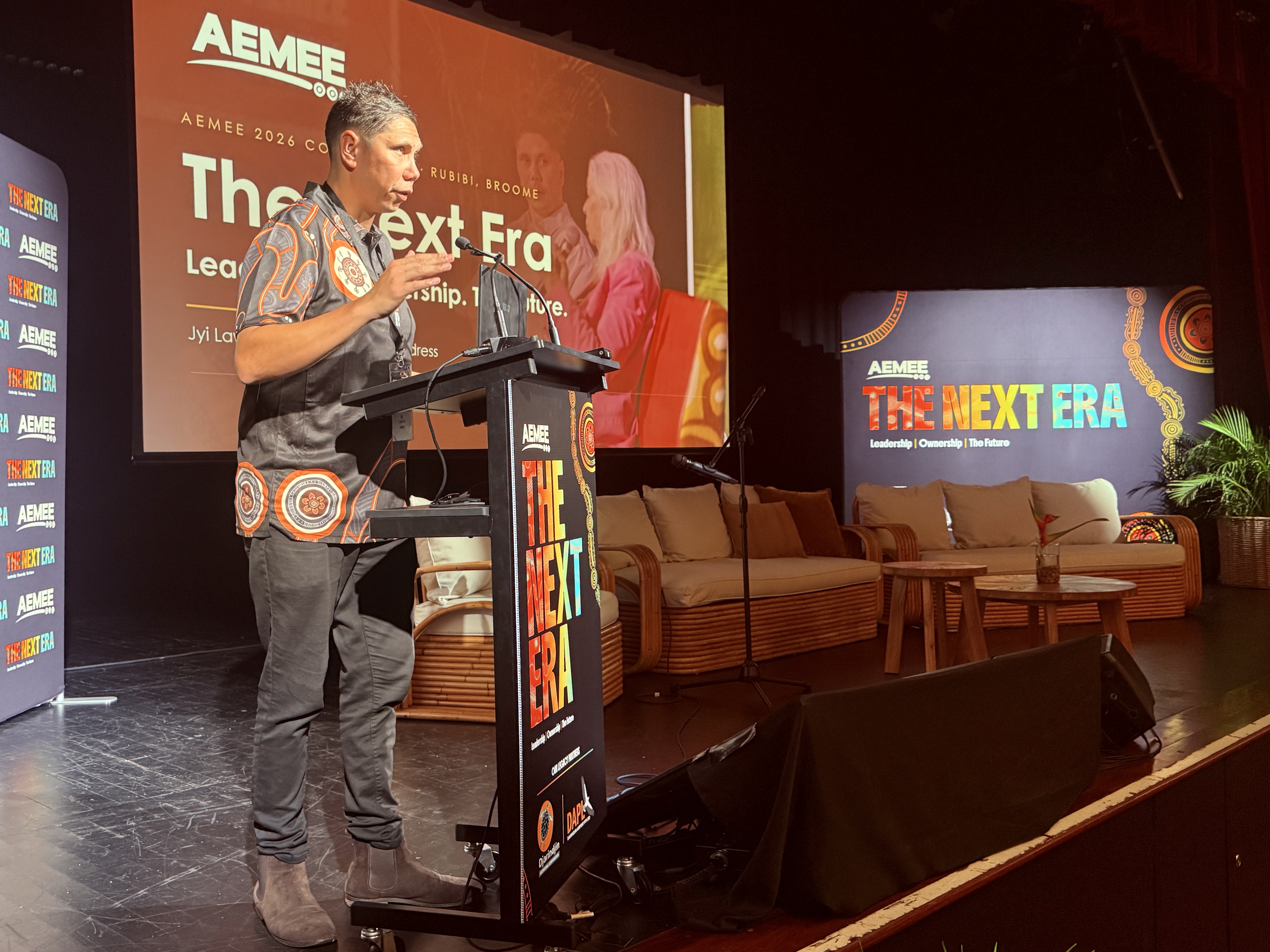
In the opening keynote, Bardi man Albert Wiggan reminded delegates what sits under every agreement made in the room.
"Country owns us; we don't own Country," Mr Wiggan said. "We're not like white men where we look at it as property or an asset to profit or make money from. Everything that we represent and talk about, our language and our culture, only existed because Country did."
Mr Wiggan grew up between Broome and One Arm Point. His father, Tom Wiggan, learned to sail on the Sunday Island mission and built a career on the pearling luggers. His mother grew up on the Beagle Bay mission, where Irish nuns and priests told her connection to Country was irrelevant.
He said all forms of industry are now in the Kimberley, and Traditional Owners carry a cost nobody else is asked to pay.
"No one else in Australia is expected to sacrifice their cultural values purely to gain opportunities that every other person in Australia takes advantage of," Mr Wiggan said.
Mr Wiggan urged delegates to treat cultural knowledge as intellectual property.
"How are we not giving away our knowledge with nothing in return? We're always giving, giving, but not receiving," he said. "It's up to each and every one of us to control our narrative, protect our intellectual property, and ensure our sharing of knowledge doesn't get used for someone else's agenda."
Last week Mr Wiggan watched the Fremantle Dockers run three days of football clinics on Cable Beach.
"I saw an incredible injection of sponsors and money spent towards kids promoting health and opportunities through sport," he said. "I only wondered what that would look like if they were all camps talking about culture, sharing knowledge, and giving young kids the cultural knowledge they need for their own wellbeing, self, and sense of identity."
Mr Wiggan sees the next generation as a commercial opportunity. His son posts videos of spearfishing and hunting to more than a million followers.
"These young Indigenous content creators are assets and investment opportunities," he said.
Mr Wiggan traced his family's custodianship from his grandfather, Yannery (Henry) Wiggan, a Bardi leader who preserved songs and stories, to his father Tom, who taught bush survival to Malcolm Douglas, Harry Butler and Les Hiddens and advised the Australian Navy. That line now continues through Mr Wiggan, his children and the Albert Wiggan Institute.
Then he left the room with a question.
"What is your legacy?"