
- Why the OECD says Australia trails Canada on Indigenous ownership of mines
- The Pilbara town sitting among the nation’s 20 most disadvantaged, surrounded by iron ore wealth
- “Indigenous expectations are moving to co-ownership, investment and equity" - IBA’s chair on what miners should do next
A new Organisation for Economic Co-operation and Development (OECD) report has set out how governments, mining companies and Indigenous peoples can all come out ahead as the global rush for critical minerals pushes new projects onto traditional lands.
Strengthening Indigenous outcomes in OECD mining regions identifies priority policy actions for achieving mutually beneficial outcomes between national and subnational governments, Indigenous peoples, and mining companies.
It groups those actions under four headings: Indigenous self-determination and decision-making, improved economic opportunities, social services and cultural wellbeing, and environmental stewardship.Australian contributions to the work came from Indigenous company i2i Global owner and IBA chair Darren Godwell.
This OECD report puts Indigenous economic interests in mining on the international record.
"Indigenous interests in mining have always been there. Whether it's continued access to our lands and waters or protection of our sacred sites, the combined cultural heritage or environmental impacts," Mr Godwell said.
"This global work from the highly respectable OECD documents the economic interests that Indigenous Peoples have in mining."
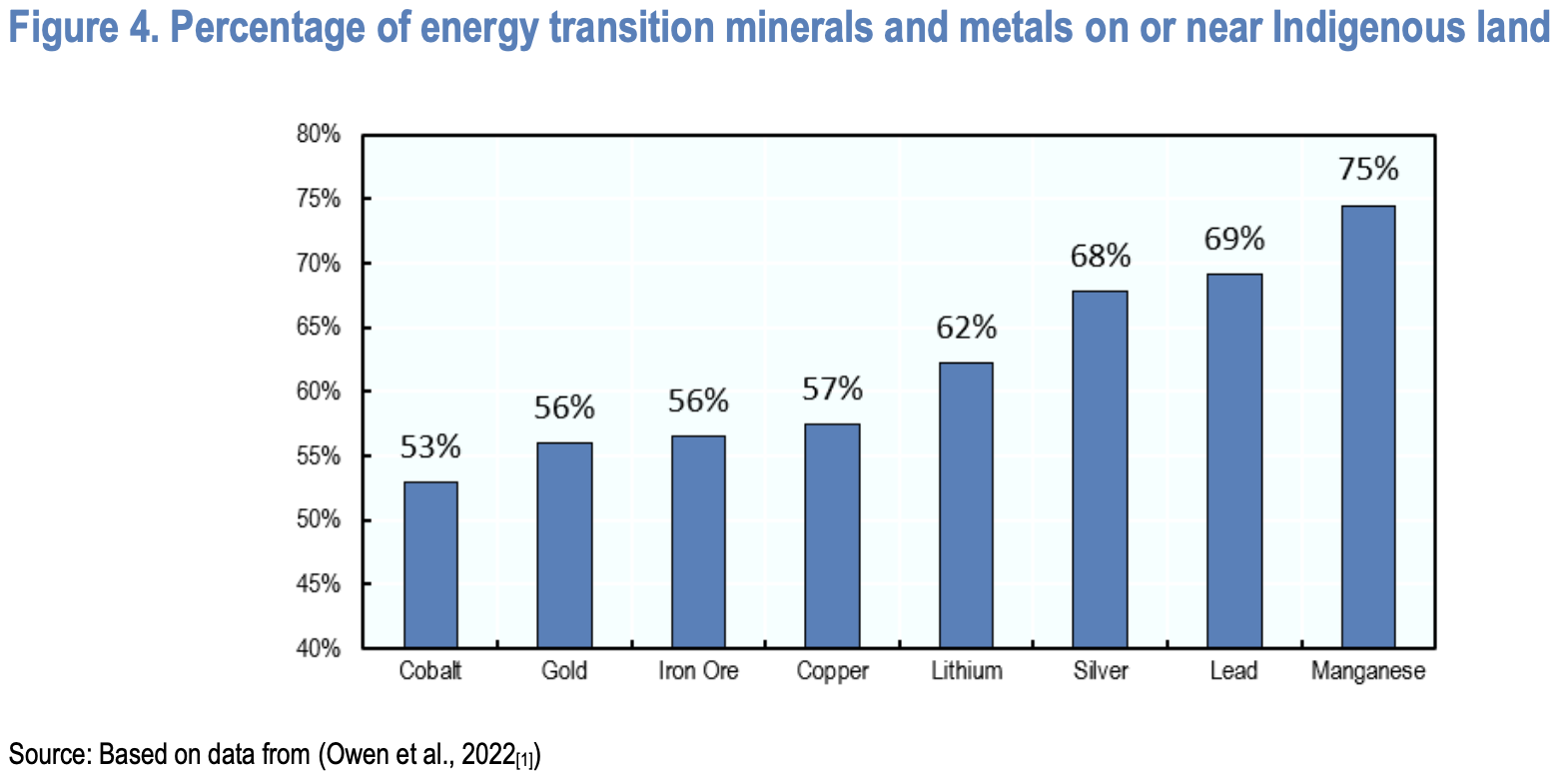
The stakes are large. The report cites estimates more than half of the world's energy transition minerals and metals lie on or near Indigenous land. Across Australia, Canada, Chile and Sweden, about 28 per cent of Indigenous peoples live in mining regions.
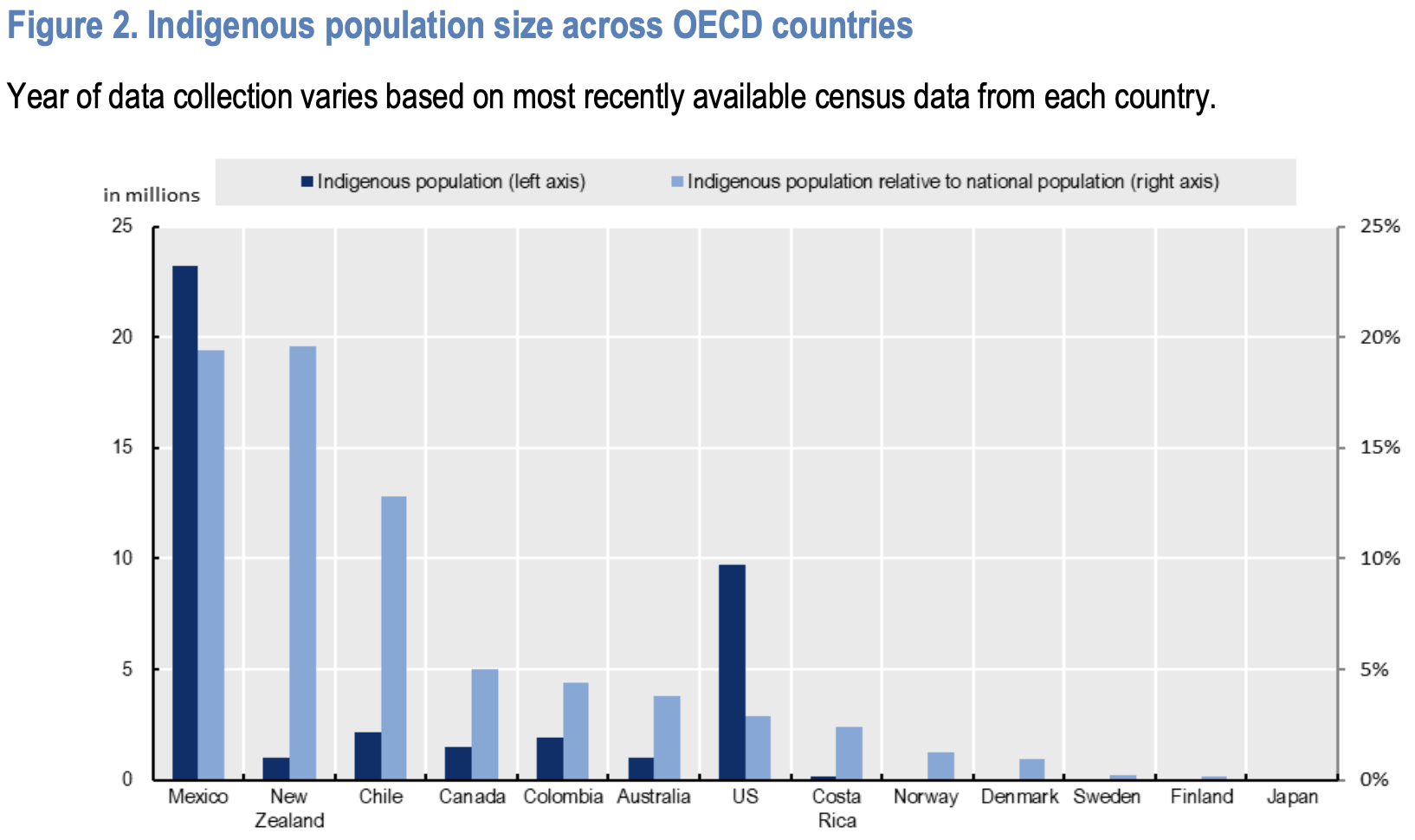
In Australia, the concentration is sharper still. Indigenous people make up 12.9 per cent of the Pilbara's population and 41 per cent of the Kimberley's, compared with 3.8 per cent nationally.
The wealth generated in those regions has not reliably reached the people who live there. The report points to Roebourne, where more than 65 per cent of residents identify as Indigenous. The town ranks among the 20 most disadvantaged localities in Australia, in a region that produces some of the world's largest iron ore volumes.
On the economic front, the OECD calls for Indigenous equity participation to be offered early in project development, better access to capital, and stronger Indigenous financial institutions.
Here the report singles out Australia. Canada has built a framework of pooled borrowing, governance support and lower-cost finance through bodies such as the First Nations Finance Authority, and in 2024 launched an Indigenous Loan Guarantee Program worth up to CAD 10 billion.
"Australia currently does not have equivalent institutional mechanisms, making it significantly harder for Traditional Owners and Indigenous organisations to secure equity stakes in projects," the report states. As a result, Australia has considerably fewer Indigenous-owned equity projects.
The report also questions how agreement money is held. Many Indigenous Land Use Agreements route payments into charitable trusts or similar vehicles, where funds can be restricted, managed externally and invested so conservatively that communities lose value.
"While Indigenous communities in Australia may secure significant funds through Land Use Agreements, the utility of those funds for community development, long-term wealth generation, business development, and self-determination can be undermined," the authors write.
The OECD makes a hard-headed business case for getting this right. Mining projects finish 20 to 30 per cent later than planned on average, and for projects worth more than USD 1 billion, delays can exceed 50 per cent and push budgets 80 per cent over plan. The report names ESG-related delays as the most frequent source of those costs, and cites the McPhillamys gold project in New South Wales, where a proposed tailings dam was blocked over cultural heritage impacts, leaving the billion-dollar project unviable.
On decision-making, the report urges governments to move beyond consultation towards shared or consent-based decision-making, and to embed free, prior and informed consent in legislation and project governance.
It also showcases what Indigenous ownership looks like in practice. The Gulkula mine in East Arnhem Land, wholly owned by the Gumatj clan of the Yolngu people, is the world's first 100 per cent Indigenous-owned and operated bauxite mine. The report notes that Gulkula puts decision-making authority, operational control and economic returns directly in Gumatj hands, with revenue reinvested in community infrastructure, education and intergenerational capacity-building.
Other actions in the report include expanding Indigenous procurement, funding ranger and environmental monitoring programmes, directing mining revenue towards long-standing service gaps, and contracting Indigenous businesses for mine rehabilitation.
Mr Godwell said the message for industry and government is simple.
"Indigenous rights and interests are enduring," he said. "We are not going anywhere, so you may as well find grounds for shared assessments, addressing concerns and finding the projects that we support."