





Latest spatial research from the country's peak Indigenous carbon organisation showed First Nations people had rights to undertake carbon projects along 66 per cent of Australia's coastline.
The Indigenous Carbon Industry Network's new report on blue carbon urged government policy at all levels to clarify the unaddressed issue of Indigenous rights and stewardship of coastal ecosystems, or risk falling behind global best practice.
The ICIN, which is member-owned by 28 Indigenous organisations that produce Indigenous carbon credits, said the blue carbon method did not apply to sea Country managed by Indigenous peoples.
Its report recommended that, where policy stated the Crown had rights to carbon, it should automatically go to Traditional Owners, excluding private or Indigenous-owned lands.
Indigenous Carbon Industry Network director, Sarah Parriman, a proud Yawuru and Jabirr Jabirr woman and passionate advocate for Indigenous advancement, self-determination and decision making, said Traditional Owners must be viewed as rights holders.
"This is where we should be heading in Australia; globally this is now becoming best practice," said Ms Parriman, who is also deputy CEO of the Kimberley Land Council.
Despite Indigenous peoples' rights to carbon projects along 66 per cent of Australia's coast, there were minimal economic or engagement opportunities for them in the blue carbon market.
The ICIN's 'Blue Carbon in Australia: Understanding the opportunity for Indigenous People' report released on Tuesday urged Indigenous rights be upheld and respected, citing globally-tested recommendations for government and the carbon industry to improve their practices.
"Indigenous peoples have cared for sea Country for millennia and are thriving in the Indigenous carbon industry, where they own and run carbon projects on their own land," Ms Parriman said.
"Their projects are reducing emissions, creating jobs and benefiting whole communities through genuine economic self-determination.
"We want to see this same success extend to the blue carbon space.
"Without Indigenous leadership and inclusion, Australia's blue carbon potential will not be realised."
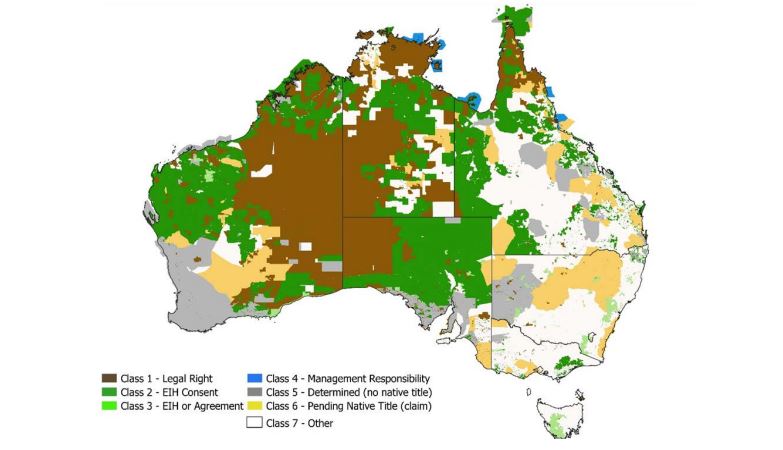
Ms Parriman said First Nations groups should be given rights to own and sell carbon in coastal ecosystems where the Crown may otherwise have interests.
"There are now many examples internationally of blue carbon projects placing Indigenous people and their knowledge at the forefront," Ms Parriman said.
"Australia must step up or risk falling behind global best practice."
The report highlighted the strong and ongoing connection of First Nations people to their lands and waters, and recommended the Australian carbon industry adopt default governance models that Indigenous people as blue carbon project owners, or at a minimum, equal joint partners.
Ms Parriman said other factors were impeding Indigenous participation in the blue carbon industry, including Australia's only existing blue carbon credit scheme being mostly inapplicable First Nations people, with highly-prohibitive startup costs for projects.
She referenced the savanna fire management carbon method, where burning projects in northern Australia provided economic benefits to Indigenous communities and reduce greenhouse gas emissions.
"This is an example of our rights and knowledge being respected and placed in the forefront," Ms Parriman said.
"It is now acknowledged as the most successful fire management program in the world, and it is led by Indigenous land managers."
The ICIN report was launched as part of the National Environmental Science Program Indigenous Engagement and Blue Carbon project, led by Charles Darwin University in collaboration with project partners the North Australia Indigenous Land and Sea Management Alliance and ICIN.
Read the report here and view an interactive version of the map on the Seamap Australia website.