




Hobart's Princes Wharf was a hive of community, culture and economic self-determination on Wednesday as the Palawa Business Hub hosted its second Aboriginal Business Showcase.
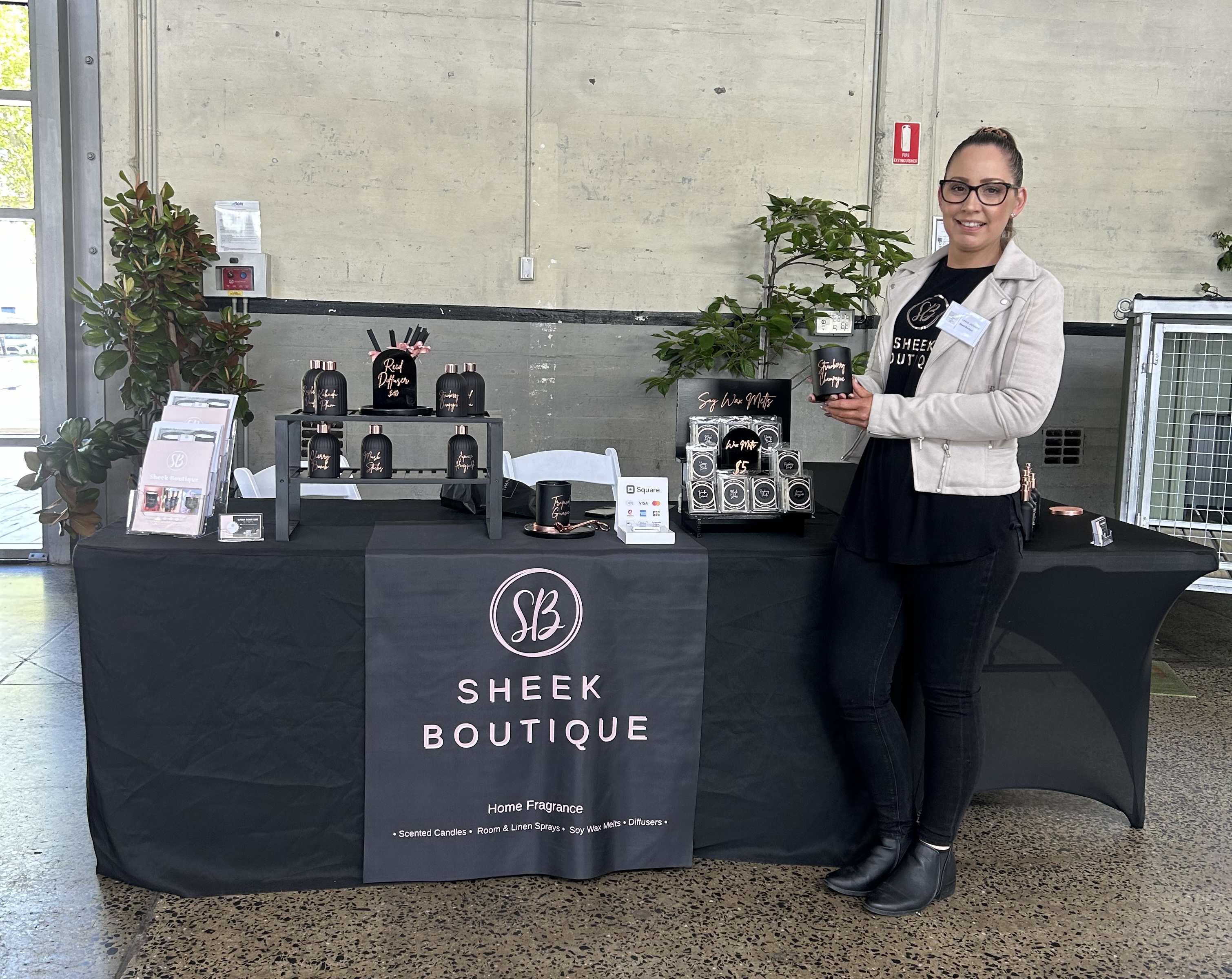
The event saw dozens of Aboriginal-owned businesses share their wares, with some utilising the event as their first public appearance.
From arts and crafts, clothing to carpet, and eats and treats, the Showcase included a wide variety of products and services offered by Tasmanian-based mob in business.
Reflecting on the event, Palawa Business Hub (the Hub) co-founder, Leah Cameron (Brown), labelled the Hub's second annual Showcase an overwhelming success.
The Marrawah Law and Advisory principal solicitor and Indigenous Business Australia (IBA) director co-founded the Hub alongside Sara Maynard last year.
"Absolutely amazing, mind blowing," the Palawa woman told the Indigenous Business Review (a National Indigenous Times publication) at the conclusion of this year's Showcase.
"Such a positive showing of not just the businesses but our Aboriginal community, coming out and supporting and just seeing the variety of businesses and being so so proud of what's going on around the state."
Ms Cameron (Brown) said after last year's inaugural event, the Hub is on an "upward trajectory".
"It definitely showed our ambition and where we're headed to, and I think we'll be here for a long time to come," she said.
"We've got more space to fill, more businesses to bring in. We've just giving them that confidence and really championing the work that they're doing."
Ms Cameron (Brown) said she felt compelled to co-found the Hub after seeing how Aboriginal businesses are supported throughout the country, and was "blown away" after the response from Tasmanian-based, Aboriginal-owned businesses after the Hub was established in August, 2024.
The Palawa woman said its been rewarding to see the confidence in Aboriginal-owned startups being willing to "give this a go" after receiving support from the Hub.
"For me that's huge, because the startup phase is the most terrifying, and having the confidence to do that, going in alone, is exceptional," she said.
Within a year, the Hub's business directory has doubled in size to more than 60 registered businesses.
Ms Cameron (Brown) said she co-founded the Hub to provide opportunities for Aboriginal-owned businesses in Tasmania "because we're not generally part of the national dialog".
"We don't have an Indigenous procurement policy here, there's no existing chamber, there's no set spends for state government," she said.
"So for me, it's like, 'hang on, putting our hand up. We need this. We need to be part of this journey', because it is having this huge impact.
"And for me as well, I just thought [there's] so many opportunities. Lutruwita/Tasmania is incredibly popular. We need to start riding this wave. We don't want to be left behind."
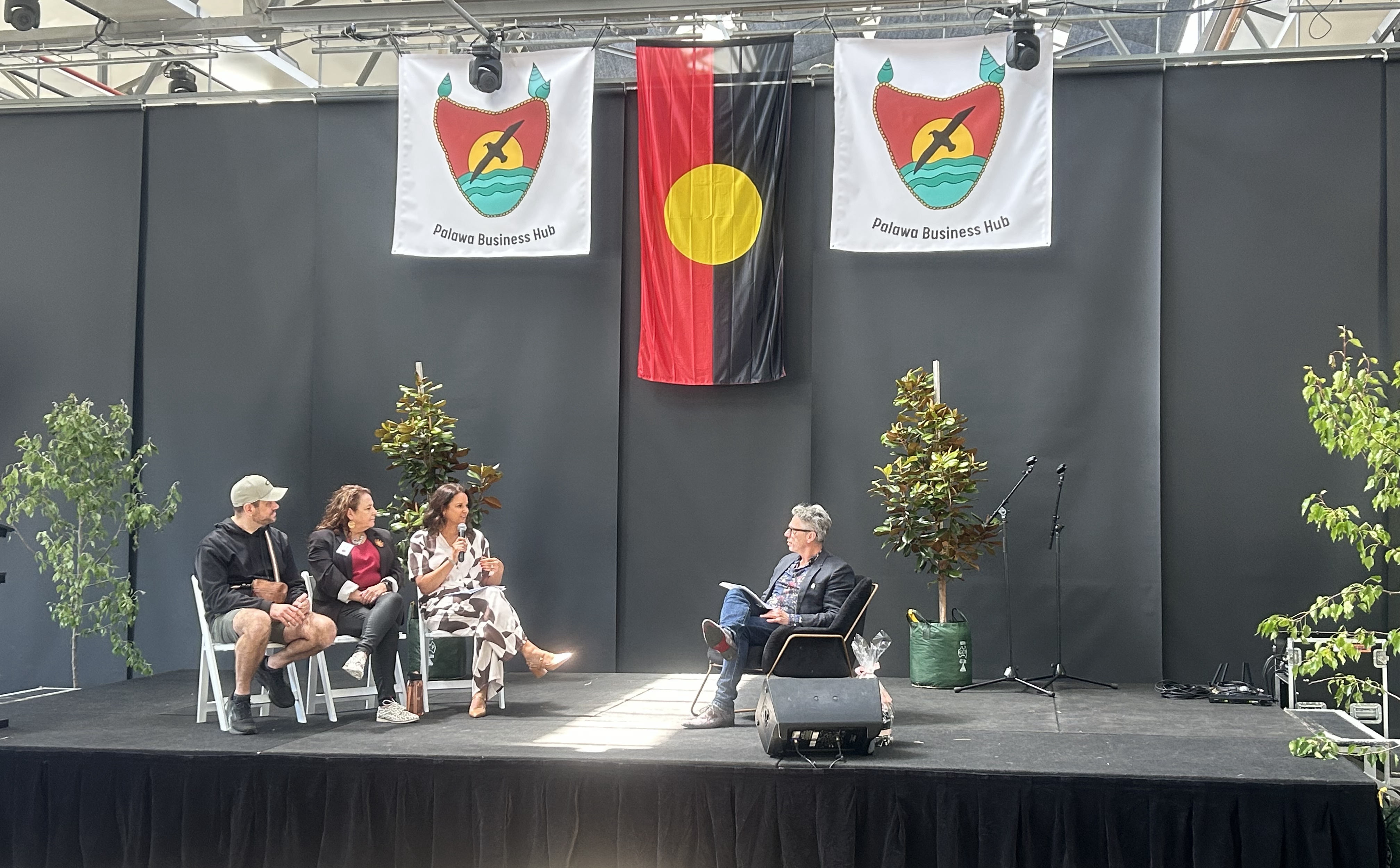
Partway through the Showcase Ms Cameron (Brown) joined a panel discussion alongside Sarah Wilcox of Cooee Tunapri and Dewayne Everettsmith of Mina Nina.
Together the trio discussed their respective successes and challenges of being an Aboriginal person in business, as well as providing advice to mob on how to succeed in the business world.
A post shared by The Indigenous Business Review (@the_ibr_au)
But for Ms Cameron (Brown), the Hub's impact goes further than supporting Aboriginal-owned businesses who for the most part, are doing it on their own.
"As a community, it's really helped change our mindset and have a different conversation with, for example government, and we're able to approach other issues that are really important to us, like Truth-telling and Treaty, through this business lens," she said.
"So coming in at a different angle is really changing that dynamic and empowering us too."
Partly due to service delivery often only available interstate, Ms Cameron (Brown) said the Hub was focused on supporting Aboriginal businesses with a physical presence in Tasmania.
"The other thing you would have seen here today is there's no joint ventures. Just the businesses working really hard, building their capability," she said.
"Not saying it won't happen, but I think that's a really important difference here, is we're really focusing on that localised support, building the capability.
"Yes, people could try and partner or be an ally and put us into your supply chain, but we're really conscious of keeping it in Tassie."
While suggesting there could be hundreds more Aboriginal-owned businesses operating in Tasmania, Ms Cameron (Brown) said she's excited to see Tasmania's Indigenous economy flourish in the future.
"I think the exciting part for me is knowing there's a generation coming through that are willing to start their business, or perhaps transition from full-time employment somewhere else to go into business, because they now see the opportunities that they've never seen before," she said.
"They've never been exposed to procurement policies. They go 'wow, we need to be in this, we can be part of a three per cent target, we can employ our own mob through that too'."
Admitting supporting Aboriginal businesses in Tasmania is "actually much bigger than we thought," Ms Cameron (Brown) said community remains forefront of mind for the Hub.
"We've had much more impact than we ever thought" she said. "So I think for us it's just [about] collating all that data, finding out where the community wants us to go.
"But what I think is bigger and better, is really that support for this little island, because it is so unique.
"We've got that brand, and how do we capitalise on it?
"I think we've proven that we can do it with next to nothing and a lot of willpower and community support, which is incredible."
2025 Palawa Business Hub Aboriginal Business Showcase exhibiting businesses
A1 Skip Bins, Black Ant, Brandi Salmon Art, Brown Bear Eatery, Custom Kennels, Instyle Floors, Hart Cultural Connections, InTravel Group, Jeanette James, Jillian Mundy Photographer, House of Healing, Lutruwita the Label, Marrawah Law and Advisory, Mon Mansell Designs, Palawa Kipli, Pressurised Plumbing and Gas, Rina Designs, Rina Katina, Saltbush Catering, Sheeke Boutique, Steve's Camerawork, Takamuna rrala Desaigns, Tash Mansell: Trauma Coach, Tristan Templar Art, TWB Bricklaying, wukalina walk, Danny Gardner, Aboriginal Land Council of Tasmania, Janice Ross - Artist.